Impressive Video from NASA Astronaut: Starlink Satellites and Green Auroras



NASA astronaut Don Pettit captured a video from the ISS showing the Starlink satellite train accompanied by green auroras. The satellites appear as bright as Jupiter, raising concerns among astronomers.
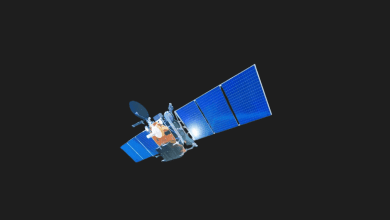
NASA astronaut Don Pettit, currently serving on the International Space Station (ISS), captured images of SpaceX‘s Starlink satellites accompanied by green auroras glowing in the upper layers of the atmosphere. In the video he recorded, Pettit revealed the reflection of Sunlight off the Starlink satellites and the visual spectacle created by the auroras. Auroras are formed when charged particles from the Sun collide with Earth’s atmosphere.
A Monumental Scene
In his statement regarding the video shared on his X account, Pettit stated that the satellite train was very distinct, and some satellites appeared as bright as Jupiter, with their light flashing for durations varying between 1 and 10 seconds. On the astronomical brightness scale, Jupiter’s peak brightness is measured at approximately a magnitude of -2, while the brightest stars range from -2 to +2, Venus can reach -4, and the Sun appears at a magnitude of -26.
According to these metrics, the visibility of the Starlink satellites is at a very noticeable level. For those unfamiliar, on the astronomers’ brightness scale, smaller numbers indicate brighter objects. Bright satellites in orbit can affect the work of astronomers. Pettit’s last mission lasted 220 days, and on his 70th birthday, April 20th, he landed in the steppes of Kazakhstan via a Russian Soyuz spacecraft. Despite the busy pace of life during and after the mission, Pettit regularly shares the images and videos he captures from the ISS.
According to tracking data from renowned astrophysicist Jonathan McDowell of the Smithsonian Astrophysical Observatory, Starlink currently has about 8,600 active satellites. While this is a significant step towards the goal of providing reliable internet service in remote areas, it raises some concerns for astronomers. The high brightness observed by Pettit can make astronomical observations difficult.

Satellite Numbers Are Rapidly Increasing
In addition, the increase in Starlink satellites also heightens the risk of space debris. The deorbiting and re-entry of satellites into the atmosphere can lead to metallic particles mixing into Earth’s atmosphere. This is said to potentially cause pollution and climate effects. Due to these concerns, SpaceX has stated that it has modified the reflectivity of some Starlink satellites and that the satellites can maneuver when necessary. Recent reports indicate that Starlink satellites are re-entering the atmosphere more frequently.
According to McDowell, when all satellite constellation projects are launched into orbit, there will be approximately 30,000 satellites (Starlink, Amazon Kuiper, and others) in Low Earth Orbit and an additional 20,000 satellites at 1,000 km due to Chinese systems. However, these numbers could be much higher, as SpaceX has plans for 42,000 Starlink satellites. SpaceX launched 2,000 Starlink satellites into orbit this year alone.
You Might Also Like;