HoverAir X1 Self-Flying Camera Review: Specs, Pros & Cons

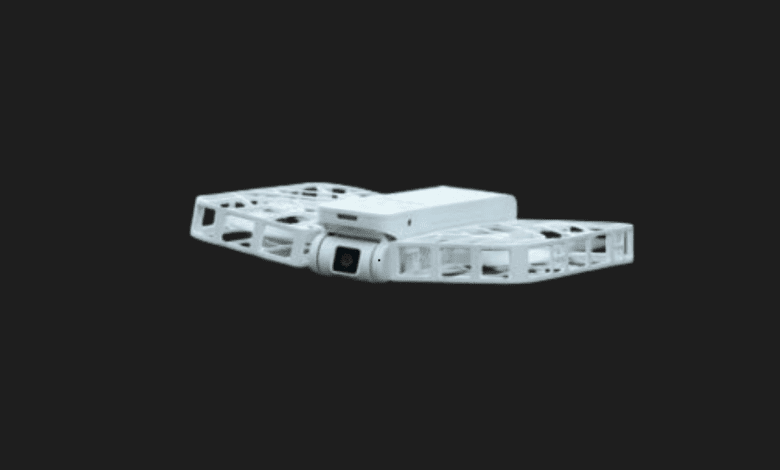

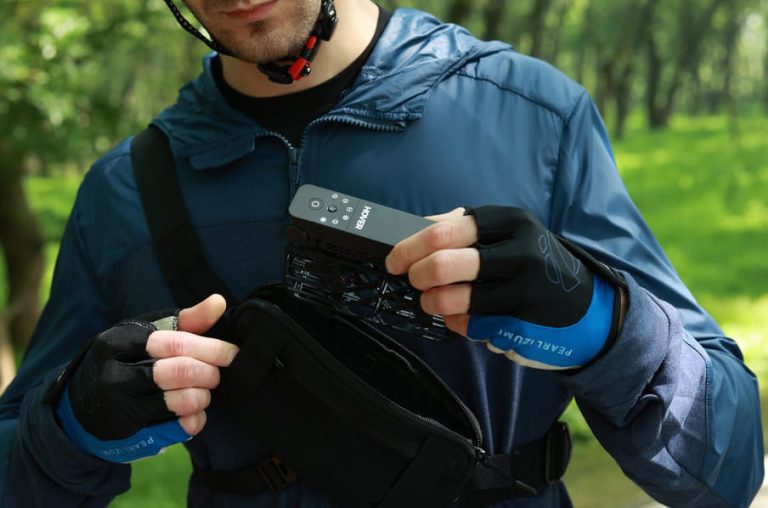
If you’ve ever wished for a dedicated personal photographer to follow you around during your adventures, I completely relate. The thought of carrying heavy equipment or fumbling with complex joysticks is enough to make anyone leave their drone at home. Enter the HoverAir X1—a pocket-sized, self-flying camera that completely removes the friction between living in the moment and capturing it. Designed for effortless content creation, it promises a completely hands-free aerial filming experience.
Pros & Cons
- ✅ Ultra-Lightweight & Safe: At just 125g with a fully enclosed frame, it requires no FAA registration and is safe to launch from your hand.
- ✅ True Hands-Free Operation: Unfolds and launches in exactly 3 seconds with brilliant automated flight paths.
- ✅ Excellent AI Tracking: Reliable algorithms keep you perfectly centered, even when cycling or running up to 15 mph.
- ❌ Short Battery Life: Maxes out at 11.5 minutes per battery, making multi-battery combos an absolute necessity.
- ❌ No Obstacle Avoidance: Relies entirely on its enclosed cage for safety rather than high-tech environmental sensors.
- ❌ Limited Resolution: Video caps out at 2.7K at 30fps, which is great for social media but falls short of professional 4K standards.
Technical Specifications
| Feature | Details |
|---|---|
| Weight & Dimensions | 125g (4.41 oz) | 5.0″ x 3.39″ x 1.22″ (Folded) |
| Camera Resolution | Up to 2.7K @ 30fps, 1080p @ 60fps, 1080p @ 30fps (HDR) |
| Flight Time & Storage | 11.5 minutes per battery | 32GB Internal Storage |
| Flight Modes | Hover, Follow, Orbit, Zoom Out, Bird’s Eye, Dolly Track |
| Max Speed | 15.7 mph (horizontally) | Level 4 Wind Resistance |
| Stabilization & Sensors | Mechanical Pitch Axis + EIS | VIO & ToF Laser Positioning |
My Experience
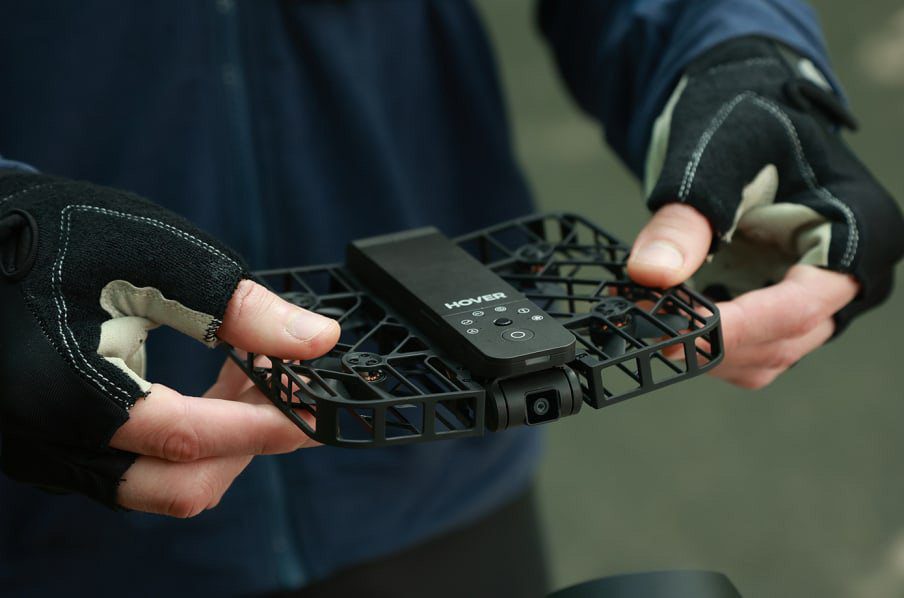
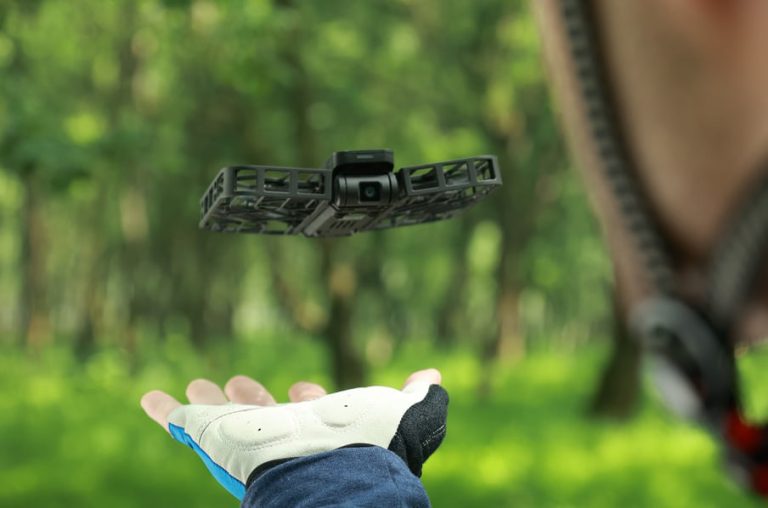
When I first unboxed the HoverAir X1, I was immediately struck by its form factor. It genuinely feels like holding a thick smartphone or a small, lightweight book. The fully enclosed carbon fiber cage gives you immense peace of mind—you simply don’t have to worry about fragile propellers clipping a tree branch, or worse, someone’s fingers. Getting it into the air for the first time was an absolute revelation. You don’t need to calibrate a compass or sync up a bulky remote controller. You literally unfold it, hold it in the palm of your hand, select your desired flight mode using the physical button on the chassis, and let it go. In exactly three seconds, it lifts off your palm and starts tracking you.
In my testing, the Visual Inertial Odometry (VIO) technology and ToF laser altitude system proved incredibly reliable. I took it out on a scenic bike ride and tested the ‘Follow’ mode. The HoverAir X1 managed to keep me dead center in the frame, tracking seamlessly up to speeds of around 15 mph. It feels magical to just ride your bike and know there is a personal aerial cameraman capturing the whole thing. The enclosed cage also means that when you’re done filming, you can quite literally grab the drone out of mid-air, and the motors will safely and instantly cut off.
Now, let’s talk about the image and video quality. Shooting at 2.7K at 30fps provides crisp, vibrant footage that is tailor-made for TikTok, Instagram Reels, and YouTube Shorts. The combination of a mechanical pitch-axis gimbal and electronic image stabilization (EIS) irons out the micro-jitters surprisingly well. However, if you are a professional videographer used to 10-bit color or 4K/60fps footage from larger drones, you will definitely notice the difference in dynamic range and sheer detail. The X1 is unapologetically optimized for social sharing, not IMAX screens.
The biggest hurdle you’ll need to work around is the battery life. Clocking in at about 11.5 minutes per charge under ideal conditions, the flight time is understandably short given the device’s 125g featherweight class. Fortunately, the combo kits include extra batteries and a fast-charging hub, which I found to be absolutely essential. Swapping a battery takes just a few seconds, allowing you to keep the creative momentum going. Ultimately, the HoverAir X1 strips away the steep learning curve of traditional drones, providing an effortless, joy-filled way to document your daily life and adventures.
Who is this for? / Alternatives
The HoverAir X1 is the ultimate tool for solo travelers, content creators, and casual users who want engaging aerial footage without learning how to pilot a drone. If you just want to press a button and be the star of the video, this is for you. As an alternative, if you need professional 4K footage and are willing to learn manual flying, the DJI Mini 4K is an excellent sub-250g drone. If you love the HoverAir ecosystem but need better specs, consider the newly released HoverAir X1 PRO or PROMAX which introduce 4K and 8K video alongside active collision avoidance.
Quick FAQ
Does the HoverAir X1 need to be registered with the FAA?No. At only 125g, the HoverAir X1 falls well below the 250g weight threshold, meaning it does not require FAA registration for recreational use.
Can the HoverAir X1 record audio?The drone itself doesn’t record audio to avoid propeller noise. Instead, the Hover X1 mobile app records audio directly from your smartphone’s microphone (or a connected Bluetooth mic) and automatically syncs it with the video.
Does it have obstacle avoidance technology?The HoverAir X1 does not feature environmental obstacle avoidance sensors. It relies on its fully enclosed propeller cage to bounce harmlessly off soft obstacles, but it should be flown in relatively open spaces.
HoverAir X1 Review
Product Images

You Might Also Like;