Historic Achievement in Fusion Energy from Japan: Superconducting Coil Test Completed

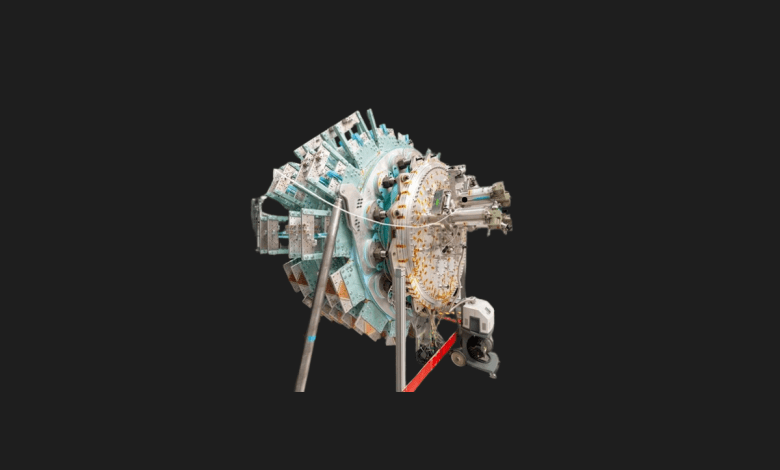

Helical Fusion successfully completed the first commercial-scale High-Temperature Superconductor (HTS) coil test, advancing Japan further in the race for limitless and clean energy.
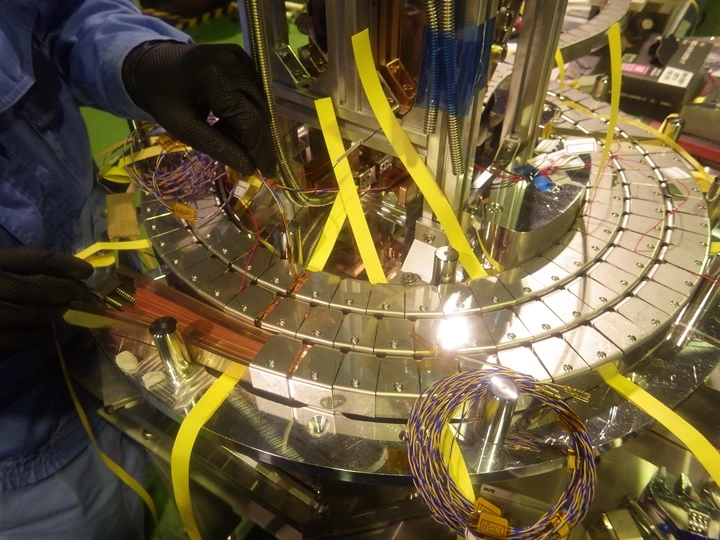
Japan has marked another significant development in the field of nuclear fusion energy. The country’s leading startup, Helical Fusion, announced that it has successfully completed a large-scale performance test of its High-Temperature Superconducting (HTS) coil. This test was the first international demonstration where an HTS coil, manufactured at the size of a commercial reactor, was able to sustain stable current generation under superconducting conditions.
Takaya Taguchi, CEO of Helical Fusion, stated at a press conference, “This means that the possibility of realizing fusion energy generation before the rest of the world has been proven.”
The test was completed by achieving a stable superconducting current of 40 kiloamperes (kA) at a temperature of 15 Kelvin ($\mathbf{-258^\circ C}$) under a 7 Tesla magnetic field. The experiment was conducted at the facilities of Japan’s National Institute for Fusion Science (NIFS).
The Helix Program and Japan’s Fusion Goal
Helical Fusion will continue its research under the Helix Program. The company aims to complete performance tests of integrated “blanket/divertor” systems with HTS magnets by the late 2020s. The next major step will be the construction of an integrated demonstration device called Helix HARUKA. This system is intended to prove that stable and continuous fusion reactions are practically possible.
In the 2030s, the company plans to commission a pilot fusion facility named Helix KANATA. This facility is designed to meet the three fundamental criteria for commercial fusion: 24/7 continuous operation, net positive electricity generation, and efficient component maintenance.

Helical Fusion, as the only company to inherit NIFS’s helical fusion technology, aims to build the world’s first commercial fusion power plant based on this design. The helical “stellarator” structure provides a longer and more stable operation time compared to other fusion models by enabling continuous plasma confinement without the need for an external current driver. It is possible to think of the stellarator design as a more advanced version of tokamaks, another fusion design. However, this “advancement” also necessitates a much more complex fusion process.
In tokamak systems, plasma is contained within a toroidal (doughnut-shaped) chamber and is stabilized by both external magnetic fields and a powerful electric current passing through the plasma. In contrast, the stellarator does not require a plasma current for stabilization. Instead, it generates external magnetic fields entirely through much more complex, three-dimensional coil geometries.
Japan’s total budget allocated to fusion research is currently around 100 billion yen. In comparison, the US and China have been making investments at the trillion-yen level in recent years. Helical Fusion’s success could pave the way for more resources to be allocated to fusion projects in Japan. Global investment in fusion energy has increased by $2.64 billion in the last year. However, experts state that much larger resources are needed for the technology to become commercially viable.
Currently, about 50 active fusion projects are underway, and Helical Fusion stands out as one of the few ventures that simultaneously targets the three key commercial conditions: stable energy production, net energy gain, and system sustainability.
You Might Also Like;