Motion Design for Everyone: Higgsfield Unveils Vibe Motion Powered by Claude

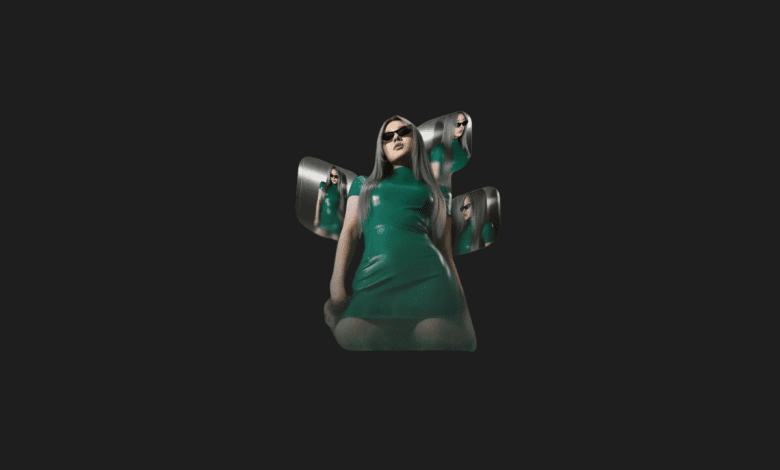

Let’s be honest for a second: if you have ever tried to get a professional motion design video created, you know the struggle. It usually involves endless email chains with agencies, confusing storyboards, and a price tag that makes your wallet weep. For years, high-end motion graphics were a gated community, accessible only to those with big budgets or complex coding skills.
But today, I’m looking at something that might just tear those gates down. Higgsfield, a rising star in the AI video space, has just dropped a bombshell feature called Vibe Motion. And here is the kicker: it’s built on top of Anthropic’s Claude.
This isn’t just another “text-to-video” toy; this looks like a genuine productivity revolution for creators like me (and probably you).
The End of the “Budget Barrier”
I’ve always believed that creativity shouldn’t be held hostage by technical limitations. Until now, if you wanted a slick, animated chart showing user growth or a logo that pulses with energy on your landing page, you had two choices: learn complex software like After Effects (which takes months) or hire a specialist (which costs thousands).
Higgsfield Vibe Motion changes the calculus. By integrating with Claude—which is widely regarded as one of the smartest LLMs for coding and logic—Higgsfield allows you to generate professional motion graphics using nothing but natural language.
How It Works: The No-Code Revolution Hits Video
We’ve seen the “No-Code” revolution transform web design (think Webflow or Wix). Now, it’s finally hitting motion design.


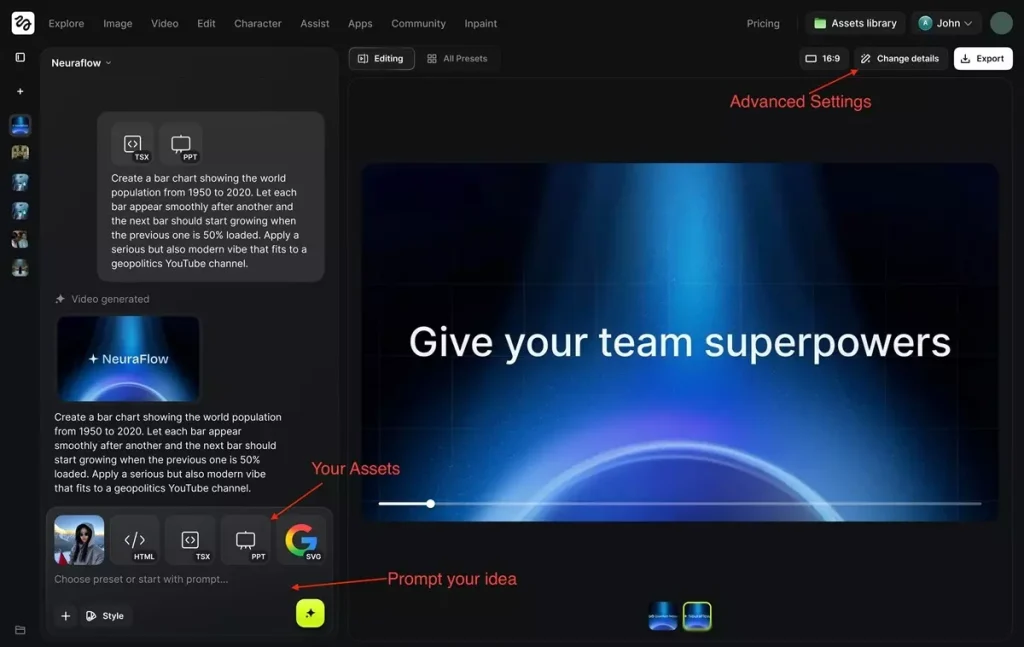
What fascinates me about Vibe Motion is the workflow:
- You don’t write code: You simply type what you need.
- You don’t push pixels: You describe the intent.
For example, you can type: “Create an animated line graph showing a sharp increase in users, with a glowing green line on a dark background.”
Because it is powered by Claude, the system understands the logic behind the request. It doesn’t just hallucinate a video file; it constructs the underlying structure of the animation. The result is a broadcast-quality motion graphic that is ready to use instantly.
Why “Claude” Makes the Difference
You might be asking, “Ugu, why does it matter that it’s powered by Claude?”
Here is my take: Most AI video generators are “black boxes.” You feed them text, and they dream up a video. But motion design requires precision. It requires math. Claude is exceptional at reasoning and coding. By using Claude, Higgsfield ensures that the animations adhere to a logical structure rather than just looking like a fever dream.
This is what makes Vibe Motion different:
- Precision: It’s great for data visualization where accuracy matters.
- Editability: It builds the “code” behind the motion, making it more than just a static video file.
- Speed: What used to take weeks of back-and-forth now takes minutes.
The Big Picture: “Vibe Editing”
Higgsfield isn’t stopping at just generating clips. They are pushing a concept they call “Vibe Editing.”
I find this approach refreshing. The problem with current AI video tools is the lack of control. You often get a cool result, but if you want to change one little thing, the whole video morphs into something else. Higgsfield’s goal is to give us controllable video production. They want to make every stage of the process intentional, bridging the gap between “prompting” and actual “directing.”
My Experience and Final Thoughts
I’ve been testing various AI tools since the boom started, and tools that solve specific, painful workflow bottlenecks are always the ones that win. Vibe Motion attacks a huge bottleneck: marketing assets.
For solopreneurs, indie developers, and small content teams, this is a superpower. You can finally have that “Silicon Valley Tech Giant” aesthetic on your website without burning your seed funding on a design agency.
Currently, Vibe Motion is in a free trial phase, so you can jump in and test it yourself. If you need higher limits, they offer professional subscriptions, but the entry barrier is currently non-existent.
I’m curious to hear your perspective: Do you think tools like this will replace motion designers, or will it just free them up to work on more complex, artistic projects while AI handles the “boring” corporate graphics?
You Might Also Like;