First-Ever Atomic-Scale Imaging Achieved in History: All Previous Limits Surpassed!



Scientists have successfully observed light at an atomic scale using a newly developed technique called ULA-SNOM. This method appears poised to revolutionize materials science and nanotechnology.
Scientists have developed a new microscopy technique that makes it possible to observe light at an atomic scale. This method, called Ultralow-Tip Oscillation Scattering-Type Near-Field Optical Microscopy (ULA-SNOM), allows for atomic-resolution imaging by confining light within a volume of just one cubic nanometer.
The ULA-SNOM technique has made it possible to image atomic structures, individual defects, and even molecules that were previously impossible to detect with optical methods. The team achieved this breakthrough by combining an atomic force microscope with visible laser light and a specially prepared silver tip.
The Smallest Feature Size Limit Has Been Surpassed!
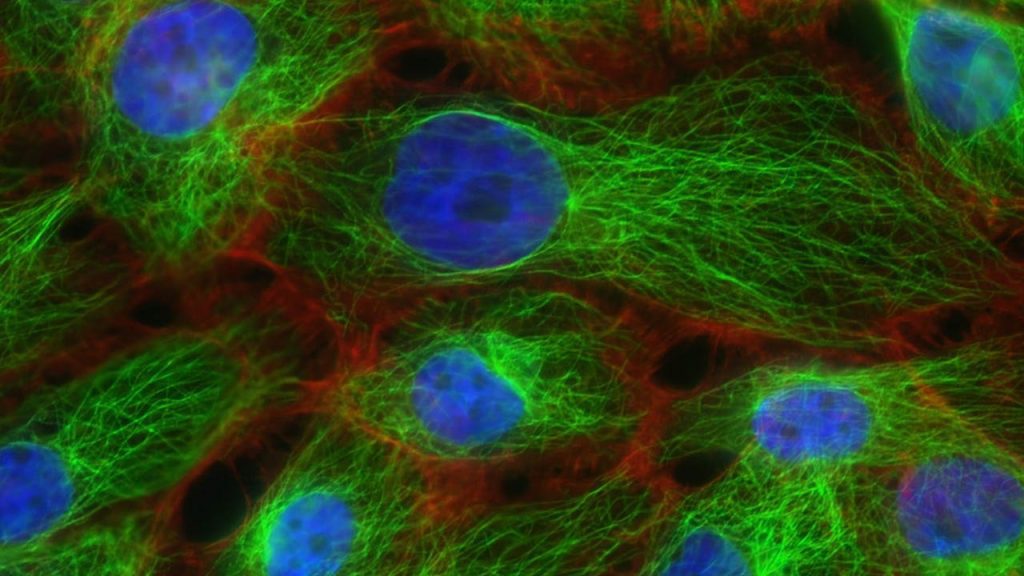
ULA-SNOM overcomes the diffraction limit, which arises from the wavelength of light and restricts the resolution in optical microscopes to approximately 200 nanometers. This means that with this technology, the smallest feature size limit that an optical imaging system can resolve has been surpassed. Researchers managed to concentrate light into an area even smaller than the atomic scale by using a silver tip oscillating with an amplitude of just one nanometer.
In tests conducted on single-atom-thick silicon islands, significant differences in the optical signal were observed between the silicon and silver regions. The team achieved extraordinary system stability by working at a temperature of 8 Kelvin (-265°C) and under ultra-high vacuum. It remains to be seen how this new imaging technique will impact scientific research.
You Might Also Like;