The Silent Goodbye: Decoding the Sudden Loss of NASA’s MAVEN Mars Mission


When I first read the latest briefing from NASA, I felt a genuine sting of disappointment. We’ve grown so used to our robotic explorers surviving far past their expiration dates that we sometimes forget how incredibly hostile space actually is.
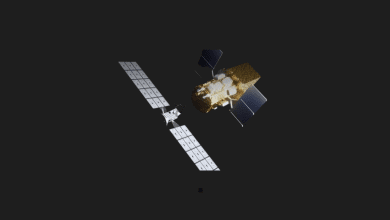
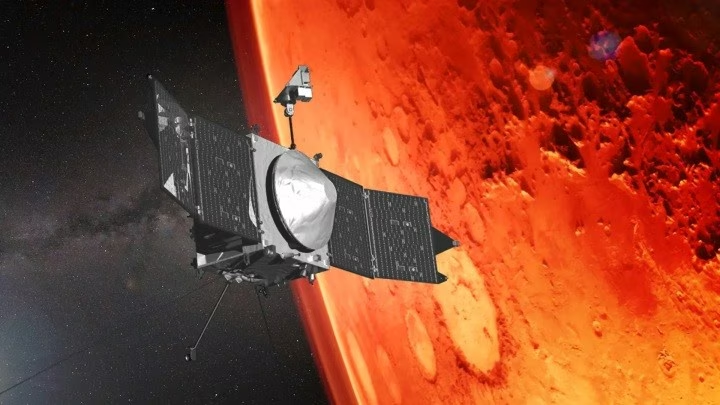
NASA has officially pulled the plug on the MAVEN (Mars Atmosphere and Volatile EvolutioN) mission after an incredible 11-year run around the Red Planet. The spacecraft essentially “went dark” back in December, and after months of grueling analysis and rescue attempts, the engineering team has finally called it.
I want to dive deep into what actually went wrong in the freezing dark behind Mars, why this loss is a bigger deal than just a broken satellite, and what it means for our rovers currently wandering the Martian surface.
The 48 Hours That Killed a Legend
To understand the suddenness of this loss, we have to look at the timeline. MAVEN wasn’t a decaying, broken-down satellite; it was highly functional right up until its final moments.
Here is how the anomaly unfolded:
- The Routine Pass: On December 6, MAVEN performed a standard orbital maneuver that took it behind Mars, temporarily blocking its line of sight with Earth.
- The Silence: Telemetry data right before the pass showed zero warning signs. The team expected it to re-emerge and ping the Deep Space Network. It never did.
- The Spin Anomaly: When engineers finally scraped together scattered radio data, they found a nightmare scenario. As MAVEN came out from behind the planet, it had triggered a safe mode and entered an uncontrollably high spin rate.
This extreme spinning practically sealed its fate. The violent rotation likely threw off its solar panel alignment, draining the onboard batteries past the point of no return. Without power, the communication systems went completely dead. While NASA has established a review board to find the exact trigger of this “death spin,” MAVEN is essentially a ghost ship now.


Why MAVEN Was Actually a Big Deal
It’s easy to overlook orbiters when we have shiny nuclear-powered rovers like Curiosity and Perseverance taking selfies on the ground. But MAVEN answered one of the most profound questions I’ve ever had about our solar system: Why is Mars a dead, frozen desert today if it used to have rivers and oceans?
MAVEN wasn’t looking at the ground; it was looking up. It proved that the solar wind—a relentless stream of charged particles from the Sun—literally stripped away the Martian atmosphere over billions of years. Because Mars lost its protective magnetic field, the Sun just blasted its ancient, thick atmosphere into deep space. MAVEN gave us the exact mechanics of how a habitable planet dies.
The Hidden Crisis: The Mars Relay Network
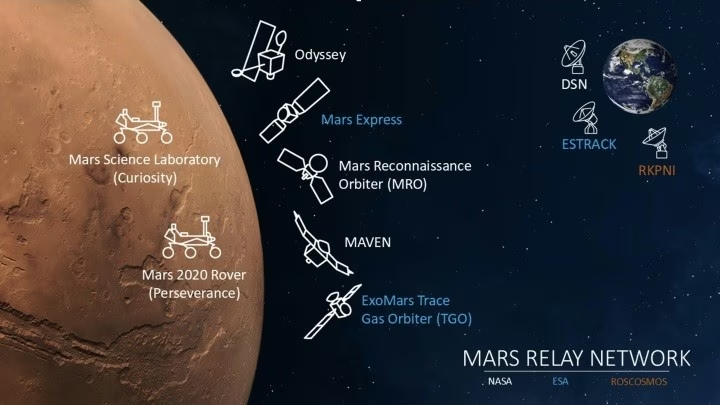
Beyond the pure science, there is a logistical headache here that really concerns me. We don’t just talk directly to our rovers from Earth. That takes too much power. Instead, rovers beam their data up to orbiters, which act as high-speed intergalactic routers, relaying the data back to NASA.
With MAVEN gone, the Mars Relay Network has taken a noticeable hit.
- We are now down to just four operational orbiters handling the communications traffic.
- While ESA’s Trace Gas Orbiter handles the bulk of the heavy lifting, MAVEN was a critical secondary node.
Losing a node in this network means tighter scheduling, potential data bottlenecks, and less redundancy if another satellite acts up.
It’s always tough to say goodbye to a piece of hardware that expanded our understanding of the universe. MAVEN was supposed to last one year; it gave us eleven. NASA will be opening its entire data archive to researchers soon, meaning MAVEN will likely keep making discoveries long after its batteries have frozen over.
I’m curious about your take on this—with our orbital infrastructure aging, do you think we are sending enough communication satellites to Mars, or are we too focused on the rovers? Let’s discuss it in the comments!
You Might Also Like;