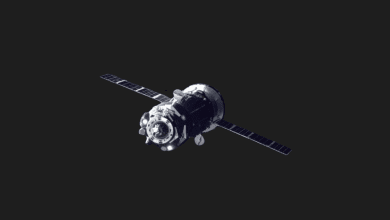
The race to the Moon between the United States and China is intensifying. While the U.S. is currently facing issues with its launch and rocket systems, China’s lunar project is progressing smoothly.
The competition to send humans back to the Moon is getting more intense. While current schedules suggest the U.S. will reach the Moon before China, recent developments indicate otherwise. Just a few weeks ago, former NASA Administrator Jim Bridenstine voiced this concern, saying, “if we don’t pick up the pace, we are going to lose the race to China.” Events in China this week further underscore the validity of Bridenstine’s warning.
China’s Long March-10 Rocket Successfully Completes Its Second Test


China’s Long March-10 rocket, developed for next-generation crewed missions, has successfully completed its second static fire test at the Wenchang Space Launch Site in China. The test, conducted on September 12, involved igniting all seven engines of the rocket’s first stage simultaneously and running them for 320 seconds. This specific trial aimed to evaluate engine performance and restart procedures under low-thrust conditions. Chinese officials announced that the test was a “complete success.”
Both firing tests conducted this year have confirmed the rocket’s design reliability and return procedures. With the U.S. experiencing significant issues with its own rockets, China’s successful completion of this second test suggests it is currently leading the race. China’s crewed lunar mission system relies on two Long March-10 launches: one carrying the Lanyue lunar lander and the other transporting the three-person Mengzhou crew capsule. Two astronauts will descend to the lunar surface, while a third will remain in orbit. In August, the Lanyue vehicle successfully completed extensive ascent and descent tests, and in June, the Mengzhou capsule passed its initial escape test.
The U.S. is planning a crewed lunar flyby with the Artemis II mission in early 2026. If all goes well, Artemis III is scheduled for a human landing on the Moon in mid-2027. However, due to budget constraints and technical issues, adherence to this timeline remains uncertain. China, meanwhile, plans its first crewed lunar mission for 2029-2030, and so far, everything is proceeding as planned.
You Might Also Like;
- Pocket-Sized Wind Energy: The Revolution for Off-Grid Living
- The Wait is Finally Over: Native YouTube Lands on Apple Vision Pro
- Inside the Beast: Samsung and NVIDIA’s Massive AI Factory with 50,000 GPUs
-

-

-

-
-

-

-

-
-

-

-
-