Are Carbon Nanotubes the Future of Technology?


Hey Explorers! I’m Ugu. Lately, I’ve been obsessed with a material that sounds like it was ripped straight out of a sci-fi novel, but it’s sitting in labs right now, waiting to flip our world upside down. I’m talking about Carbon Nanotubes (CNTs).
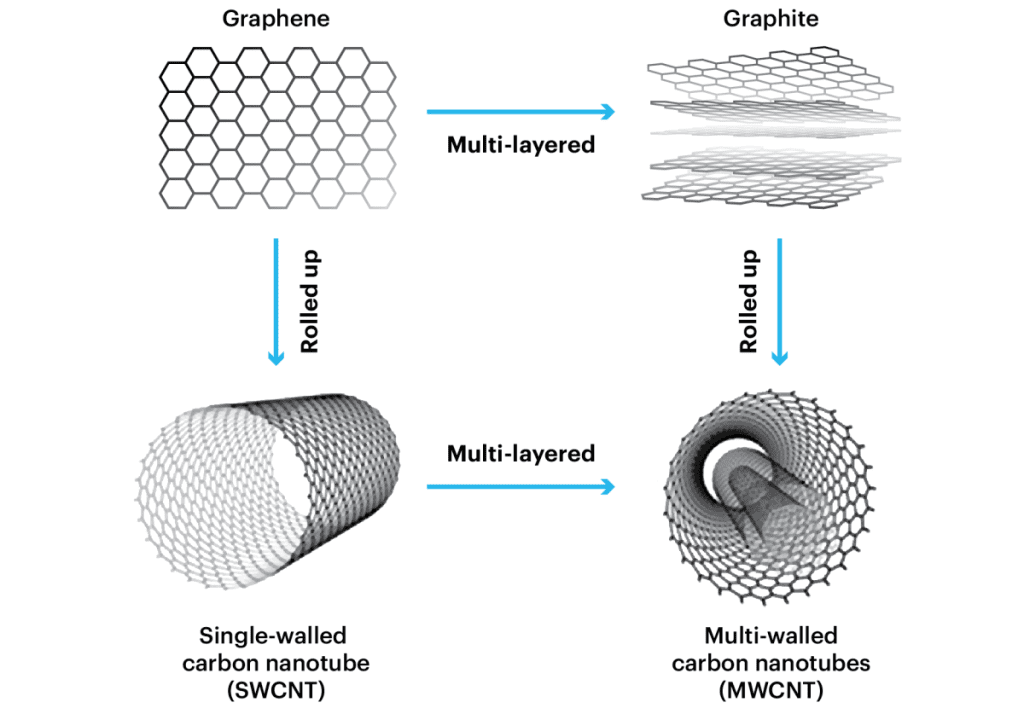
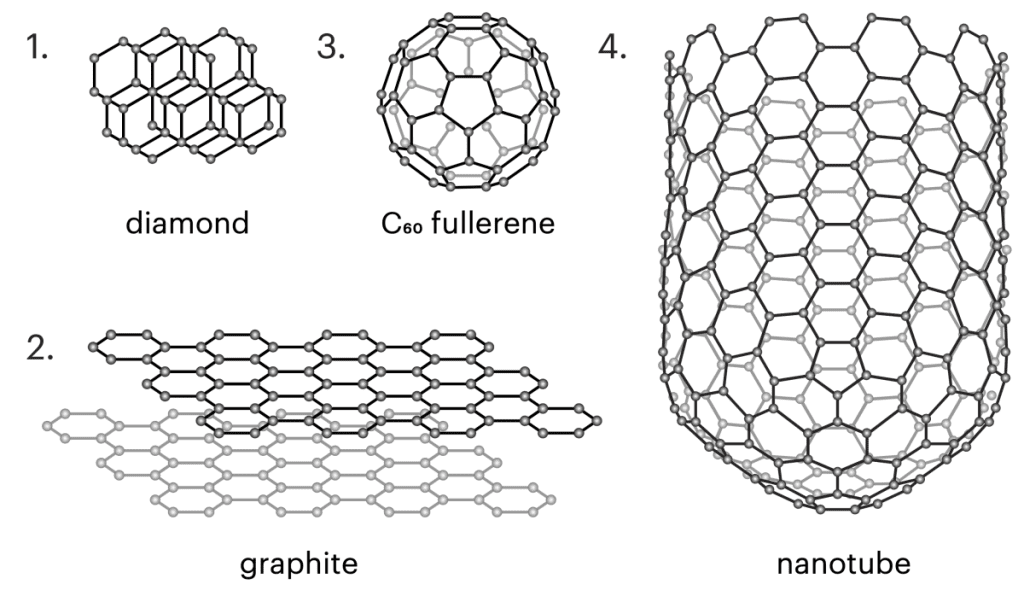
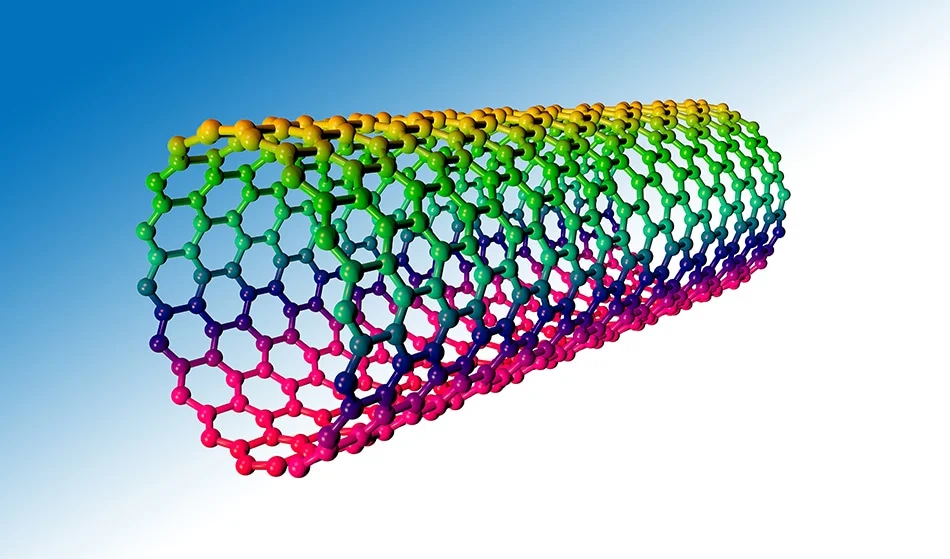
If you haven’t heard of them, imagine a sheet of carbon atoms—one atom thick—rolled into a perfect cylinder. They are so tiny that you could fit 50,000 of them across the width of a single human hair. But don’t let the size fool you. In my research, I found that these little tubes are 100 times stronger than steel at a fraction of the weight.
Let’s dive into why I think this is the “miracle material” we’ve been waiting for.
The Super-Material We Didn’t Know We Needed

When I first started looking into CNTs, I thought, “Okay, it’s just another laboratory discovery that will never see the light of day.” I was wrong. The reason everyone from NASA to Apple is keeping an eye on this is because of their unmatched versatility.
- Strength: They have a tensile strength of roughly 100 Gigapascals. To put that in perspective, steel is around 0.4.
- Conductivity: They can carry electricity better than copper and heat better than a diamond.
- Flexibility: Unlike brittle carbon fiber, nanotubes can be bent and twisted without snapping.
I often wonder: if we had mastered this 20 years ago, would our phones still be made of breakable glass and heavy aluminum? Probably not.
Silicon is Dying; Long Live Carbon?
This is where things get really exciting for me as a tech nerd. We are reaching the physical limits of silicon. We can’t keep shrinking transistors forever because they start to leak heat and lose efficiency.


Carbon Nanotube Field-Effect Transistors (CNFETs) are the answer. I’ve seen data suggesting these chips could be 3 times faster and use 9 times less energy than the silicon chips we use today. Imagine a MacBook or a gaming rig that stays ice-cold while performing heavy renders, with a battery that lasts for weeks instead of hours. That’s the potential here.
Building the “Space Elevator”
If you’ve ever followed my posts about space, you know I’m a dreamer. One of the biggest hurdles to exploring the stars is the cost of fuel. For decades, scientists have dreamed of a Space Elevator—a cable stretching from Earth into orbit.
Until now, we didn’t have a material strong enough to support its own weight at that length. Steel would snap like a thread. But Carbon Nanotubes? They are theoretically strong enough to make this “stairway to heaven” a reality. I get chills just thinking about it—sending cargo to space for the price of a train ticket.
The “Ugu” Reality Check: Why Aren’t They Everywhere?
I won’t lie to you and say we’ll have CNT cars tomorrow. There’s a massive “but.”
The challenge isn’t making them; it’s making them at scale. Growing a forest of perfect, long nanotubes is incredibly difficult. Most of what we produce today is “carbon soot”—a mix of messy tubes that lose their magical properties when they aren’t aligned perfectly.
Also, there are health concerns. Because they are so small and needle-like, breathing them in can be dangerous, similar to asbestos. We have to be smart about how we manufacture them.
My Take: Is it the Future?
In my opinion, we are currently in the “Bronze Age” of Carbon Nanotubes. We know they are there, we’ve made a few “swords” (small-scale applications), but we haven’t built an empire with them yet.
However, seeing how fast materials science is moving, I’m betting that within the next decade, CNTs will be the hidden backbone of our foldable tech, our ultra-fast EV batteries, and maybe even our first permanent structures on the Moon.
I have a question for you: If you could have one item in your daily life—your phone, your car, or maybe your house—made of a material that is indestructible and super-light, which one would you choose?
Let’s chat in the comments! I’m curious to see what you’d upgrade first.
Stay curious, stay with technology!
You Might Also Like;