Besxar has reached an agreement with SpaceX to begin experiments in semiconductor manufacturing under the vacuum conditions of space. The company aims to reduce the cost and error rate in chip production using this method.
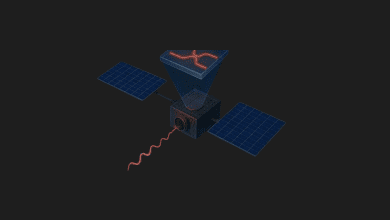
The US-based startup Besxar has entered into a significant agreement with SpaceX to enable semiconductor production in orbit. Unlike other similar initiatives that focus on microgravity, the company aims to revolutionize chip manufacturing by utilizing the natural vacuum conditions of space.
🏭 The Era of Orbital Chip Production

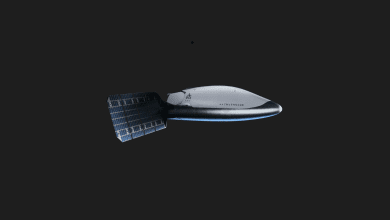
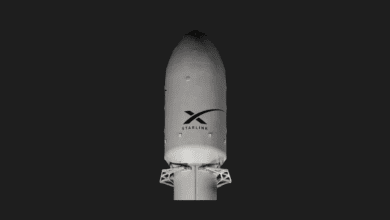
Within this scope, Besxar will integrate its developed experimental manufacturing modules into the booster stages of the Falcon 9 rockets. These modules, dubbed “Fabships,” will each be about the size of a microwave oven. Two Fabship units will be mounted onto the rocket’s booster stage on each mission. Some of the tests, which will be conducted across a total of 12 Falcon 9 missions, may begin before the end of the year. The financial details of the agreement were not disclosed.
Unlike most SpaceX customer payloads, Besxar’s experiment modules will not enter orbit. Instead, they will return to Earth during the rocket’s descent phase. Each test will assess the manufacturing processes in the extreme vacuum environment of space during a flight lasting approximately 10 minutes. This short but intense testing period will allow Besxar to rapidly improve its technology.
💰 Goal: Avoiding High Costs

The initial test modules will test the durability of semiconductor materials during space travel and the re-entry process. The goal is to prove the manufacturability of wafers without suffering deformations such as bending or cracking during this process.
While other space manufacturing projects typically focus on microgravity effects, Besxar centers its approach on the purity and efficiency of the vacuum. The primary reason for this is cost. Traditional chip manufacturers are forced to incur enormous expenses for the necessary equipment and processes to maintain ultra-sterile production environments. For example, TSMC plans to invest $50 billion in just a single advanced technology facility.


Besxar argues that the natural vacuum conditions of space can inherently provide this level of purity. This method could enable the production of purer and more efficient chips, which could be critically important for high-performance applications such as AI data centers, quantum computing systems, and advanced defense technologies.
Following this initial test series, which is expected to last about a year, Besxar plans to evaluate the maturity of the technology and move to the second phase. In the future, the company aims to conduct longer-duration space operations or more frequent launches with larger Fabship modules.
Would you like me to find more information on Besxar’s technology or their specific chip production methods?
You Might Also Like;
- We Selected 10 Series Similar to Stranger Things for Those Who Love It
- Where and How is Silver Used in Electric Vehicles?
- Hyundai Unveils Its Multi-Purpose Wheeled Robot
Follow us on TWITTER (X) and be instantly informed about the latest developments…