The View That Changes Everything: Artemis 2’s Deep Space Eclipse


The other night, I was sitting at my computer, deep-diving into the orbital simulations for the Artemis 2 mission. I was totally lost in the technical data, the flight paths, and the spacecraft specs, but then I stopped dead in my tracks. On my screen was a render of the view the crew would see from the tiny window of their spacecraft. Literally, I was left absolutely speechless. I just stared at the monitor.
If you follow my writing, you know how much I love technology and space exploration, but this… this was something entirely different. Looking at our Earth, the Moon, and a total solar eclipse simultaneously, all framed by the pitch-black, endless void of deep space. Honestly, just thinking about it gives me the chills.
Today, I’m not going to bore you with technical hardware specs, rocket thrusters, or mission budgets. Today, I want to talk about the most staggering, paradigm-shifting view humanity might ever witness—a view that forces us to ask, “Who are we, really?” Let’s look out that Orion capsule window together.
Not Just Another Moon Mission: A Revolution in Perspective
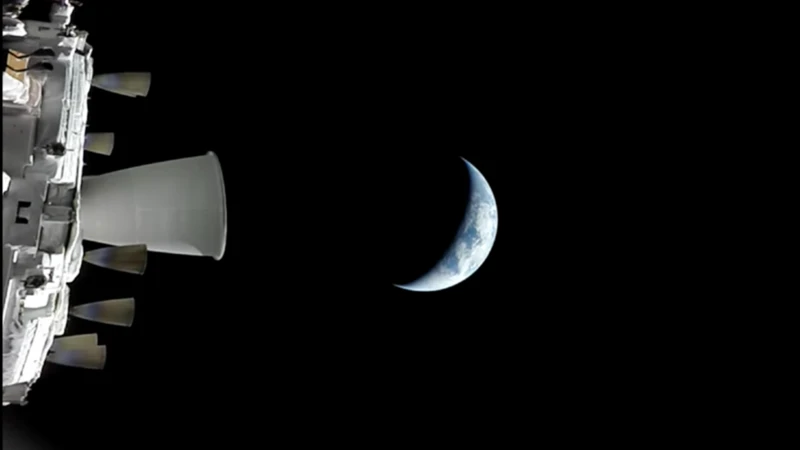
We’ve all seen the documentaries about the Apollo missions. You probably remember the famous “Earthrise” photo from Apollo 8—that vibrant, fragile blue marble rising from behind the dead, gray lunar surface. That single photograph was enough to awaken global environmental awareness and make us see ourselves as one unified whole.
But what Artemis 2 is going to offer us is vastly different, and in my opinion, much more profound.
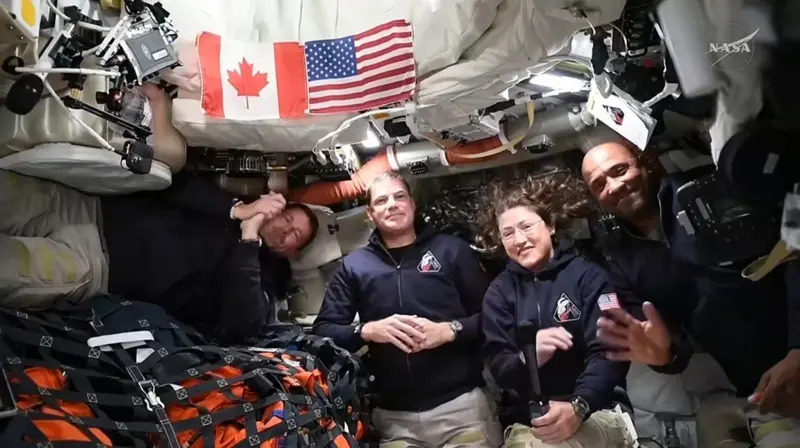
Why? Because the Artemis 2 crew (Reid Wiseman, Victor Glover, Christina Koch, and Jeremy Hansen) won’t just loop around the Moon and come back. When they are nearly 380,000 kilometers away from Earth, they are going to have front-row seats to one of the rarest visual spectacles in the universe.


Here is a quick breakdown of what they will see out that window:
- Our Tiny, Fragile Home: Earth will be hanging there in the incomprehensible vastness of space, a vulnerable, glowing blue dot.
- The Massive, Silent Moon: Right next to them, the colossal body of the Moon will loom with its craters and eerie silence.
- A Cosmic Shadow Play: And the real kicker—as the Moon passes perfectly in front of the Sun, casting that massive shadow back toward Earth, the astronauts will see the Sun’s corona glowing like an ethereal halo against the absolute darkness of deep space.
The Terrifying Infinity Beyond That Tiny Window
While researching these details, I couldn’t help but ask myself: What does it actually feel like to be there in that exact moment?
The windows on the Orion spacecraft aren’t massive glass balconies. They are engineering marvels, pressure-resistant, but relatively small viewports. Imagine floating up to that small frame and looking out.
The scale of what you are looking at is so massive that the human brain might genuinely struggle to process it. On one hand, you have that pale blue dot containing life, the air we breathe, and everyone we have ever loved. On the other hand, you have the cold, unforgiving, and infinite darkness of the solar system. I have to admit, the idea of that endless darkness gives me the creeps. It feels like if I stare into it, the darkness stares right back. But at the same time, I simply cannot look away. There is something intensely magnetic and mesmerizing about it.
The “Overview Effect” on Steroids
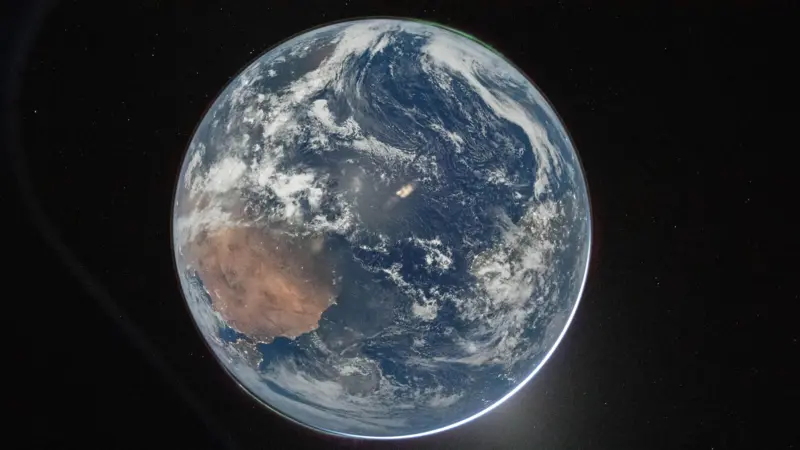
There is a well-known concept that astronauts talk about when they travel to space: The Overview Effect. It’s that profound cognitive shift they experience when they see Earth as a single, fragile sphere without borders.
I strongly believe what the Artemis 2 crew will experience goes way beyond that. They aren’t just going to see a world without borders; they are going to witness the massive mechanics of the universe operating in real-time through this eclipse.
- Think about our daily struggles down here.
- We get angry in traffic, stress over bills, and argue endlessly on social media.
- But when you look out that small window and see the Sun disappear behind the Moon against the backdrop of infinity… suddenly your coffee cup, your morning stress, and even global conflicts seem incredibly “small,” don’t they?
For me, this is the ultimate value of space exploration and technology. It’s not just about mining new elements or claiming new territory; it’s about reminding us of who we are and how incredibly humble our place in the cosmos truly is.
What if You Were in That Seat?

As I dug deeper into my research and visualized these scenes in my head, my admiration for human curiosity and our technological achievements multiplied. We, these tiny biological creatures clinging to a rock, have used our minds and our science to hurl ourselves into the deep void just to witness this magnificent cosmic dance. It is simply spectacular.
I hope I’ve managed to pass on a little bit of that mix of chills and awe I’ve been feeling since I started writing this piece. Because this isn’t just NASA‘s story or the astronauts’ story; it’s our collective human story.
So, let’s get to the real question, and please be honest with me:
Imagine you are one of those four lucky people. You are in the Orion capsule. You slowly float over to that small window and look outside. Right in front of you is the Earth, the Moon, and a total solar eclipse. And surrounding it all is an endless, pitch-black void…
What would be the very first emotion you feel? Would you be completely terrified by the infinite, silent darkness, or utterly amazed by the breathtaking beauty of our tiny home? Let’s meet in the comments below. Seriously, I am incredibly curious to know what would go through your mind in that exact moment. Let’s talk about it!
You Might Also Like;