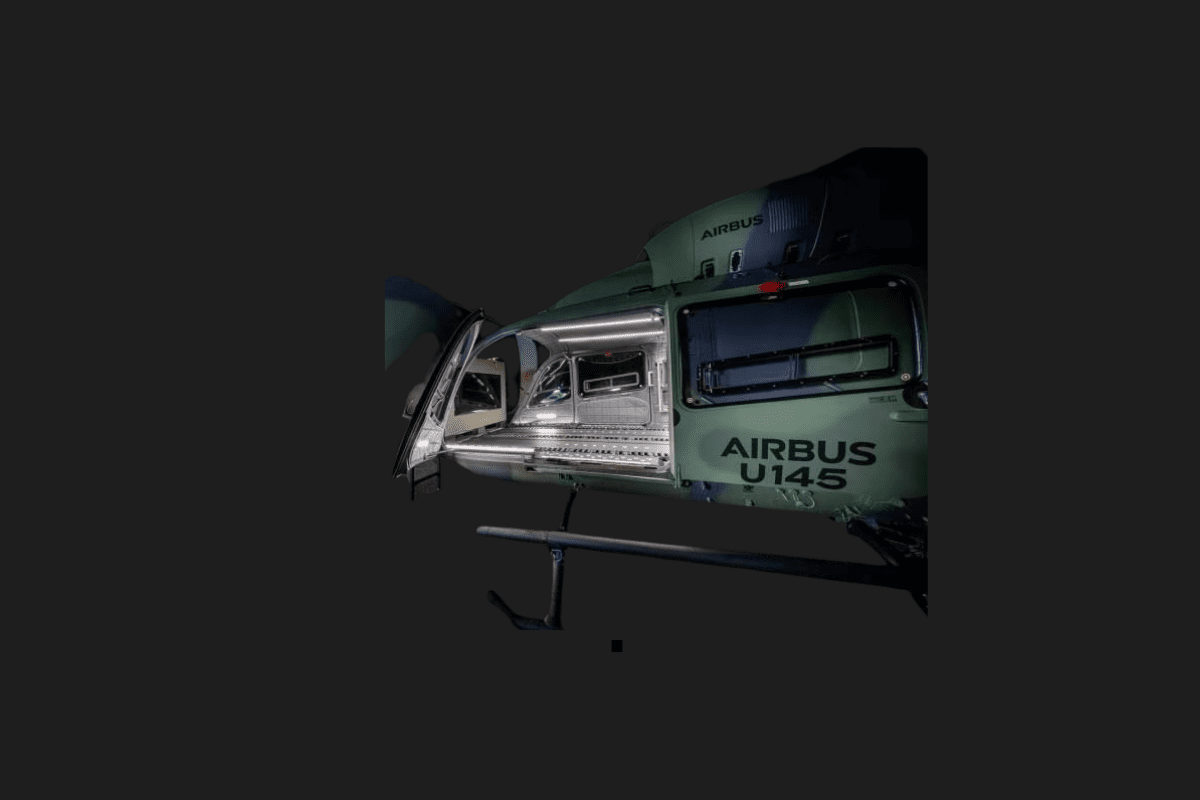
I spend a lot of my time looking at the latest tech and aviation trends, but when I was digging through the announcements from the ILA air show in Berlin this morning, I actually had to read one press release twice. Airbus has officially unveiled the U145—a fully autonomous, unmanned version of their incredibly popular H145 helicopter.
We are not talking about a small drone here. We are looking at a full-sized, heavy-duty aircraft that completely removes the human pilot from the equation. The idea of a nearly 4-ton helicopter flying itself through disaster zones or active military theaters is no longer science fiction; it is slated to enter service in the 2030s. Let’s dive into why this is such a massive leap for aviation and what it means for the future of the skies.
The Evolution of a Proven Workhorse

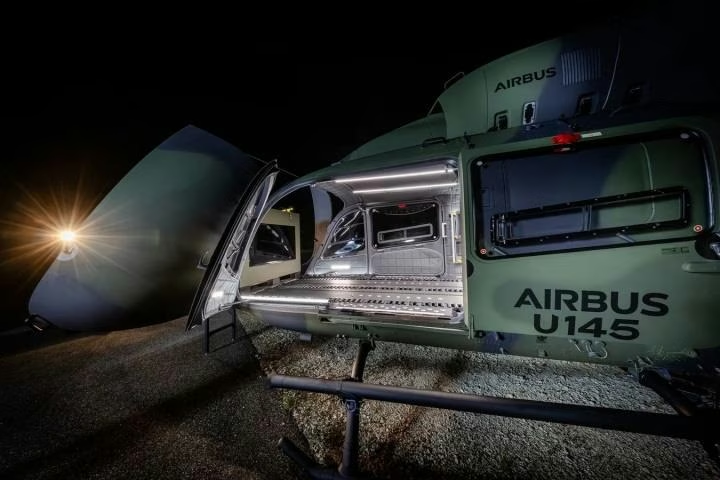
To truly understand the impact of the U145, we have to look at its predecessor. The Airbus H145 is a legendary machine. It has been used for years by medical teams, law enforcement, and military forces worldwide because it is reliable, tough, and capable of handling intense environments.
Instead of building an autonomous drone from scratch—which is incredibly expensive and risky—Airbus took the genius route. They are leveraging the proven endurance and payload capacity of the H145 platform and pairing it with next-generation autonomous flight technology. Matthieu Louvot, an executive at Airbus Helicopters, confirmed that they are planning the first flight for late 2026. For safety, this initial flight will still have a pilot onboard, but the ultimate goal is full operational service by the early 2030s.
A Radical Redesign: Deleting the Cockpit
When I first looked at the concept images of the U145, something felt distinctly missing. Because it doesn’t need a pilot, Airbus completely removed the physical cockpit.
Think about how much space and weight a cockpit requires: seats, dual controls, instrument panels, life support, and reinforced glass. By eliminating all of that, the engineering team was able to fundamentally redesign the front of the aircraft. Here is what makes the U145’s design so revolutionary:
- Integrated Nose Ramp: Instead of a cockpit, the front of the helicopter features a massive, foldable loading ramp. This allows for rapid, high-volume cargo loading straight into the belly of the machine.
- Maximum Takeoff Weight (MTOW): The U145 will boast a massive 3,800-kilogram MTOW, making it an absolute beast for heavy logistics.
- Advanced AI & Sensor Suite: It relies entirely on a custom sensor package and deep artificial intelligence to navigate, avoid obstacles, and execute complex missions without human intervention.
This is actually Airbus’s second major venture into turning manned helicopters into unmanned systems, following their VSR700 program (which was based on the smaller Cabri G2). But the U145 is on a completely different scale.
Beyond Cargo: The “Drone Mothership” Concept

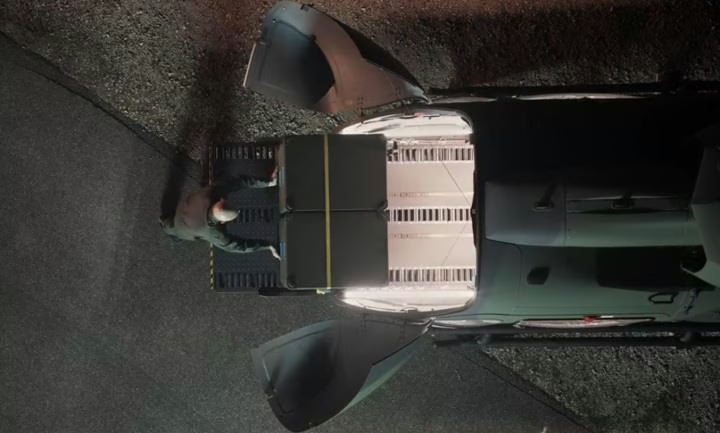
While high-volume cargo transport is the primary mission, I find the alternative use cases far more fascinating. Airbus is designing the U145 to be a multi-purpose platform. Because it doesn’t risk a human pilot, it can be sent into environments that are simply too dangerous for standard crews.
According to Airbus, the U145 will be adapted for:
- Disaster Management: Delivering critical supplies to areas cut off by earthquakes or floods.
- Firefighting: Dropping water or retardant in zero-visibility smoke conditions where a human pilot would crash.
- Armed Reconnaissance & Surveillance: Loitering over hostile areas for hours on end without pilot fatigue.
But here is the detail that really blew my mind: Airbus is partnering with the European defense giant MBDA to turn the U145 into a “drone mothership.” It will be capable of carrying, deploying, and coordinating swarms of smaller, air-launched unmanned systems mid-flight.
The Global Autonomous Race
It is also worth noting that Airbus isn’t just focusing on Europe. Their US branch (Airbus U.S. Space & Defense) is running a parallel project called the MQ-72C for the US Marine Corps. Partnering with tech firms like Shield AI and L3 Harris, they are developing an autonomous version of the Lakota UH-72B helicopter.
It is clear to me that the race to automate heavy-lift rotorcraft is aggressively accelerating globally. The military and logistical advantages of removing the human pilot—saving lives, increasing flight hours, and maximizing payload—are just too great to ignore.
As I look at the timeline for the U145, I realize the 2030s are going to look vastly different. We are entering an era where looking up at a massive helicopter might mean looking at a flying supercomputer rather than a human aviator.
What do you guys think about this shift? Would you feel comfortable living in a city where heavy, fully autonomous helicopters like the U145 are flying cargo and emergency missions right above your head, or does the lack of a human pilot still make you nervous? Let me know your thoughts!
You Might Also Like;
- Airbus Reveals the Fully Autonomous U145 Helicopter: A Pilotless Revolution
- Ridley Scott Returns to the Post-Apocalypse: The Dog Stars Trailer Breakdown
- AI Diaries: Weekly AI News and Updates (June 10, 2026)
-
-

-

-

-

-

-

-

-

-

-

-