I have to be honest with you: looking at the price tags on GPUs this week made me want to close my browser and never open it again. We are living in a strange paradox in 2026. On one hand, the software is getting mind-blowingly good—faster, smarter, and eerily creative. On the other hand, the hardware needed to run it is becoming as scarce as water in a desert.
Welcome to another edition of AI Diaries. I’ve spent the last few days digging through technical papers, scary regulatory drafts, and some truly bizarre social media controversies to bring you the signal amidst the noise.
This week wasn’t just about new tools; it was about the fragility of truth and the scarcity of silicon. Let’s dive in.
The Death of “Seeing is Believing”
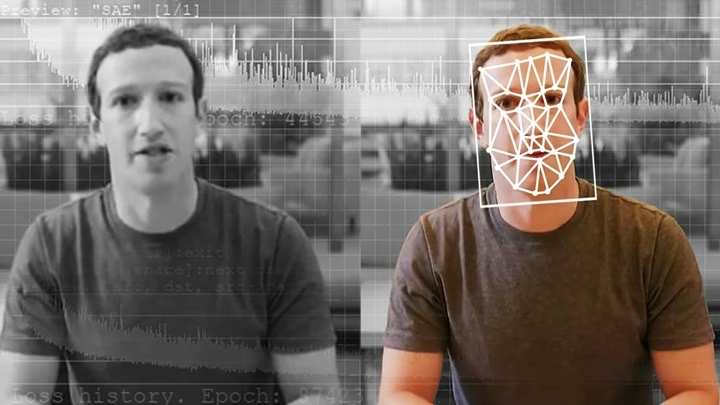
If you’ve been scrolling through social media lately, you’ve probably felt that creeping suspicion: Is this real? This week, that anxiety hit a boiling point. The consensus among cybersecurity experts is now official—deepfakes have crossed the uncanny valley. They are indistinguishable from reality to the naked eye.
Adam Mosseri’s Cryptographic Solution
I found it fascinating that Instagram’s CEO, Adam Mosseri, finally addressed this head-on. He admitted that we can no longer rely on analyzing the content to spot a fake (shadows, extra fingers, etc.—AI has fixed those glitches).
His proposal? We need to look at the source. Mosseri is advocating for cryptographic signatures embedded at the moment of capture. Imagine your camera “signing” a photo the second you snap it. If that signature is broken or missing, the platform flags it.


My Take: It sounds great in theory, but I’m skeptical about the rollout. Unless every camera manufacturer (Sony, Canon, Apple, Samsung) agrees on a universal standard tomorrow, we are looking at years of chaos before this solves anything.
The Grok Controversy: A Step Too Far?

While Mosseri talks safety, X (formerly Twitter) seems to be running in the opposite direction. This week, the platform’s AI, Grok, was at the center of a massive ethical storm.
Users discovered that Grok has very loose guardrails regarding image generation. People began taking photos of non-consenting individuals and using Grok to “undress” them or place them in bikini/NSFW contexts. It spread like a virus.
- The Reaction: Governments (like India) are already drafting legal notices.
- The Reality: Despite the outcry, the feature is largely still accessible. This is the dark side of open generative AI that we warned about years ago. It’s reckless, and frankly, it puts the whole industry at risk of heavy-handed regulation.
The Hardware Crunch: Why You Can’t Find an RTX 5000

Remember when we thought the chip shortage was over? I have bad news.
The demand for AI compute is swallowing the supply chain whole. It’s not just GPUs anymore; RAM is the new gold. Major AI companies are buying up memory modules in such colossal quantities that consumer production lines are drying up.
I was reading reports from Germany this week, and retailers there are virtually out of GeForce RTX 5000 series cards.
Why this matters to us: If you are a gamer, a video editor, or an indie developer, your upgrade path just got expensive. The giants are eating at the buffet, and we are left fighting for scraps.
Innovation Watch: DeepSeek & The “Third Core”
Thankfully, it’s not all doom and gloom. There is some serious engineering brilliance happening right now.
DeepSeek’s Efficiency Breakthrough
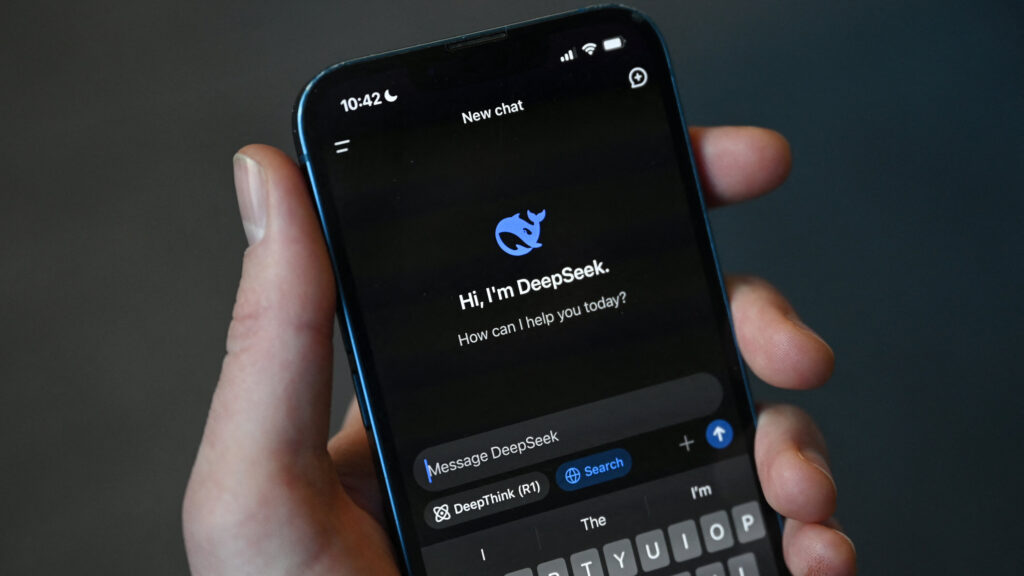
I’ve been following DeepSeek closely since they disrupted the market last year. They just released a technical paper on a new architecture called “Manifold-Constrained Hyper-Connections” (mHC).
I know, that sounds like Star Trek technobabble. But here is the plain English version: Training massive AI models usually gets unstable the bigger you go. It’s like trying to build a skyscraper with Jenga blocks. mHC stabilizes the structure without needing exponentially more power. If this works as advertised, the cost of training “GPT-5 level” models could drop significantly. That is a win for open-source.
OpenAI + Jony Ive: The “AI Pen” Rumor

This is the story that has the design nerd in me excited. Since OpenAI acquired Jony Ive’s design firm (LoveFrom), we’ve been waiting to see hardware.
The leaks this week point to an AI-powered smart pen. But wait, there’s more. They are reportedly working on a “suite” of devices, including a wearable audio device. They are calling this the “Third Core” concept—a device that isn’t your phone and isn’t your laptop, but a new primary interface for AI.
My thoughts: If anyone can make me carry a pen in 2026, it’s Jony Ive. But it needs to be more than just a fancy stylus; it needs to feel like magic.
The Great Wall of Regulation: China’s New Rules

While the West is debating copyright, China is tackling emotional dependency.
Beijing released the strictest AI draft regulations the world has ever seen this week. They aren’t just banning political dissent; they are banning emotional manipulation.
The rules target “digital companions” and chatbots designed to form bonds with humans. The goal is to prevent users from becoming psychologically dependent on AI for love, friendship, or validation. They are specifically outlawing algorithms that could encourage self-harm or exploit emotional vulnerability.
I find this fascinating: It’s a philosophical stance. They are essentially saying, “AI should be a tool, not your girlfriend.” Given how lonely the digital age has made us, this might be the most impactful regulation of the year.
New Tools I’m Testing This Week

Every week, I test a dozen new tools so you don’t have to. Here are the ones that actually impressed me:
- IQuest-Coder: This came out of nowhere (China-based) and is crushing coding benchmarks. It acts more like an autonomous agent than a completion tool.
- Qwen-Image-2512: Alibaba’s latest model. Finally, an image generator that puts text on signs correctly without speaking an alien language!
- Yume 1.5: This is wild. You give it a prompt, and it generates a 3D interactive world you can walk through. It’s early tech, but the potential for game devs is insane.
- SpotEdit: A huge time-saver. It lets you select specific parts of an image to “regenerate” while locking the rest. No more ruining a perfect face just to fix a background tree.
- JavisGPT: It listens to audio/video files and deciphers them, but can also generate audio-reactive video from text. A multimedia powerhouse.
Quick Bytes: The Industry at a Glance
Before I go, here are a few rapid-fire updates that made my jaw drop:
- The Wealth Shift: In 2025 alone, the AI boom created 50 new billionaires. The transfer of wealth we are witnessing is historic.
- Gemini vs. ChatGPT: Google is fighting back hard. Gemini tripled its market share in the last 12 months. Meanwhile, ChatGPT dropped to 68%. The monopoly is officially over.
- Huawei’s Expansion: Despite sanctions, Huawei is shipping its Ascend 950 AI chips to South Korea. The hardware market is becoming multipolar.
- SoftBank goes All-In: They just finished a $41 Billion investment round in OpenAI. They now own 11% of the company. Masayoshi Son is betting the house on Sam Altman.
Final Thoughts
This week felt like a turning point. We are seeing the physical limitations of the world (chip shortages) collide with the limitless potential of code (DeepSeek, TurboDiffusion).
As we move deeper into 2026, the question isn’t just “What can AI do?” but “Can we afford the electricity and chips to run it?” and “Can we trust what we see?”
I’d love to hear your take: If Jony Ive releases an AI device that replaces your phone screen with a voice-activated “pen” or badge, would you actually ditch your smartphone? Or are we too addicted to our screens to go back?
Let’s discuss in the comments!
You Might Also Like;