A Revolution in Real-Time Error Correction in the Quantum World!

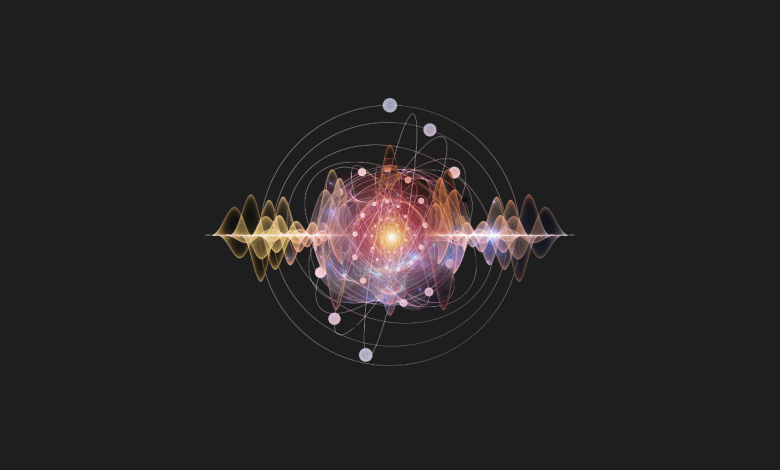

Quantum researchers have developed a new algorithm that manages noise in qubits in real-time. The method, called Frequency Binary Search, makes error management easier.
Quantum researchers have developed a new algorithm that can manage noise, or errors, occurring in qubits in real-time. This method can be applied to different types of qubits and even when a large number of qubits are used.
In quantum computers, qubits are much more sensitive than the bits in classical computers. Even small environmental changes can lead to errors. This situation seriously threatens the accuracy of the data processed in quantum computers. These unwanted disruptions are known as decoherence.
Now, a new method developed through the collaboration of researchers from the Niels Bohr Institute, MIT, NTNU, and Leiden University is paving the way for effectively managing this type of noise.
Currently, there are a few methods to solve this problem, such as improving the material, designing qubits to be less sensitive, or developing algorithms that cancel out the noise. For the past 10-15 years, research has mostly focused on this last method. However, the most difficult part of canceling out noise is having to do it almost instantly. Because by the time the data reaches your screen, the noise might have changed, and the correction is delayed.
Noises Can Be Detected Instantly

The research team says they have found a solution to this problem with a new method they call “Frequency Binary Search.” The algorithm works with an integrated FPGA on a Quantum Machines controller. This controller manipulates and reads the qubits and collects data from experiments. While previous methods required thousands of measurements, this new method can achieve the same precision with fewer than 10 measurements in most cases.


The controller estimates the qubit frequency without waiting for the data to be slowly transmitted to a computer. This allows frequency changes caused by environmental effects to be recorded in real-time during the experiment. When the noise is known and the control can be updated quickly, the noise becomes manageable.
Today, qubits in quantum processing units are calibrated with thousands or tens of thousands of measurements. As the number of qubits increases, it becomes more difficult to track frequency fluctuations. Since systems with millions of qubits may be possible in the future, efficient noise management will be critically important.
You Might Also Like;