A Quantum Paradox: Using “Noise” to Cool the Ultimate Computer


If you have been following the quantum computing race as closely as I have, you know there is one arch-enemy that keeps engineers up at night: Noise.
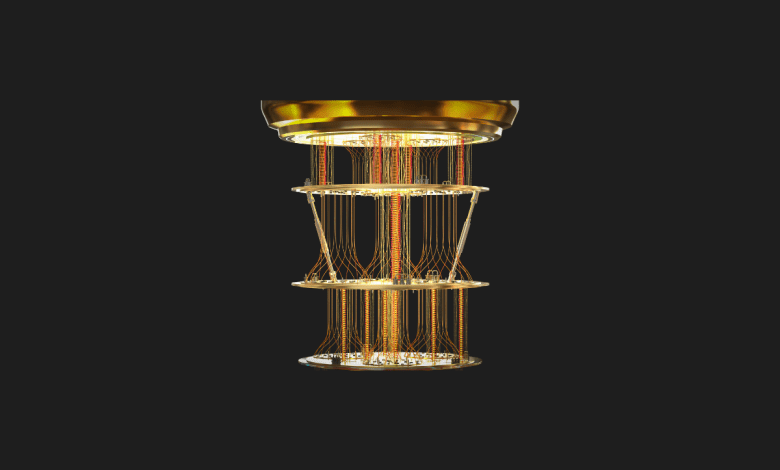
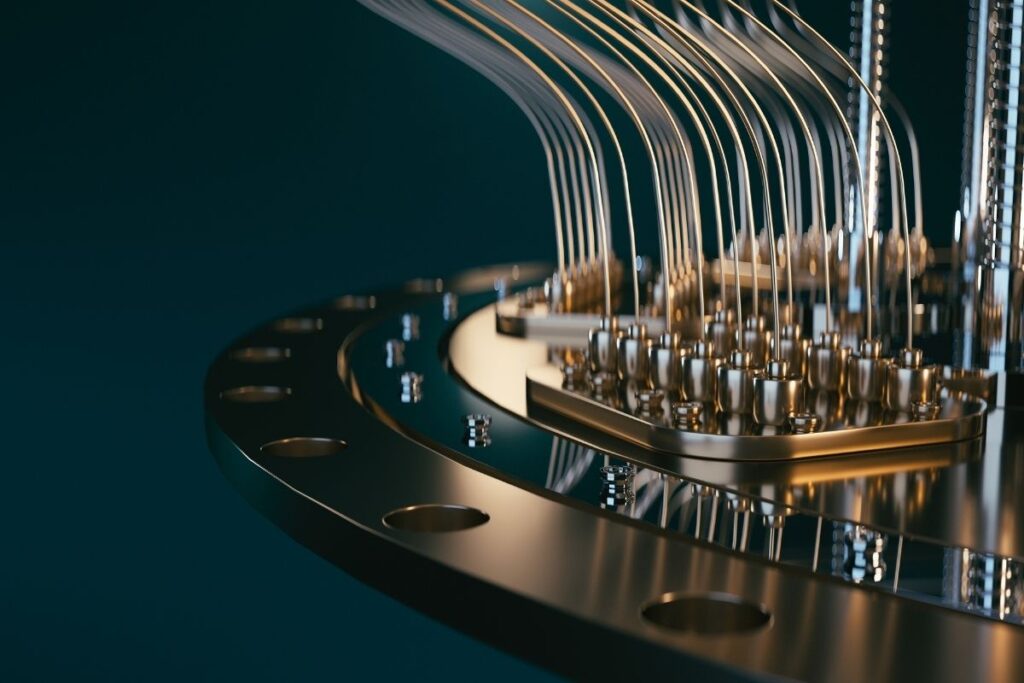
In the quantum world, “noise” isn’t just loud sound; it’s heat, it’s vibration, it’s a stray photon. For a qubit (quantum bit), noise is death. It causes decoherence, making the calculation collapse before it even finishes. That is why companies like IBM and Google build those massive, golden chandelier-looking dilution refrigerators to freeze chips down to near absolute zero.
But this week, a team of researchers at Chalmers University of Technology in Sweden did something that sounds scientifically illegal.
They didn’t just fight the noise. They used it as a fuel to cool the system down.
It sounds like a paradox, doesn’t it? How can adding chaos (noise) create order (cooling)? I dove into their paper published in Nature Communications, and what I found is a brilliant piece of engineering that might just save quantum computing from its own heat problem.
The “Judo” Move of Physics
I like to think of this new discovery as the “Judo” of quantum physics. In Judo, you use your opponent’s weight and momentum against them. That is exactly what the team at Chalmers is doing with thermal energy.


For decades, the standard procedure has been to isolate quantum processors in a vacuum and cool them globally. But as chips get bigger, local heating becomes a problem. You might have the whole fridge at -273°C, but specific parts of the circuit can heat up due to activity.
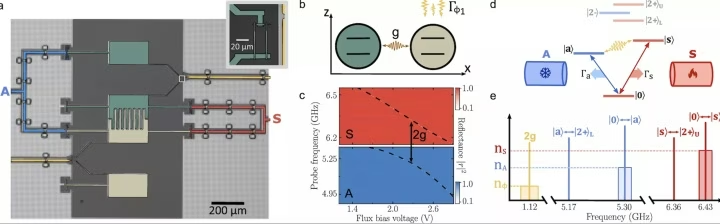
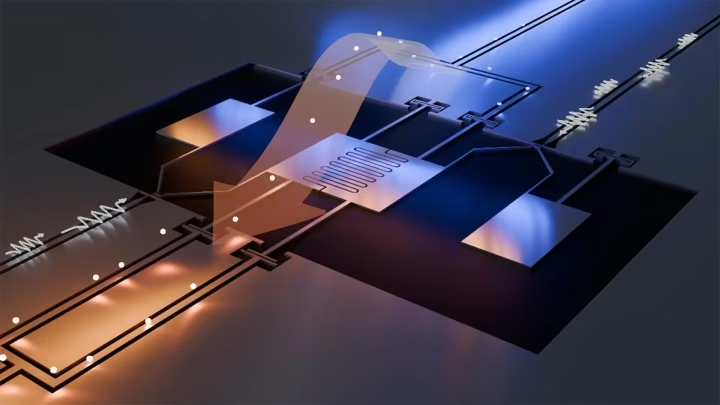
The researchers designed a device—a “minimal quantum refrigerator”—that uses random microwave noise to drive heat away from sensitive components.
Here is the breakthrough in plain English:
- They treat noise not as a nuisance, but as a resource.
- By injecting a specific type of controlled noise, they can manipulate the flow of heat.
- It turns the randomness of the universe into a precise cooling mechanism.
How the “Impossible Fridge” Works
The device isn’t a fridge in the way we think of a Samsung in our kitchen. It’s microscopic.
At the heart of the experiment is something called a Superconducting Artificial Molecule. Now, don’t let the name scare you. It’s not a biological molecule; it’s an electronic circuit built to behave like an atom.
The system works by connecting to two “channels” (think of them as reservoirs):
- The Hot Reservoir: The part we want to take energy away from.
- The Cold Reservoir: Where we dump the heat.
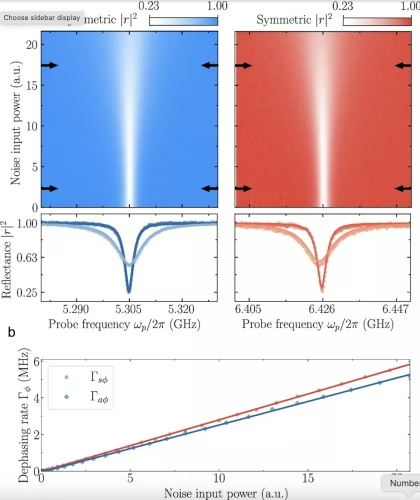
The Magic Switch: The researchers introduce a third channel. Through this channel, they inject microwave noise. This noise acts like a photon-powered water wheel. When the noise hits the system, it triggers the transfer of energy from the hot side to the cold side.
It relies on the principle of Brownian Motion—the random movement of particles. Theorists have predicted for years that you could use Brownian motion to create a cooling effect, but this is the first time I’ve seen it fully realized in a superconducting circuit.
The Mind-Blowing Scale of “Attowatts”
To understand how precise this is, we have to talk about the scale of energy they are moving. We are talking about Attowatts.
I love the analogy the researchers used to explain this, because it puts our human brains in check:
If you were to use the amount of heat flow this quantum fridge generates to heat a single drop of water by just 1 degree Celsius, you would have to wait longer than the age of the universe.
That is how delicate quantum systems are. A shift in energy so small that it is almost non-existent to us is enough to ruin a quantum calculation. The fact that they can measure and control heat flow at this level is, frankly, staggering.
Why This Changes the Game for IBM, Google, and Others
Why am I so excited about a tiny fridge? Because the “Brute Force” era of quantum cooling is hitting a wall.
Currently, quantum computers act like giant thermoses. You cool the whole thing. But as we move from 100 qubits to 1,000 and eventually 1,000,000 qubits, the internal heat generated by the electronics themselves will become unmanageable.
You can’t just put a fan on a quantum chip.
- The Solution: We need “Active Local Cooling.”
- The Application: Imagine integrating these tiny “noise fridges” directly onto the quantum processor.
This technology allows for on-chip thermal management. It means we could cool down specific, overheating qubits without disturbing their neighbors. It transforms the cooling process from a “blanket” approach to a “surgical” one.
Beyond Cooling: A Quantum Engine?

Here is the part that really got my gears turning. The researchers noted that this device is reversible.
If you change the parameters, this “fridge” can become a Heat Engine. Instead of using work to move heat, it can use heat to generate power. Or, it can act as a Low-Noise Amplifier.
What this tells me: We are looking at the birth of Modular Quantum Components. Just as we have transistors, capacitors, and resistors for classical electronics, we are now inventing the fundamental building blocks for thermal management in quantum circuits. This “artificial molecule” could be the grandfather of a standard component found in every quantum computer in 2035.
My Perspective: The Era of “Controlled Chaos”

I often write about how technology tries to dominate nature. We build dams to stop rivers; we build firewalls to stop viruses. But quantum mechanics forces us to be humbler. You cannot beat the uncertainty principle; you have to dance with it.
This development from Sweden is a perfect example of tech maturity. We are moving past the fear of “noise” and learning to conduct it like an orchestra.
Simone Gasparinetti, the senior author of the study, put it best when he said this is the most complete experimental realization of Brownian cooling to date. It proves that thermodynamic balance can be established at the nanoscale, even when the rules of classical physics seem to break down.
Final Thoughts
We are still years away from seeing this inside a commercial machine. But make no mistake: solving the heat problem is just as important as solving the coding problem. You can have the smartest brain in the world, but if it overheats, it’s useless.
This “noise fridge” might just be the cooling fan the quantum revolution was waiting for.
I’d love to hear your take: Do you think “controlling noise” is the breakthrough we needed to stabilize quantum computers, or are we just adding more complexity to an already impossible machine?
Let’s discuss in the comments below.
You Might Also Like;