Blue Sunsets and Giant Peaks: Why Mars Is Way Weirder Than You Think


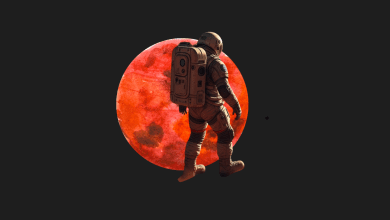
I’ve always been obsessed with the idea of standing on another world, but the more I look into Mars, the more I realize it’s not just a “Red Planet”—it’s a land of total contradictions. When I was digging through the latest atmospheric data for this piece, one specific detail actually stopped me in my tracks: the color of the sunset.
We spend our lives chasing golden hours here on Earth, but on Mars? Everything flips. Let’s dive into why our neighbor is much more than just a dusty rock.
The Sunset Flip: Why Blue is the New Red

This is the part that honestly broke my brain a little. On Earth, we have a blue sky and red sunsets. On Mars, the atmosphere is so thin and filled with fine dust that it scatters light differently.
- The Science: While Earth’s atmosphere scatters blue light (making the sky blue), the Martian dust scatters red light throughout the day.
- The Result: When the sun goes down on the horizon, the blue light penetrates the dust more efficiently.
- The Vibe: If you were standing in the Gale Crater, you’d see a pale, cool blue glow around the sun. It’s hauntingly beautiful and feels like something straight out of a high-budget sci-fi flick.
Living Large (Literally) on the Red Planet

If I ever get the chance to visit, the first thing I’m doing is heading to Olympus Mons. I used to think Mt. Everest was the peak of planetary ambition, but Olympus Mons makes it look like a backyard hill.
1. The Volcano That Touches Space
Olympus Mons is a shield volcano about the size of Arizona. It stands nearly 22 km (13.6 miles) high. To put that in perspective, it’s nearly three times the height of Everest. Because it’s so wide, the slope is actually quite gentle—if you were standing on it, you wouldn’t even know you were on a mountain because the curve of the planet would hide the base.
2. The Ultimate Weight Loss Program
I’m not a fan of the gym, so Martian gravity sounds like a dream to me. Mars has about 38% of Earth’s gravity.

- If you weigh 100 kg here, you’d step on a scale there and see 38 kg.
- You could jump higher, carry heavier gear, and feel like an elite athlete just by stepping off the lander.
Is a One-Way Ticket Worth It?

I often find myself wondering if I’d actually go. Sure, the blue sunsets are mesmerizing and the low gravity sounds fun, but we’re talking about a world where the average temperature is -62°C (-80°F). It’s a harsh, unforgiving desert that requires us to bring our own air.
However, when I look at the high-res images coming back from the Perseverance Rover, I see a landscape that feels strangely familiar. It’s a silent witness to the history of our solar system. The “secret blue side” of Mars reminds us that nature doesn’t always follow the rules we’re used to.
I’ve always believed that the Metaverse will be our first real bridge to Mars. Before we physically land there, we’ll be walking these blue-tinted craters in 1:1 digital twins, feeling the scale of Olympus Mons from the safety of our homes.
Why This Matters for Our Future

We aren’t just looking at Mars because it’s “cool.” We’re looking at it because it’s the ultimate “Plan B.” Every stat we learn—from the atmospheric pressure to the chemical makeup of the soil—is a piece of a puzzle we’re solving in real-time. I find it incredible that in our lifetime, “Martian” might go from being a sci-fi trope to a legitimate job description.
I have to ask: If SpaceX or NASA offered you a one-way ticket to Mars tomorrow, knowing you’d be the first to see that blue horizon in person but could never come back to Earth, would you take it?
You Might Also Like;