Why the Red Planet is on Pause: The Real Reason We’re Racing Back to the Moon


Let’s be honest—for the last decade, we’ve been sold a dream tinted in rust. Every headline, every Elon Musk keynote, and every sci-fi blockbuster told us the same thing: Mars is the goal. We were going to be a multi-planetary species, building glass domes on the Valles Marineris.
But if you look at the launch schedules today, something has shifted. The vibe has changed. While we were all staring at the horizon for a glimpse of the Red Planet, the world’s superpowers and trillion-dollar corporations quietly did a U-turn.
Suddenly, it’s all about the Moon again. NASA’s Artemis program, China’s Chang’e missions, SpaceX’s Starship lunar contracts—everyone is scrambling for a piece of our lunar neighbor. They say it’s a “stepping stone” to Mars, but I’ve been looking at the numbers and the strategic moves behind the scenes, and I’m telling you: the Moon isn’t a pit stop. It’s the finish line.
1. The Trillion-Dollar Gas Station: Helium-3 and Beyond

I remember the first time I read about Helium-3, I thought it sounded like something straight out of a Marvel movie. It turns out, it’s very real and incredibly valuable.
The Moon has been soaking up solar winds for billions of years, creating a massive reservoir of this isotope. Why does it matter? Because it’s the “holy grail” of clean energy. A few tons of Helium-3 could potentially power the entire Earth for a year through nuclear fusion—without the radioactive waste.
When I see companies like Blue Origin or ISRO (India) obsessing over the lunar south pole, I don’t just see exploration; I see the birth of the “Lunar Gold Rush.”


- Water Ice: It’s not just for drinking. By breaking down $H_2O$ into Hydrogen and Oxygen, the Moon becomes a refueling station.
- Cost Efficiency: Launching a rocket from Earth’s gravity is like trying to jump out of a deep pit with a backpack full of lead. Launching from the Moon? It’s a breeze.
2. The Ultimate High Ground: Geopolitical Dominance
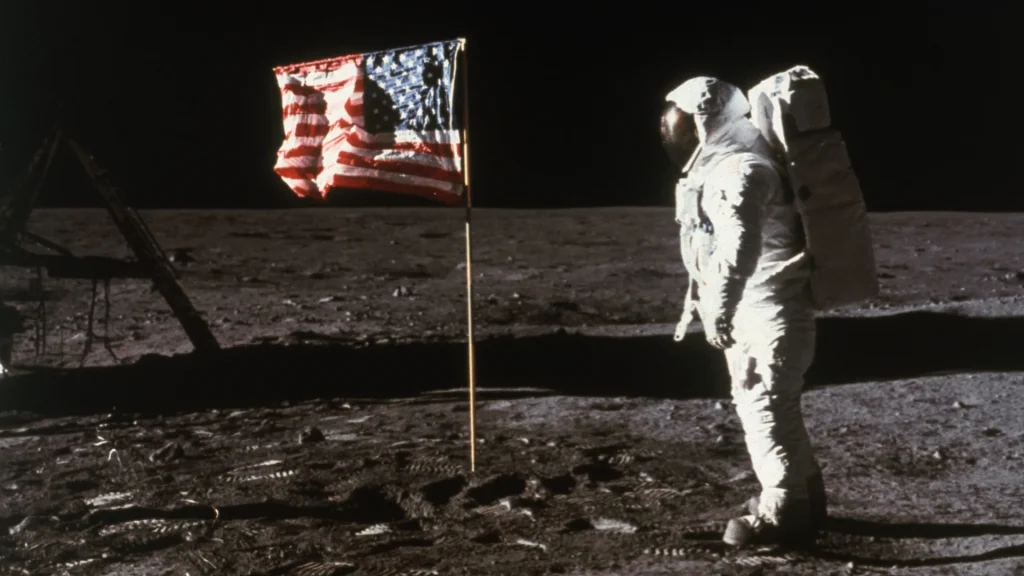
Here is the part that gives me pause. As much as I love the “science for humanity” narrative, there’s a much grittier reality: orbital control.
I’ve been tracking the “Cislunar” strategy reports, and the consensus is clear: whoever controls the space between the Earth and the Moon controls the satellite lanes. In a world where our entire economy depends on GPS, telecommunications, and surveillance, the Moon is the ultimate military high ground.
If a nation establishes a permanent presence on the lunar surface, they aren’t just “exploring.” They are setting up a gatekeeper position for everything that happens in Earth’s orbit. It’s a 21st-century version of controlling the Silk Road.
3. Why Mars Is Moving to the “Back Burner”

I’ll admit, I was a Mars optimist. But let’s look at the cold, hard facts I found while researching the logistics:
| Challenge | The Moon | Mars |
| Travel Time | 3 Days | 6 – 9 Months |
| Communication Delay | 1.3 Seconds (Live Chat) | Up to 24 Minutes (Email only) |
| Resupply | Easy & Frequent | Possible every 2 years |
| Radiation | Manageable with shielding | Lethal during transit |
Mars is incredibly hard. I think the big players realized that if they can’t make a profit or sustain a base three days away, they have zero chance of doing it seven months away. The “Mars Hype” served its purpose—it got us excited about space again—but the Moon is where the infrastructure is actually being built.
4. The “Hidden Discovery” Theory

I’m not one for tinfoil hats, but I have to wonder: why the sudden, frantic rush? We ignored the Moon for fifty years. Now, suddenly, China and the US are in a dead heat to claim the same craters at the South Pole.
Is it just the ice? Or did our modern sensors pick up something during the recent orbital mapping missions that we haven’t been told yet? Whether it’s specific mineral anomalies or just the realization that the first one there sets the laws for the next century, the “Great Lunar Silence” is officially over.
My Take: We Are Becoming a Lunar Civilization First
I used to think we were failing because we weren’t on Mars yet. Now, I realize we were just being impatient. The Moon is the “Silicon Valley” of the 2030s. It’s where the tech will be tested, the fortunes will be made, and the new laws of space will be written.
I’m honestly more excited about a “Moon Village” than a lonely Mars colony. It feels more reachable, more real, and frankly, more like the future we were promised.
What do you think? Are we right to pivot back to the Moon to secure our energy and strategic future, or are we just being cowards for putting the Mars dream on hold? Let’s chat in the comments—I really want to hear your perspective on this.
You Might Also Like;