Right now, as I sit here sipping my coffee on a quiet morning, everything feels incredibly permanent, doesn’t it? We scroll through our feeds, worry about emails, and stress over the battery life of our phones. But while researching for my latest deep-dive into the future, I realized something that genuinely gave me chills: We are living in the blinking of an eye.
I’m not talking about the next decade or even the next century. I want to take you on a ride that starts right now, in 2026, and stretches all the way to Year 1 Trillion.
When I looked at the timeline of what’s coming, I didn’t just see a documentary; I saw the ultimate story of survival. We are going to abandon our biological bodies, eat stars for breakfast, and eventually upload our consciousness into the fabric of the universe itself.
Are you ready? Fasten your seatbelts. This is the long road ahead.
The “Danger Zone”: 2026 – 2100

Let’s be honest with each other. This is the part that scares me the most. Why? Because this is the only part of the timeline where we could actually fail.
The next 75 years are not about conquering the galaxy; they are about passing the “Great Filter.” We are currently like a toddler playing with a loaded gun. We have nuclear weapons, biological engineering, and rapidly evolving AI, but we still have the emotional maturity of cavemen.

- The Climate Pivot: I firmly believe that by the 2040s, the climate crisis won’t just be weather news; it will be the primary driver of our economy. We will see massive geo-engineering projects. I’m talking about mirrors in space or artificial clouds. It sounds like sci-fi, but it will be a necessity.
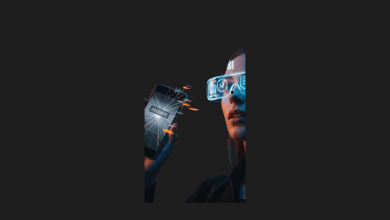
- The AI Merger: By 2050, the phone in your hand won’t exist. The interface will be direct. Whether it’s Neuralink or AR glasses, the barrier between “me” and “the internet” will dissolve.
My take: If we make it past 2100 without blowing ourselves up, we are essentially immortal as a species. But that “if” is doing a lot of heavy lifting right now.
Farewell to Flesh: The Post-Biological Era (Year 3000+)
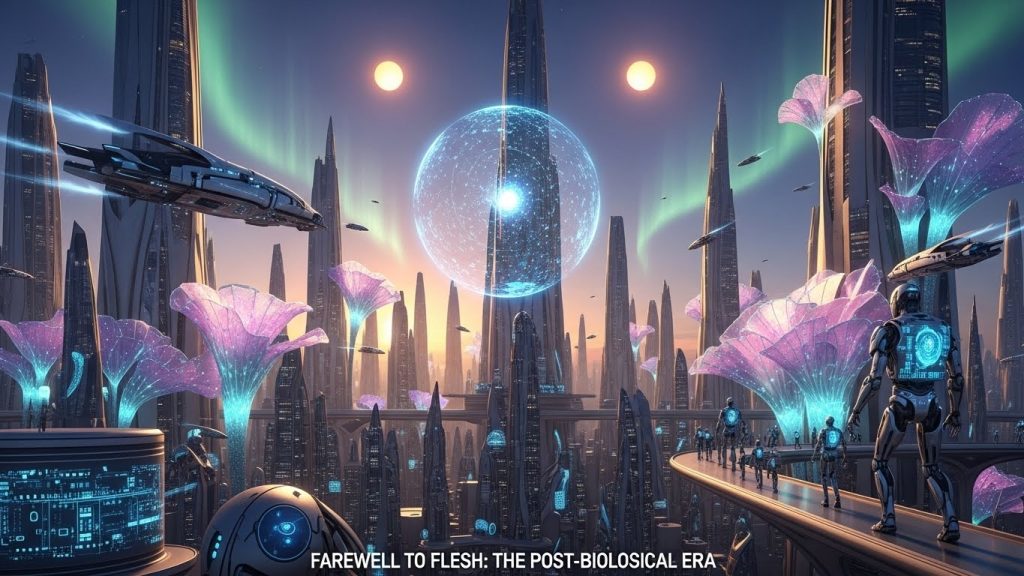
Here is where things get weird. And when I say weird, I mean “abandoning your physical body” weird.
Biology is messy. It’s fragile. We get sick, we age, and we die because our cells stop dividing correctly. If humanity wants to travel the stars, we can’t do it in these meat sacks we call bodies. Radiation in space would cook us alive.
I predict that within a few thousand years, Homo Sapiens will go extinct. Not because we died out, but because we upgraded.
- Synthetic Bodies: Imagine swapping your heart for a pump that never fails, or your eyes for sensors that can see the entire electromagnetic spectrum.
- The End of Aging: Death becomes an option, not a destiny.
I often wonder, if I replace every part of my body with a machine, am I still Ugu? Or am I just a ship of Theseus made of chrome and silicon? It’s a terrifying thought, isn’t it?
Harnessing the Stars: The Dyson Sphere Era
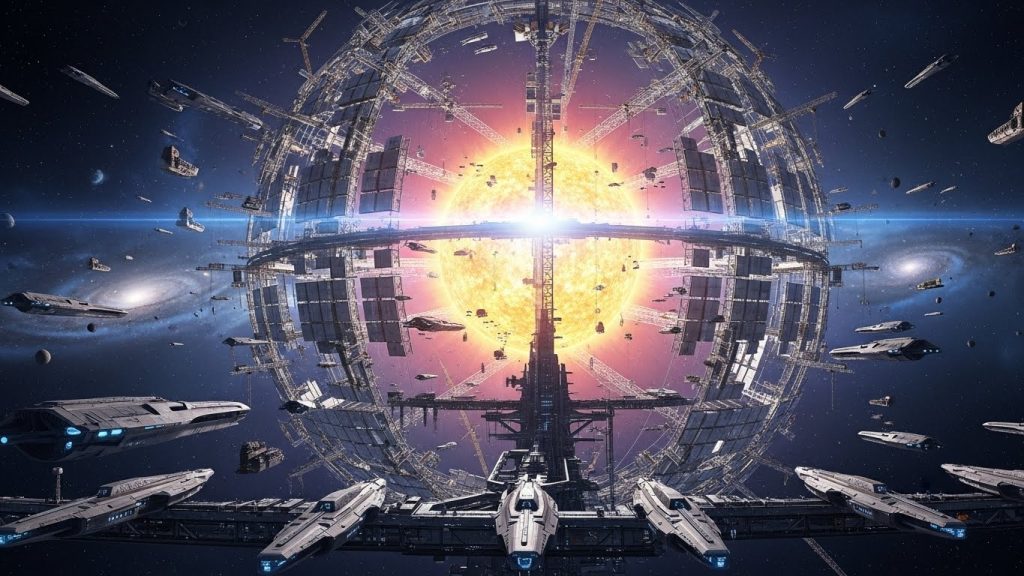
Let’s jump ahead to Type II Civilization status.
At this point, burning fossil fuels will look as primitive as rubbing sticks together to make fire. To run the massive simulations and supercomputers of the future, we will need all the energy of the Sun.
We will likely dismantle Mercury (sorry, Mercury, you were useless anyway) to build a Dyson Swarm—a massive array of solar collectors surrounding the Sun.
Why do this? Because by this era, “reality” will likely be digital. Billions of humans won’t live on planetary surfaces; they will live in massive, hyper-realistic simulations powered by the star. You could live a thousand different lives in the span of a real-world minute.
Think about it: If you could live in a paradise simulation where you can fly, create worlds, and never feel pain, would you ever choose to come back to the “real” world? I’m not sure I would.
The Long Dark: Year 1 Trillion and Beyond
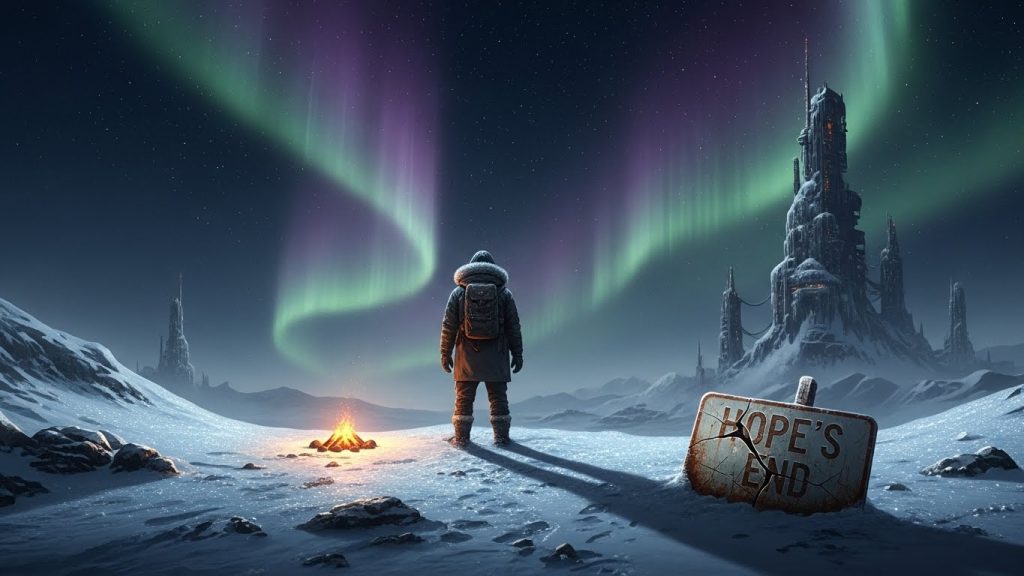
This is the part of the research that made me put my pen down and just stare out the window.
Eventually, the party has to end. The universe is expanding, and stars run out of fuel. One by one, the lights in the sky will go out. The night sky will become pitch black.
But humanity (or whatever we have become) will not give up.
- Black Hole Farming: When the stars die, our descendants will likely huddle around Black Holes. Using something called the Penrose Process, they can harvest rotational energy from the black hole itself.
- Slowing Down Time: To make their energy reserves last, these future beings might slow down their subjective time. One thought might take a year to process, but to them, it feels like an instant. They could stretch the final days of the universe into an eternity of subjective experience.
The Final Question: Is It Worth It?
Writing this timeline was an emotional rollercoaster for me. It starts with the anxiety of climate change and ends with the lonely, quiet heat death of the universe.
But there is something beautiful about it, too. It means our current struggles—the traffic, the arguments, the bills—are just tiny, insignificant blips in a massive, majestic story. We are the ancestors of gods. We are the ones who have to survive today so that they can exist tomorrow.
So, I’ll leave you with the question that has been haunting me since I started writing this:
If you had the choice to upload your mind to a computer and live forever in a simulation while the universe dies around you, would you do it? Or is death a necessary part of being human?
I’m really curious to read your theories in the comments. Let’s discuss.
You Might Also Like;