Wireless Power from the Clouds: Why This Moving Plane Test Changes Everything



I’ve always been obsessed with the idea of “Tesla’s Dream.” No, not the car company, but Nikola Tesla’s original vision of a world where we don’t need messy, expensive copper wires to move electricity from point A to point B. For a long time, that felt like pure science fiction—the kind of stuff I’d see in a movie and think, “Maybe in a hundred years.”
Well, it turns out “a hundred years” might be happening right now.
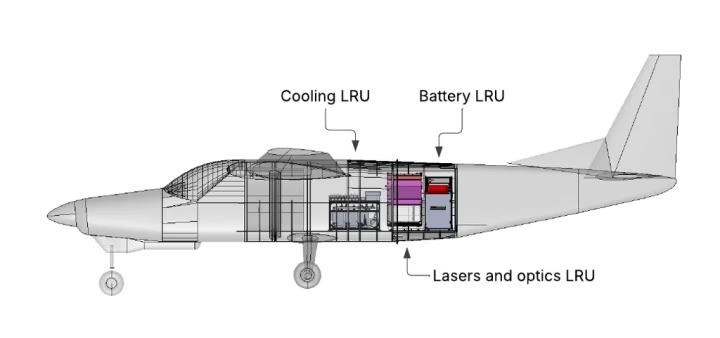
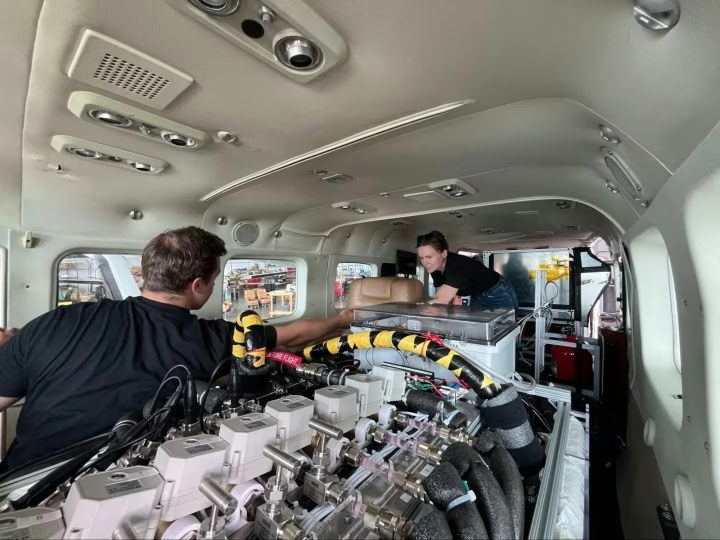
I was catching up on the latest from Overview Energy, and they just pulled off something that I honestly find more impressive than most rocket launches I’ve seen lately. They successfully beamed power from a moving airplane down to the ground. This isn’t just a cool lab trick anymore; it’s the first real “proof of life” for a global energy grid that lives in the sky.
The “Moving Target” Challenge
Let’s get into why this is a big deal. We’ve seen wireless power before—you probably use it to charge your phone. We’ve even seen it done between two fixed points on the ground. But doing it from a Cessna turboprop flying at 5,000 meters? That’s a whole different level of difficulty.
Think about the physics here:
- The Altitude: 5,000 meters up in the air.
- The Speed: The plane was cruising while battling 70-knot crosswinds.
- The Precision: Even with the plane bouncing around in the wind, the laser-based system stayed locked onto the ground station.
I remember reading about previous tests where everything had to be perfectly still. If the wind blew too hard, the connection snapped. The fact that Overview Energy managed to maintain a “power link” from a vibrating, moving aircraft tells me that the tracking technology is finally ready for the “real world.”

Why Not Just Use Cables? (The Space Vision)

You might be wondering, “Ugu, why go through all this trouble just to power something from a plane?” The truth is, the plane is just a placeholder. The real target is Space.
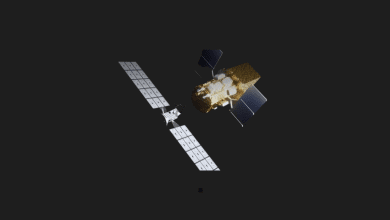
The vision Overview Energy is chasing involves putting massive solar satellites into Geostationary Orbit (GEO). Up there, the sun never sets, and there are no clouds to block the light. It’s a 24/7 source of pure, clean energy. But the biggest “bottleneck” has always been getting that energy back down to Earth safely and efficiently.
What I find most brilliant about their approach is the Near-Infrared strategy.
Infrared vs. Microwaves: The Invisible Battle
Most researchers have been trying to use microwaves to send power from space. But there’s a massive problem: our airwaves are already crowded. Between 5G, satellite internet, and defense systems, the 2-20 GHz range is like a traffic jam at rush hour. If you try to beam gigawatts of power through those frequencies, you’re going to mess up everyone’s Wi-Fi—or worse.
Overview Energy’s solution? They use near-infrared waves.
- It bypasses the frequency congestion.
- It behaves more like light than radio.
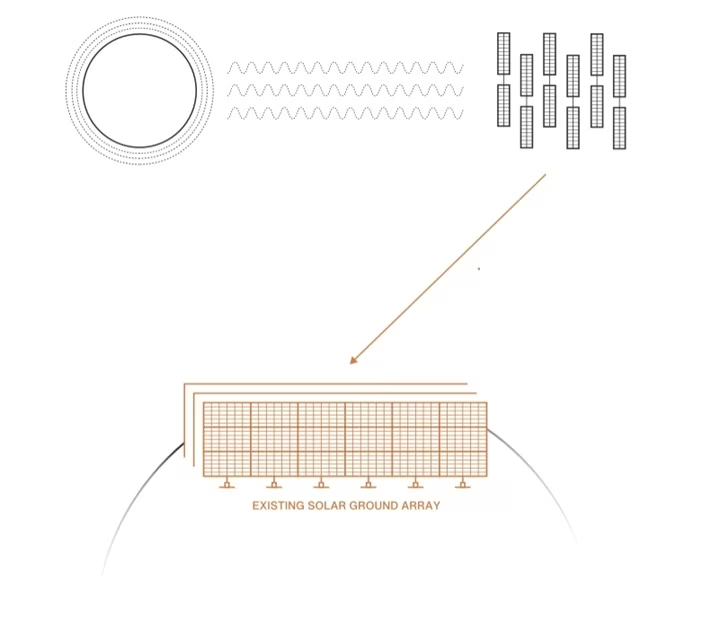
- The “Genius” Part: This energy can be picked up by the standard solar panels we already have on the ground.
Imagine a solar farm in the middle of the desert. During the day, it collects sunlight. At night, a satellite beams near-infrared energy down to those same panels, and they keep producing electricity. We wouldn’t even need to build a new grid. I think that’s a masterstroke of engineering—using the infrastructure we already have to solve a futuristic problem.
The New Space Race: Energy
It feels like we are in the middle of a “Wireless Gold Rush.” I’ve been tracking several players in this space:
- Caltech (2023): Proved they could move energy in space using microwaves.
- DARPA (2025): Set a record by beaming 800 watts over 8.6 kilometers.
- Overview Energy (2026): Just proved we can do it from a moving, high-altitude platform.
This isn’t just academic anymore. When DARPA and private energy companies start hitting these milestones, it means the commercial “tipping point” is close.
My Perspective: A World Without Power Lines?
I’ll be honest, the thought of high-powered lasers or infrared beams coming from the sky used to make me nervous. But the more I look at the “low-intensity, wide-area” delivery method Overview Energy is proposing, the more it makes sense. It’s not a “death ray”; it’s more like “targeted moonlight” that carries a lot of juice.
The roadmap here is ambitious:
- Next step: A demonstration satellite in Low Earth Orbit (LEO).
- By 2030: Megawatt-level transfer from GEO.
- Long term: Gigawatt-scale power that could replace coal and gas plants entirely.
If they can scale this, we are looking at a future where energy is truly global. A solar farm in a sunny desert could “upload” power to a satellite, which then “downloads” it to a city on the other side of the planet where it’s currently midnight.
I’m genuinely excited to see the first LEO satellite test. If they can track a plane in a 70-knot wind, tracking a satellite moving in a predictable orbit should, theoretically, be the easy part.
What do you think? If we could get all our clean energy from space, would you be okay with “energy beams” coming from the sky, or does the idea of wireless power on a global scale feel like we’re playing with fire?
You Might Also Like;