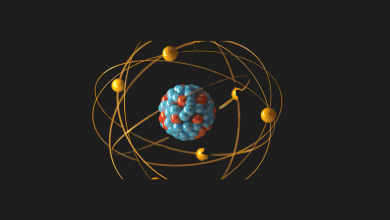

CERN has received $1 billion in funding for the Future Circular Collider (FCC), which will be a much more powerful and sensitive version of the Large Hadron Collider.
The greatest breakthroughs in the field of particle physics have often been made possible by massive and expensive research infrastructures. The Large Hadron Collider (LHC), which enabled CERN to discover the Higgs boson in 2012, is one of the most concrete examples of this. However, to uncover the still unexplained secrets of the universe, the scientific world now needs a more powerful and precise particle accelerator. Meeting this need will be possible with the construction of the Future Circular Collider (FCC), which has been in the planning stage for years.
In a statement made this week, CERN announced that for the first time in its history, a consortium of private donors has committed over 860 million euros in funding for the institution’s new flagship project, the Future Circular Collider. This support, equivalent to approximately $1 billion, is seen as a historic turning point not only for the realization of the FCC but also because it marks the first time in CERN’s 71-year history that private funds have been directly involved in a large-scale basic science project. This group of donors, including the Breakthrough Prize Foundation, the Eric and Wendy Schmidt Strategic Innovation Fund, and names like John Elkann and Xavier Niel, has signed off on one of the largest private investments in basic physics research.
Future Circular Collider Will Be 91 Kilometers Long

The planned Future Circular Collider is in a completely different league in terms of scale compared to the Large Hadron Collider (LHC). Unlike the 27-kilometer LHC, the FCC will have a circumference of approximately 91 kilometers and will be built at an average depth of 200 meters along the France-Switzerland border.
With this project, the aim is to examine the properties of the Higgs boson with a precision not possible until now and to discover new particles or interactions beyond the Standard Model. This means opening new doors on topics such as dark matter, matter-antimatter imbalance, and the fundamental forces of the universe.
Although $1 billion in funding has already been secured for the FCC, bringing the project to life will take a long time. The final decision is expected to be made in May 2026, and definitive approval regarding the construction process is expected around 2028. The FCC will likely become operational in the second half of the 2040s, at which point the LHC will have already completed its lifespan. Since China has suspended its rival project, the Circular Electron Positron Collider, the Future Circular Collider will be the global scientific community’s strongest option.


You Might Also Like;