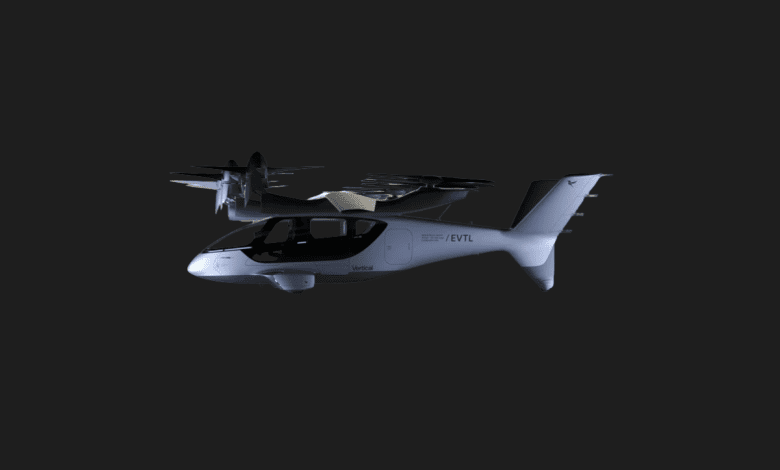

Following the success of its manned flight, Vertical Aerospace has introduced its new eVTOL model, Valo. Aiming for certification in 2028, Valo draws attention with its longer range, fast charging, and advanced design.
eVTOL developer Vertical Aerospace announced its certification goal for the year 2028 by unveiling its new model, Valo. Valo is positioned as the commercial version of the VX4 prototype, which performed a manned flight in the UK this summer.
According to Vertical Aerospace, Valo distinguishes itself from its predecessor specifically with its renewed aerodynamic design. The company states that this new approach was shaped in line with data obtained from the current test program and direct feedback received from airline operators.
Technical Specifications and Performance
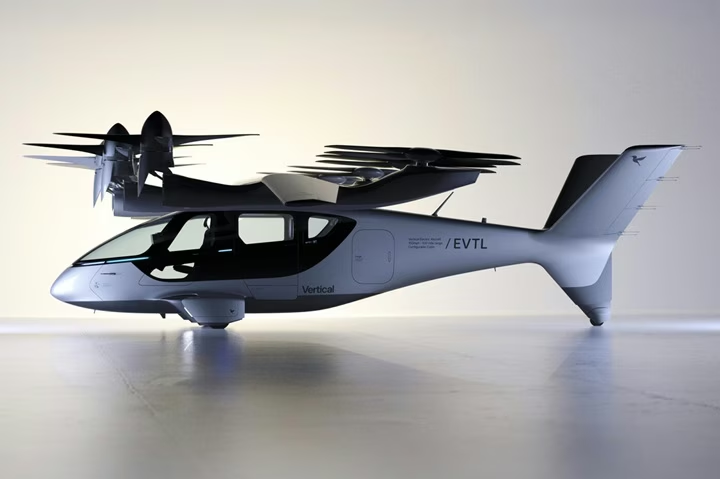
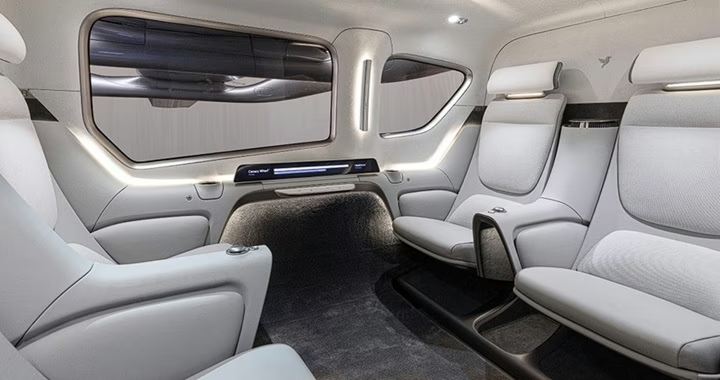
The new vehicle can reach a range of up to 160 kilometers and a speed of 240 km/h. In the company’s initial commercial route planning, key connections between airports and city centers stand out. Aimed at commercial use, this model features remarkable characteristics such as a four-passenger capacity, a more aerodynamic cabin, an underfloor battery layout, renewed wing and propeller architecture, and an improved material structure.
On the powertrain side, Valo features eight liquid-cooled underfloor battery packs, which can be recharged in approximately 12 minutes for “short missions.” The vehicle also includes eight electric propulsion units (EPU), each having electrically isolated multiple circuits. The total payload capacity has been announced as 550 kilograms.
Strong Pre-Order Numbers
Customer interest in Valo is already strong. Vertical Aerospace reports receiving 1,500 pre-orders, including major players such as American Airlines, Avolon, Bristow, GOL, and Japan Airlines.


In parallel with Valo, the company is also developing a hybrid-electric variant of the VX4 that offers a 1,600-kilometer range, 1,100 kg payload, and both manned and unmanned mission capabilities. According to previous statements, flight tests for the second-generation hybrid powertrain will begin in the second quarter of 2026.
You Might Also Like;