The Last Image: From Ancient Myths to Digital Immortality


Is death the end, or just a change of hardware?
In the late 19th century, a chilling belief swept through Europe. Detectives and scientists alike were obsessed with a concept called “Optography.” The theory was simple but terrifying: they believed that the human eye worked exactly like a camera. If a person was murdered, the last thing they saw—the face of their killer—would remain frozen on their retina, like a developed photograph.
Scientists actually decapitated rabbits and examined the eyes of murder victims, desperately trying to develop these “retinal photos.”
Of course, we now know this was biologically impossible. The eye resets. The image fades. But the obsession behind it never died. Humans have always been desperate to capture the “final moment” and preserve human consciousness.
Fast forward to today, and we are no longer looking at dead eyes. We are looking at live brains.
The New Optography: Neuralink and the “Brain Backup”
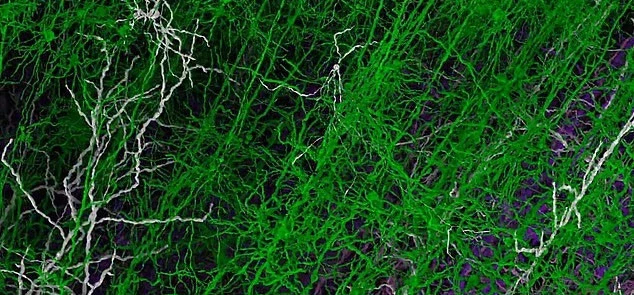
What was once a Victorian ghost story is becoming Silicon Valley’s biggest project. Companies like Neuralink are developing Brain-Computer Interfaces (BCIs) that don’t just “read” the brain, but interact with it.
The science is shifting from observation to extraction.
Neuroscientists and futurists postulate a concept called Whole Brain Emulation (WBE). The logic is terrifyingly simple:
- Your brain is essentially a biological computer processing electrical signals.
- If we can map every neuron and synapse (the connectome).
- We can, theoretically, “upload” that data to a machine.
We aren’t trying to capture a single static image on a retina anymore. We are trying to copy the entire operating system of a human being.
The Afterlife Has an IP Address: Enter the Metaverse

If you upload a human mind, where does it live? It can’t float in a void. It needs a world. It needs a body.
This is the ultimate destiny of the Metaverse.
Forget gaming or buying virtual land for a moment. Imagine a future where the Metaverse is the heaven we built for ourselves.
- The Body: Your physical body dies, but your consciousness wakes up in a custom-designed 3D Avatar.
- The World: You aren’t limited by physics. You can fly, teleport, or revisit memories perfectly rendered in 3D.
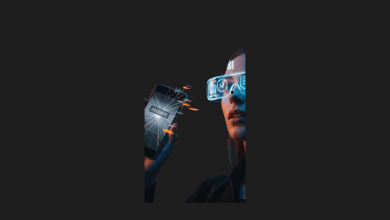
- The Connection: You can attend your great-grandchild’s graduation, not as a ghost, but as a digital presence in the room via Mixed Reality glasses.
The “Ship of Theseus” Paradox

Here is the question that will keep you up at night, and the one science hasn’t answered yet:
If we scan your brain, map your memories, and upload “You” to the Metaverse Planet… is it really you? Or is it just a perfect copy of you, while the real you ceases to exist?
In the 19th century, they looked for ghosts in the eyes of the dead. In the 21st century, we are building ghosts out of code.
We are the first generation in history with a chance to choose our own afterlife. The question is: Are you brave enough to upload yourself?
You Might Also Like;