6 Technologies We Need to Have If We Want to Settle on Mars One Day


Founding a colony on Mars and living there long-term is among humanity’s greatest goals. So, what technologies are needed to do this?
Mars has been a planet that has captured people’s imaginations for decades. We have seen many different vehicles sent to the Red Planet for research so far. Of course, the main goal is to send humans to Mars and even, one day, to be able to establish a colony there. Thanks to the work of pioneers like NASA and SpaceX, we may soon see significant steps taken in this regard.
However, we still do not fully possess the necessary technologies to live on Mars. So, what kind of technologies do we need if we genuinely want to live on Mars one day? These technologies will enable our long-term survival on Mars. Let’s take a look at what they are.
In-Situ Resource Utilization (ISRU) Technology

The biggest logistical obstacle to settling Mars is the cargo problem. Transporting every kilogram of payload from Earth to Mars is both incredibly expensive and means a journey lasting months. A sustainable colony cannot wait for everything it needs from Earth. This is where In-Situ Resource Utilization, also known as ISRU, comes into play. ISRU, in its simplest definition, is surviving on Mars by using the resources we find there.
The most concrete example of this is the MOXIE experiment on NASA’s Perseverance rover. MOXIE succeeded in taking Mars’s atmosphere, which is 95% carbon dioxide, and converting it into breathable oxygen. Integrating this into human missions in the future will be genuinely useful if we want to live on Mars for a long time.
Life Support Systems

Even current systems like the International Space Station (ISS) are dependent on periodic resupply ships. However, we will not have this luxury on Mars. The life support systems developed for a Mars colony must be “closed-loop.” This means that nothing is wasted. The system must take the carbon dioxide exhaled by astronauts and convert it back into oxygen via plants or chemical reactors.
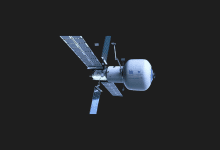

Most important is water recycling. A habitat on Mars must be able to produce potable water from all kinds of wastewater—including sweat, breath, and even urine—with over 99% efficiency. These systems must also see waste as a resource, for example, by converting organic waste into fertilizer for plant agriculture. In short, our home on Mars must somehow mimic Earth’s ecosystem.
Safe Areas, Precautions Against Radiation

One of the most insidious dangers awaiting us on Mars is radiation. Mars does not have a strong magnetic field like Earth, and its atmosphere is too thin to block cosmic rays and radiation from the Sun. An unprotected person on the surface can be exposed to a lethal dose of radiation in a short time. Therefore, living spaces created on Mars must not only maintain pressure and temperature but also serve as an effective radiation shield.
Sustainable Energy Production

A Mars colony requires enormous energy for everything needed to operate. Since Mars is farther from the Sun than Earth, the efficiency of solar panels is lower. Furthermore, massive dust storms, which can last for months and cover the entire planet, can render solar panels completely non-functional.
Although solar energy can be used in the initial stages, more permanent, long-term sustainable energy sources are needed. Using such sources will make living on Mars much more possible for humans. One of the options being considered is nuclear reactors. Small, portable nuclear reactors, like NASA’s Kilopower project, have the potential to provide uninterrupted, high-volume energy 24/7, unaffected by dust storms or the day-night cycle.
Food Production
If you’ve watched the movie The Martian, you’ve definitely seen the character played by Matt Damon growing vegetables. This film is shown as one of the most realistic space movies and gives us ideas about possible life on Mars. If we are truly seeking long-term life on Mars, we need to be able to produce food.
The solution here lies in soilless agriculture technologies. Systems like hydroponics, which means growing plants in water and nutrient solutions, can be used. They can be beneficial as they minimize water use and provide maximum yield in small spaces with vertical farming techniques. At the same time, developing radiation- and low-light-resistant, fast-growing plants through genetic engineering can also contribute.
Rapid and Reusable Mars Transportation

We need a massive transportation capacity to get all these technologies to Mars and establish a colony. It is economically impossible to build a Mars city with current single-use rockets. Fully reusable rocket systems, like the Starship being developed by SpaceX, are designed to change this equation. Since it is still undergoing tests, it is not at the desired level right now. However, if it becomes truly successful one day, it could make a serious contribution to Mars missions.
Settling on Mars has the potential to be one of the greatest achievements in human history. The technologies we’ve listed above are among the fundamental building blocks necessary to turn a dream into reality. When we succeed in all of them, we may see people living on Mars, just like in science fiction films.
You Might Also Like;