
Russia aims to cut the Earth-Mars journey to 1 month with a plasma-based propulsion system. The new technology, which offers much higher efficiency than chemical rockets, could radically change the duration and cost of interplanetary travel.
Trips to Mars are seen as a major challenge due to the long journey times, approaching nine months, and the risks of radiation exposure that astronauts face during this period. However, Russian scientists have announced that they have developed an ambitious technology that will completely change this timeframe.
Rosatom, the Russian State Atomic Energy Corporation, suggests that a new plasma-based propulsion system could reduce the transit time between Earth and Mars to just 30 to 60 days. This represents a dramatic leap, cutting the time required to reach the Red Planet from nine months to as little as one month.
Among the best-known variants of plasma or electric propulsion systems, which have been used for decades for orbit adjustments, are ion thrusters and Hall effect thrusters. These systems convert propellant into charged particles (ions) and accelerate them using electric or magnetic fields, providing them with extraordinary fuel efficiency compared to chemical rockets.
However, these systems are primarily used for orbit maintenance in long-duration missions due to their low thrust power. The potential of Rosatom’s project to convert this technology into the main propulsion engine for interplanetary travel could be truly groundbreaking.
How Does Rosatom’s Plasma Technology Work?

Scientists at Rosatom have developed a laboratory prototype of a plasma electric rocket based on a magnetic plasma accelerator. Unlike traditional rockets that burn chemical fuel to produce hot gas, this engine ionizes a working fluid (hydrogen in the Rosatom system) into plasma. It then uses powerful electromagnetic fields to accelerate and eject these charged particles at extremely high speeds, thrusting the spacecraft forward.
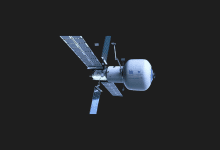

This design allows the particle exhaust velocity to reach approximately 100 km/s. This speed is many times higher than the typical exhaust speeds of chemical rockets, which range from 2 to 4.5 km/s. The Rosatom team, which aims to produce a flight-ready version of the engine by 2030, claims that the prototype has successfully operated for over 2,400 hours, which is theoretically sufficient for a Mars mission.
Thrust Power and Efficiency Difference

The fundamental difference between chemical and plasma engines is the balance between thrust power and efficiency. Chemical rockets provide the very high thrust power needed for launch instantly but consume fuel inefficiently. Plasma engines, while having low instantaneous thrust, offer much higher propulsion efficiency and exhaust velocities. The goal is to reach high speed gradually by applying continuous acceleration over a long period. The Russian design relies on launching the spacecraft into orbit using conventional rockets but transitioning to the plasma engine for the Mars transit.
Reaching Mars in as little as two months requires much higher average velocities than those of today’s spacecraft. If successful, this technology would mark a turning point in deep space propulsion, making interplanetary travel both shorter and safer by reducing astronauts’ exposure to cosmic radiation.
You Might Also Like;