

While not as buzzworthy as artificial intelligence, the quantum sector is experiencing its own period of excitement. Some of the world’s most powerful institutions, including Google, Microsoft, Amazon, IBM, and the U.S. government, are spending millions of dollars to develop and produce the first practical quantum computer.
According to a report by McKinsey, startups focused on quantum technology received nearly $2 billion in investment last year, as investors flock to a sector that could generate approximately $100 billion in revenue within a decade.
The pace of this momentum has slowed slightly this year: according to the same report, quantum computing companies generated less than $750 million in total revenue in 2024. Still, McKinsey analysts predict that the three main branches of quantum technology globally—quantum computing, quantum communication, and quantum sensing—will reach a revenue of $97 billion by 2035.
So far in 2025, popular stocks in the sector started the year on a positive note, with Quantum Computing (QUBT) up 11% and D-Wave Quantum (QBTS) up 74%. However, with the sell-off wave triggered in the markets by the “Liberation Day tariffs” announced on April 2, the sector has shown a volatile trend so far, considering stocks like Rigetti Computing (RGTI) and Quantum-Si (QSI) have lost between 29% and 31% year-to-date.
Although quantum is just beginning to take the stage, there is increasing talk of a major breakthrough. And tech giants want to lead the way: last year, Microsoft introduced its first quantum chip, Google executives argued the technology could be just five years away, Amazon unveiled its quantum processor with error-correction features, and IBM announced its plan to build a meaningful quantum computer by 2029.
Meanwhile, semiconductor giant Nvidia has drawn attention with complex statements about quantum. In January, the company’s CEO, Jensen Huang, shook quantum computer stocks by stating that 15 years was an “early estimate” for when quantum computers would be available. At the time, he said that 20 years was a timeframe that “most of us would believe.”


Two months later, Huang walked back those comments but also noted his surprise that the markets had reacted to them, and that they were even large enough for markets to react.
🤔 Understanding Quantum Technology
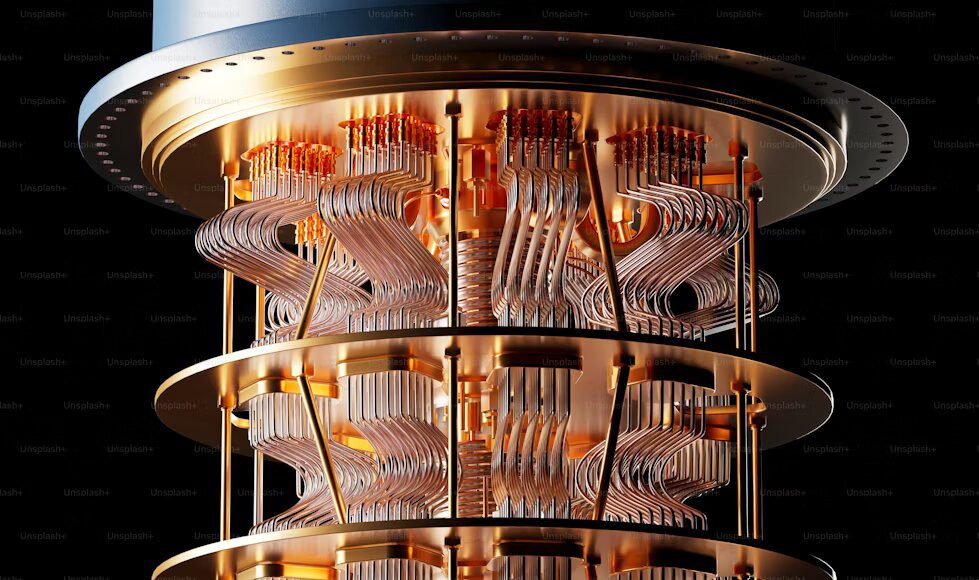
To imagine a quantum computer, one must fundamentally change what it means to compute.
Traditional computers work because they have billions of transistors on each chip. These transistors can be a one or a zero, meaning they can be on or off. A large number of transistors can represent almost any number, refer to parts of the system’s memory, and perform arithmetic operations. This is how all computers in the world work today.
In quantum computers, the system uses qubits (quantum bits) instead of transistors. This is far more complex than ones and zeros. Whether qubits are on or off is determined by quantum mechanics, and all qubits are “entangled,” meaning a change that occurs in one affects the probability of the others.
🔮 The Claim of Quantum Supremacy
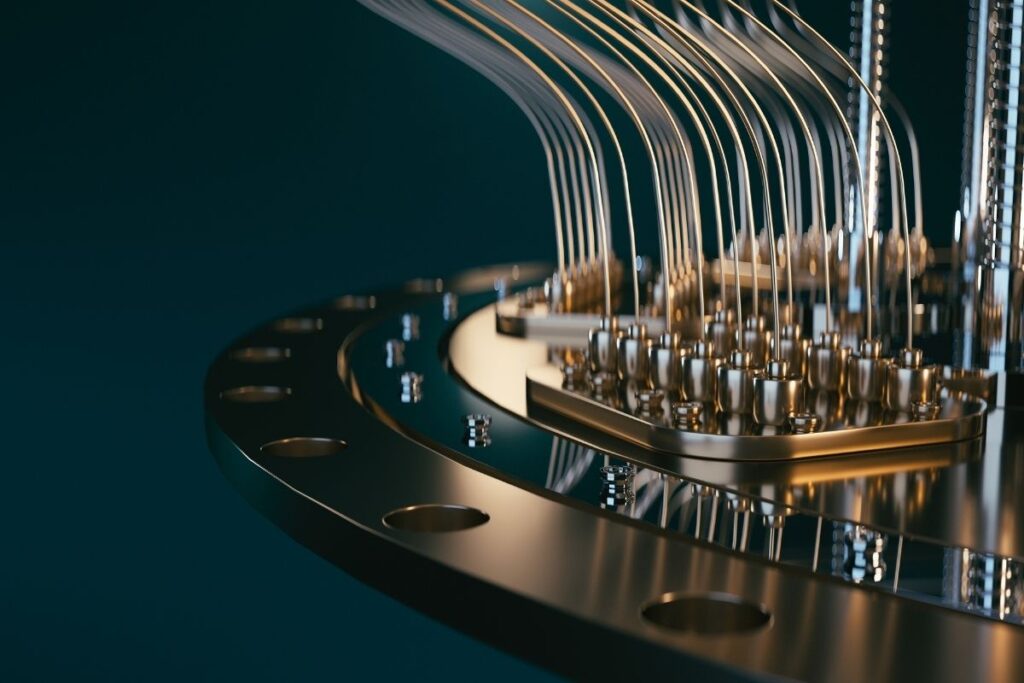
Currently, there isn’t much that quantum computers can do in a practical sense. The projects being developed in this field are purely for research, but they offer clear potential.
However, several groups claim to have proven “quantum supremacy,” stating that they have solved a problem on a quantum computer that would take much longer on a traditional computer. All of these actions were formerly of an abstract nature.
Google was the first company to declare quantum supremacy in 2019, calling its quantum computer’s achievement a “benchmark.” The task it performed is called random circuit sampling, which is primarily used just for testing quantum computers.
Google stated that researchers gave a computer random instructions to create a problem as complex as possible within the scope of quantum mechanics. The researchers then showed that the quantum computer solved the quantum problem faster.
On the other hand, in terms of future real-world applications, much of the potential of quantum computers lies in the fields of medicine, chemistry, and materials research.
Google points to drug discovery, or finding molecules that could become useful medicines. It also notes that quantum computers could perform the scientific work necessary to commercialize fusion energy.
When Microsoft announced its first quantum chip in February, it highlighted chemistry and materials science problems, such as why some materials corrode or how plastic could be composted.
There is also some optimism that quantum computers will be well-suited for generating training data for artificial intelligence applications, especially for situations or problems with a large number of potential solutions.
❗️ Concerns Regarding China

However, there is a fear that quantum computers could allow countries like China to rapidly decrypt U.S. military messages or consumer banking transactions.
The Pentagon stated in 2021, “If effective measures are not taken, the hostile use of quantum computers could have devastating consequences for national security systems.”
Microsoft has also acknowledged the national security factor and has even framed quantum security as a race against China.
Still, the U.S. government has so far led the efforts to transition encryption to so-called post-quantum methods that cannot be broken by quantum computers. Companies like Apple have already begun integrating post-quantum encryption into services like iMessage.
You Might Also Like;