
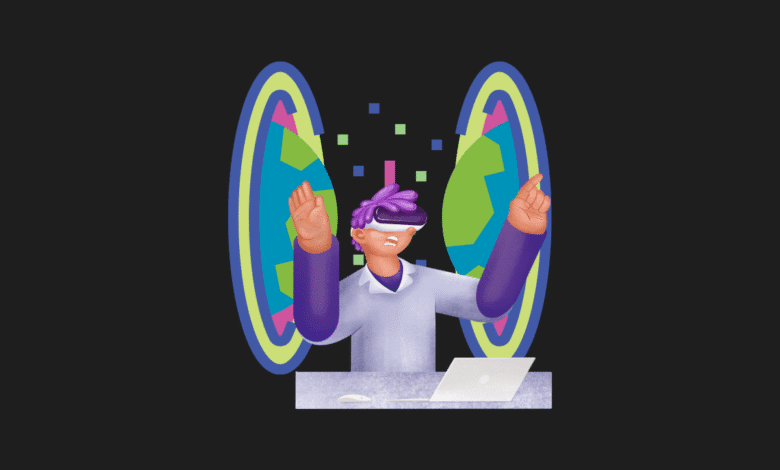

The Multiverse, also known as “multiple universes,” is the idea that beyond our observable universe, there may exist countless other universes—each with its own distinct properties. This concept arises in both cosmology and quantum mechanics, and it can be categorized into four main levels:
Four Levels of the Multiverse

- Level I – Infinite Spatial Regions
If space is large enough, regions so far apart could exhibit the same physical laws but different initial conditions, effectively forming “duplicate universes” at extreme distances. - Level II – Bubble Universes
Rooted in cosmic inflation, this model proposes that our universe and other “bubble universes” disconnected during inflation may have different physical constants, particle types, or even numbers of dimensions. - Level III – Quantum Many‑Worlds Interpretation
According to the Many‑Worlds view of quantum mechanics, every quantum measurement spawns branching universes for each possible outcome, meaning all potential results actually occur in parallel realities. - Level IV – Mathematical Universe Hypothesis
This abstract approach holds that every mathematically consistent structure exists as its own universe, governed by its own internal laws.
Theoretical Evidence and Debates

- Observational Limits
To date, there is no direct experimental proof of other universes. Analyses of the cosmic microwave background or unusual galaxy distributions can only offer indirect hints. - Philosophical vs. Scientific
Some physicists argue the multiverse belongs in philosophical thought experiments because it lacks testability, while others champion it as a valid extension of scientific inquiry that challenges our understanding of reality.
Multiverse in Popular Culture

- Marvel Cinematic Universe (MCU) explores parallel realities and branching timelines.
- Stranger Things introduces an alternate dimension called the “Upside Down.”
- Numerous science‑fiction novels imagine alternate histories and worlds ruled by different physical laws.
Differences Between the Metaverse and the Multiverse
| Feature | Multiverse | Metaverse |
|---|---|---|
| Nature | Theoretical, cosmological parallel universes | Technology-driven virtual worlds powered by VR/AR |
| Purpose | To explore the structure and possibilities of reality | To enable social interaction, commerce, and entertainment in digital space |
| Accessibility | Beyond current technological reach | Accessible today via VR headsets, high-speed internet, blockchain |
| User Role | Observer/theoretical researcher | Active participant through avatars |
| Degree of Reality | Grounded in physical theory | Computer-generated, fictional yet interactive |
- The Multiverse is a speculative scientific concept probing the boundaries of reality.
- The Metaverse consists of immersive, interactive digital ecosystems under active development today.
While the Multiverse theorizes “multiple realities” to deepen our grasp of existence, the Metaverse harnesses current technology to bring people together in shared virtual environments. Scientists continue searching for multiverse evidence, even as developers build and expand metaverse platforms. Both ideas stretch the limits of our imagination and point toward the future’s theoretical and practical frontiers.
You Might Also Like;
Follow Us








I love how you broke down the differences between the metaverse and multiverse. It seems like the multiverse is a natural evolution of the metaverse, offering even more complex and immersive experiences. Where do you think the two will overlap in the future?