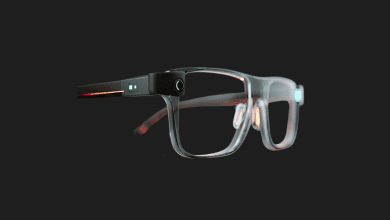
I have to admit, I am a total sucker for a good robotics demo. Every time a massive tech company drops a slick, highly-produced video of a humanoid robot folding laundry, making coffee, or doing backflips, I catch myself thinking, “Wow, the future is actually here.” We are constantly being sold the narrative that these machines are fully autonomous, powered by cutting-edge AI that thinks and acts completely independently.
But let’s pause and take a breath. I just finished reading a comprehensive new report from MIT (Massachusetts Institute of Technology), and it completely shattered that futuristic illusion.
It turns out, the “AI revolution” in physical robotics is hiding a massive, industry-wide secret. Behind those impressive robotic eyes, there is very often a real, sweating human being wearing a VR headset, pulling the strings like a high-tech puppeteer. Let’s dive into why the robotics industry is faking it until they make it, and what this means for you and me.
The “Wizard of Oz” Problem in Modern Robotics


The MIT report highlights a practice that is an open secret among robotics engineers but heavily concealed from the general public: teleoperation.
When we see a robot flawlessly navigating a messy kitchen on stage at a major tech expo like CES, we assume the robot’s “brain” is doing all the heavy lifting. In reality, the MIT study points out that many of these highly publicized demos are strictly controlled by off-site human operators.
- The Deception: Companies present these robots as independent, intelligent entities to impress investors and go viral on social media.
- The Reality: They are essentially highly advanced, incredibly expensive remote-controlled cars.
I find it fascinating—and a bit frustrating—how aggressively the industry markets “autonomy” when the technology to safely navigate the unpredictable chaos of a real human home just isn’t there yet.
The 1X Technologies Controversy: Honesty Over Hype


To truly understand this dynamic, we need to look at 1X Technologies. When they recently announced their $20,000 humanoid robot, Neo, they did something almost unheard of in this space: they told the truth.
1X openly stated that if Neo gets confused or encounters a task it doesn’t understand, a human operator will remotely log into the robot to assist it. At the time, tech commentators criticized them. Why would I pay $20,000 for a robot that doesn’t even know how to work by itself? But as the MIT report proves, 1X wasn’t falling behind the competition; they were just the only ones being transparent. Here is how their hybrid system actually works:
- An operator in a remote center puts on a Meta Quest 3 VR headset.
- They see exactly what the robot sees in real-time.
- They move their own arms and hands, and the robot mimics those movements perfectly in your living room to complete the chore.
While I appreciate the honesty from 1X, learning about the mechanics of this system immediately set off alarm bells in my head regarding our personal data.
The Ultimate Privacy Nightmare?

Let’s be brutally honest for a second. If I buy a humanoid robot to help around the house, I expect it to be a closed system. The idea of teleoperation introduces a massive, glaring privacy flaw.
If your robot gets stuck while picking up laundry in your bedroom, and a remote worker logs in to help… that stranger is now looking at the inside of your home through the robot’s cameras. * Who are these operators?
- How secure is the video feed?
- What stops a bad actor from hacking the teleoperation feed and literally walking around your house remotely?
These aren’t paranoid sci-fi questions anymore; this is the reality of the business model currently being built. Until companies can guarantee 100% on-device processing without human intervention, putting one of these in a private space feels like an enormous risk.
The Hidden Labor Force Training the AI


The MIT report also sheds light on another uncomfortable truth: how these robots are “learning” in the first place.
To train an AI to understand physical movement, you need massive amounts of motion data. And where does that data come from? Low to middle-income workers doing exhausting, repetitive physical labor.
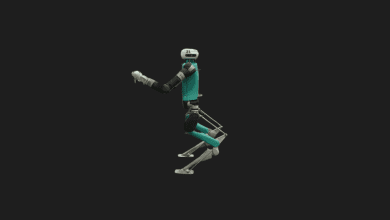
Take Tesla’s Optimus robot, for example. To teach Optimus how to pick up a box or walk across a factory floor, human workers wear specialized motion capture (mocap) suits and VR headsets. They work long shifts, repeatedly performing the exact same mundane tasks, so the AI can record their joint movements and learn to mimic them.
It is ironic, isn’t it? We are building robots to save humans from physical labor, but to get there, we are currently relying on an invisible army of human workers performing intense physical labor just to generate the training data.
Will Robots Ever Be Truly Autonomous?


So, is the dream of the autonomous robot dead? Not exactly. The gap between controlled demo environments and the unpredictable chaos of your living room is huge, but the industry is actively trying to close it.
The next massive leap is something called World Models. Just like Large Language Models (LLMs) like ChatGPT ingest the entire internet to understand text, World Models ingest massive amounts of internet video to understand physics, gravity, and human behavior.
1X and other startups are aggressively pushing for these software updates. The goal is that eventually, the robot will have watched enough videos of humans doing dishes that it won’t need a teleoperator to step in. But according to experts, standardizing this level of AI will take years. Until then, teleoperation is going to be the industry norm, not the exception.
Reading this MIT report completely changed how I look at the robotics industry. It reminded me that we always need to look past the slick marketing and ask the hard questions about how the technology actually works. The next time you see a viral video of a robot doing parkour, just remember: there is probably a very stressed-out guy with a joystick just out of frame.
But I want to turn this over to you. Knowing that a human operator might need to remotely access your robot’s cameras to help it function, would you still allow a humanoid robot into your home? Let me know your thoughts in the comments, I really want to see where people draw the line on privacy!
You Might Also Like;
- The True Cost of Being Stranded in Space: How Much Do NASA Astronauts Actually Earn?
- The Illusion of Autonomy: Why Your Futuristic Robot is Secretly Controlled by a Human
- Decathlon’s New Stilus E-Touring is a Game-Changer for Electric Adventures
-

-

-

-

-

-
-

-

-

-

-

-