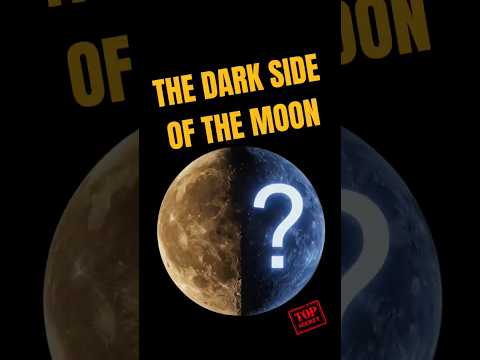
I’ve always been the type of person who stares at the night sky a little too long. There is something deeply unsettling—yet incredibly beautiful—about looking at the Moon and realizing it never turns around. It’s like having a conversation with someone who refuses to show you the back of their head.
We call it the “Dark Side,” mostly thanks to Pink Floyd, but scientifically, it’s the Far Side. And lately, I’ve fallen down a rabbit hole of research that suggests this hidden face of the moon is far more mysterious than just a collection of craters. From massive gravitational anomalies buried under the crust to the eerie silence that makes it unique in the solar system, the Far Side is a completely different world.
As I dug into the data from recent missions, I realized something: The Moon isn’t just a dead rock. It’s a vault keeping secrets about the violent history of our solar system. Let’s crack it open.
The Two-Faced Moon: Why Is It So Weird?

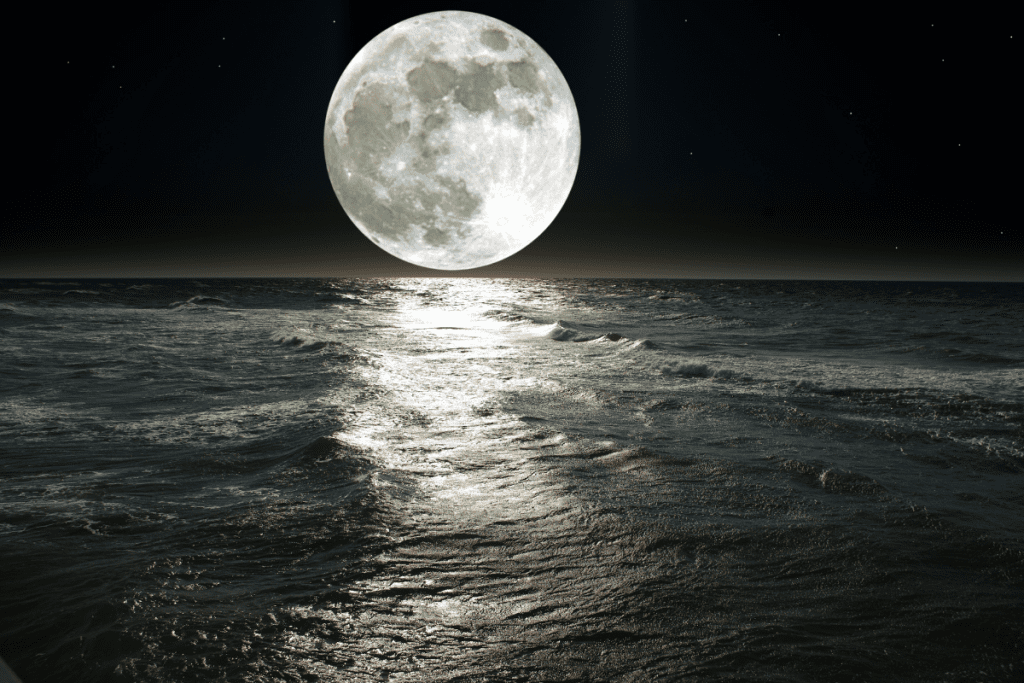
First, let’s clear up a misconception I see everywhere. The “Dark Side” isn’t actually dark. It gets plenty of sunlight during the New Moon phase (when we see the shadowed side from Earth). The reason we never see it is due to tidal locking. The Moon rotates on its axis at the exact same speed it orbits Earth, keeping one face permanently locked toward us.
But here is where it gets interesting for me. If you look at the photos from the Soviet Luna 3 (which first snapped the Far Side in 1959) or the recent Chinese Chang’e missions, you’ll notice something immediately:
- The Near Side: It’s covered in maria—those large, dark, basaltic plains formed by ancient volcanic eruptions. This is the “Man in the Moon” we all know.
- The Far Side: It’s a battered mess. It has almost no maria. Instead, it is heavily cratered, with a crust that is significantly thicker than the side facing us.
Why the difference? I find this fascinating: One leading theory suggests that when the Moon was young and molten, the heat radiating from a still-molten Earth kept the Near Side hot, preventing a crust from forming quickly. The Far Side, facing the cold void of space, cooled down fast and hardened, making it harder for magma to break through later. It’s literally a frozen shield.
The Anomaly: A Metal Heart Buried Deep

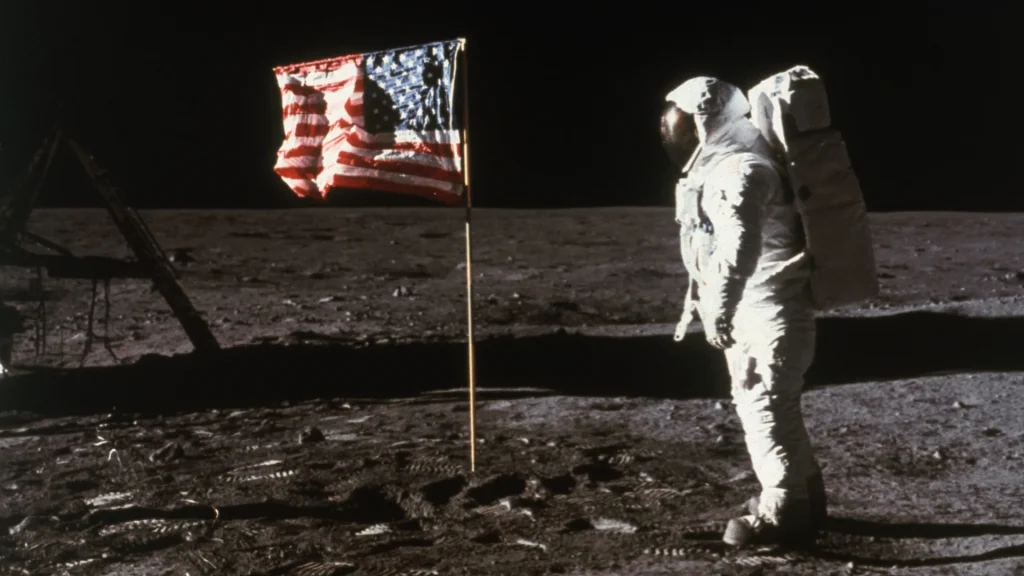
This is the part that gave me chills when I first read about it.
A few years ago, scientists analyzing data from NASA’s GRAIL mission found something massive buried beneath the South Pole-Aitken basin. For context, this basin is the largest known impact crater in the entire solar system—it stretches from the Moon’s South Pole all the way up to the Aitken crater.
Underneath this basin, there is a mass anomaly.
Imagine a pile of metal five times the size of the Big Island of Hawaii. Now, bury that pile hundreds of miles underground. That is what is sitting inside the Moon right now. The extra mass is so heavy that it actually pulls on the spacecraft orbiting above it, altering their trajectory slightly.
What is it?
- Theory A: It’s the iron-nickel core of a massive asteroid that smashed into the Moon 4 billion years ago and got stuck in the mantle.
- Theory B: It’s a concentration of dense oxides formed from the cooling of the lunar magma ocean.
Personally, I lean towards the asteroid theory. There is something incredibly “scifi” about the idea that the Moon is carrying the corpse of a planetary killer inside its belly. It reminds me that our neighborhood in space wasn’t always this quiet; it used to be a shooting gallery.
The Quietest Place in the Universe
As a tech enthusiast, this is the aspect of the Far Side that excites me the most.
On Earth, we are loud. We blast radio waves, TV signals, GPS data, and military radar into space 24/7. For radio astronomers trying to listen to the faint whispers of the early universe, Earth is like a neighbor mowing their lawn at 3 AM.
The Far Side of the Moon is the only place in our local solar system that is permanently shielded from Earth’s radio noise. The Moon’s massive body blocks all our chatter.
Why does this matter?
- The Dark Ages of the Universe: Scientists want to place a radio telescope on the Far Side to listen to the “Cosmic Dawn”—the era before the first stars ignited.
- Alien Signals: If I were looking for extraterrestrial intelligence (SETI), the Far Side is exactly where I’d put my listening post. It’s the ultimate “quiet zone.”
I honestly believe that within our lifetime, we will see a major observatory built there. It will be humanity’s dedicated ear to the cosmos, finally free from the noise of our own civilization.
What Are We Waiting For?
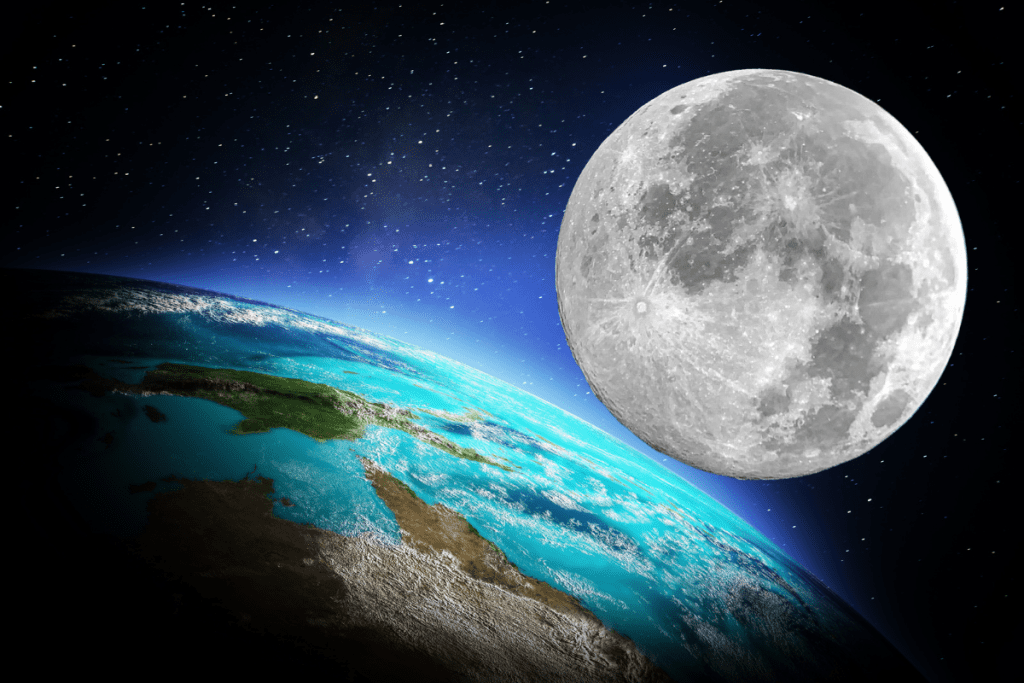
We are currently in a new Space Race, and the Far Side is the prize.
China has already landed there with the Chang’e 4 mission (growing the first cotton plant on the Moon, which is insane!). NASA’s Artemis program is targeting the South Pole. We aren’t just looking at rocks anymore; we are looking for water ice, resources, and a strategic position.
But beyond the politics and the resource mining, there is that sense of wonder. When I look up at the Moon tonight, I won’t just see the glowing orb. I’ll be thinking about the rugged, cratered, silent world on the other side—and the massive metal anomaly waiting in the dark.
Is it just geology? Probably. But the universe has a funny way of surprising us just when we think we have it all figured out.
What’s Your Theory?
I’ve shared the science, but I want to know what you think. If you could send a rover to the center of the South Pole-Aitken basin tomorrow, what do you hope it would find? Are we looking at a simple asteroid impact, or does the Moon have more secrets buried deep down?
Let’s discuss this in the comments—I’d love to hear your wildest theories!
Stay curious, Ugu | Metaverse Planet
You Might Also Like;
- The Mystery of the Far Side: What Is Hiding in the Lunar Shadows? | Metaverse Planet
- The Doomsday Clock Hits 85 Seconds to Midnight: Are We Out of Time?
- Nvidia’s AI Can Now Predict the Future (Of Weather)
-

-

-
-
-

-

-
-
-

-

-

-

