
I’ve always spent my nights looking up at that glowing white orb, thinking it was Earth’s most loyal, silent guardian. We take it for granted, don’t we? It sits there, exactly where it should be, drifting away from us at a tiny $3.8$ cm every year. But lately, I’ve been obsessed with a “what-if” that’s been keeping me up: What if the Moon stopped running away and started coming back?
I spent hours diving into the orbital mechanics and tidal physics of this scenario, and let me tell you, it’s not just a disaster movie plot. It’s a terrifying transformation of our entire reality. If you think a lunar collision is just a “big crash,” grab a coffee and settle in. It’s way more poetic—and way more brutal—than that.
The First Signs: Gravity Becomes Our Enemy

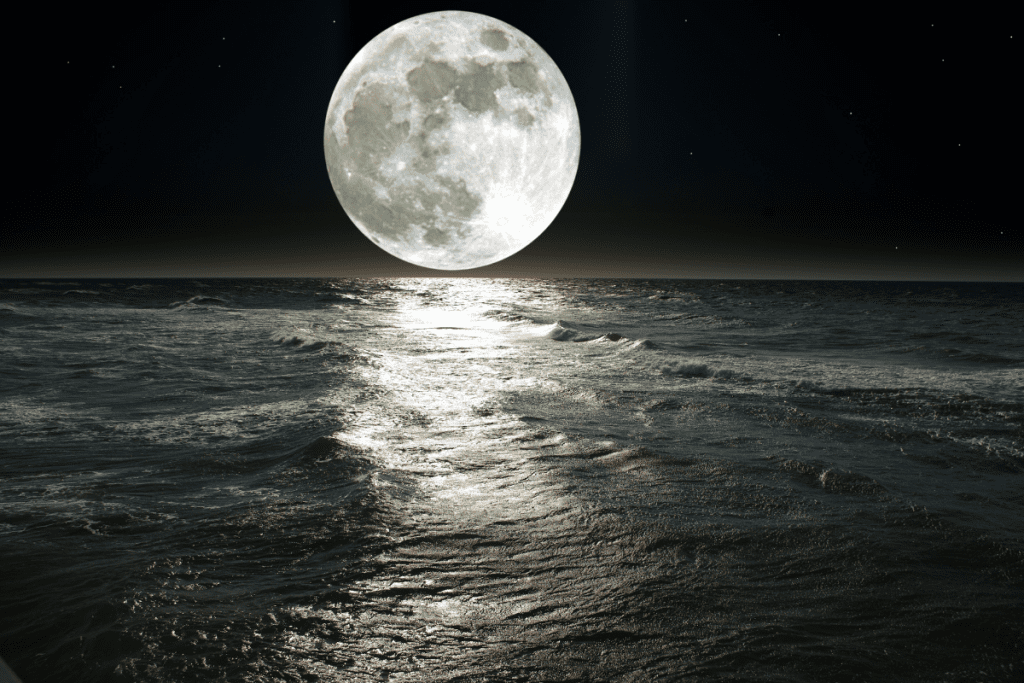
In the beginning, you wouldn’t even see it moving. Space is vast, and the Moon is huge. But I realized that we wouldn’t need a telescope to know something was wrong; we’d feel it in the water.
As the Moon inches closer, its gravitational pull on our oceans begins to intensify. We aren’t talking about high tide coming up to your toes anymore. I’m talking about megatsunamis that reshape the coastlines of every continent daily. Imagine the power of the ocean being yanked toward the sky.
But it’s not just the water. The Earth’s crust itself is flexible. I was shocked to learn that the Moon’s gravity actually “stretches” the solid ground. As it gets closer, this stretching becomes violent.
- Global Earthquakes: Fault lines that have been silent for millennia would snap.
- Volcanic Winter: The internal friction would heat the Earth’s core, triggering massive eruptions.
I’ve always loved the Moon, but at this stage, it stops being a light in the dark and starts acting like a planetary wrecking ball.
The Roche Limit: Nature’s Trash Compactor
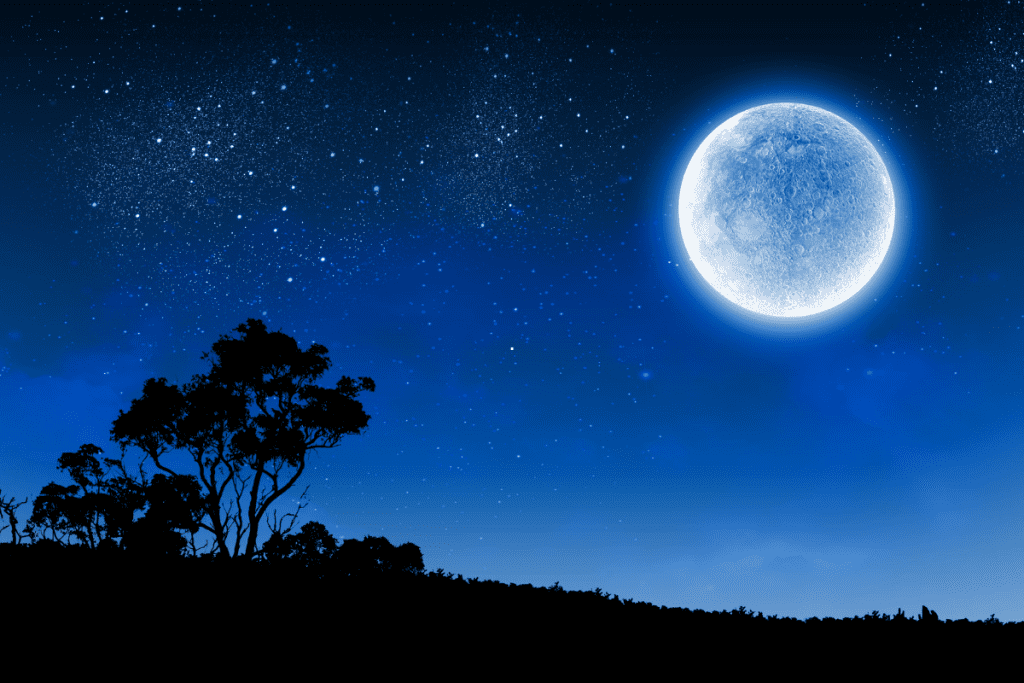
This is the part of my research that really blew my mind. Most people think the Moon would just hit the Earth like a giant cue ball. But physics has a much more “creative” (and messy) plan.
There is a theoretical boundary called the Roche Limit. For the Earth-Moon system, this is roughly $18,470$ kilometers away. Once the Moon crosses this line, the Earth’s gravity becomes so much stronger on the “near side” of the Moon than the “far side” that the Moon literally cannot hold itself together.
The Moon would shatter in the sky. Imagine looking up and seeing your favorite celestial body disintegrate into trillions of glowing, jagged boulders. I personally find the mental image of this both haunting and strangely beautiful. For a brief moment, Earth would have a ring system, just like Saturn. But don’t get too attached to the view—those rings are made of fire and debris that are about to rain down.
The End of the Blue Marble
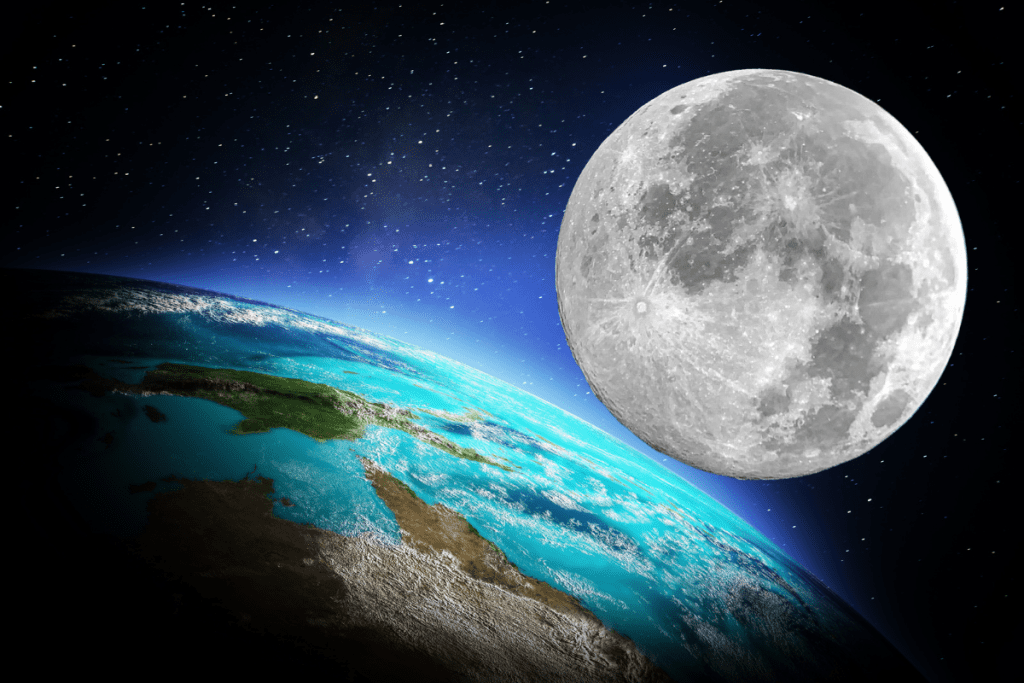
Once the Moon breaks apart, the debris doesn’t just stay in orbit. The atmosphere would drag those rocks down. We’d experience a “meteor shower” that doesn’t just last for a night, but for weeks, turning the sky into a furnace.
The kinetic energy released would be enough to boil the oceans. I’ve often wondered if humanity could survive in deep-sea bunkers or underground vaults, but when the very crust of the planet is melting, there’s nowhere left to hide.
Ugu’s Perspective: Why This Matters

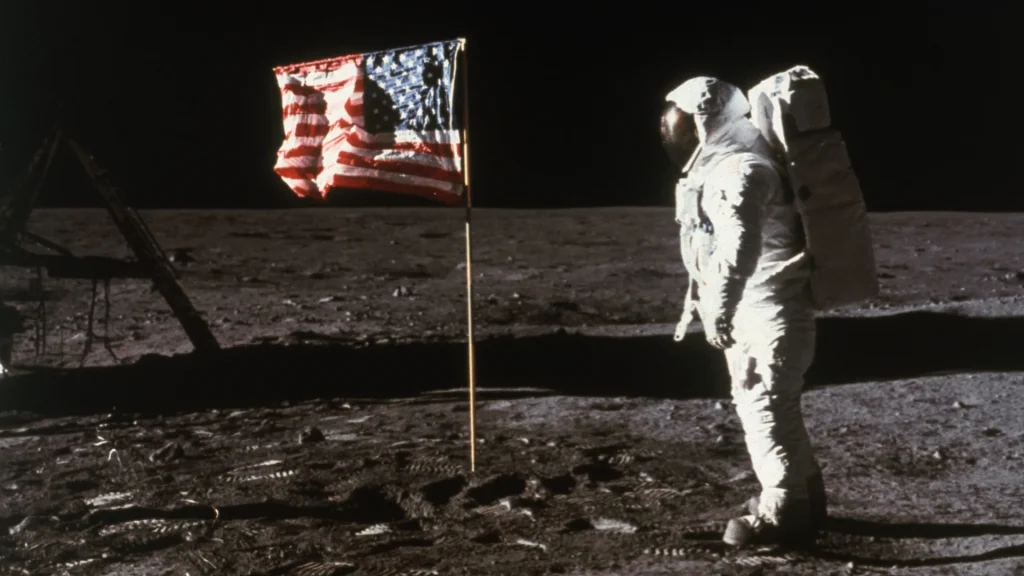
I know this sounds like a doomsday rant, but looking into these extremes makes me appreciate the delicate balance we live in. We exist in a “Goldilocks” zone not just because of our distance from the Sun, but because our Moon is exactly where it needs to be. It stabilizes our tilt, gives us our seasons, and—thankfully—it’s currently choosing to leave us alone.
I’m curious, though. If we had a 50-year warning that the Moon was coming for us, do you think humanity would actually unite to build a “Galactic Ark,” or would we spend those 50 years arguing about who gets a seat? I’d like to think we’d make it to Mars, but part of me feels like we’d just stay and watch the most beautiful, terrifying show in the history of the universe.
What do you think? Is humanity meant to outlive its home planet, or are we tied to Earth’s fate until the very end?
Stay curious,
You Might Also Like;
- Nvidia’s AI Can Now Predict the Future (Of Weather)
- The Tipping Point: Electric Cars Overtake Petrol in Europe
- Snapchat Doubles Down on AR: Meet Specs Inc.
-
-
-
-
-
-
-

-

-

-

-
-

