I remember back in 2023 and 2024 when we were all just “playing” with chatbots. Fast forward through a massive 2025 where global AI spending hit a jaw-dropping $1.5 trillion, and here we are in 2026. We aren’t just talking about tools anymore; we’re talking about autonomous agents and super-computing platforms that are becoming the literal backbone of how we work.
I’ve been watching this shift closely, and it feels like we’ve finally moved past the “hype” phase and into the “infrastructure” phase. According to recent data from Cerebrum Tech, 2026 is the year these systems scale up to become your actual digital teammates.
2025: The Foundation of the $1.5 Trillion Shift

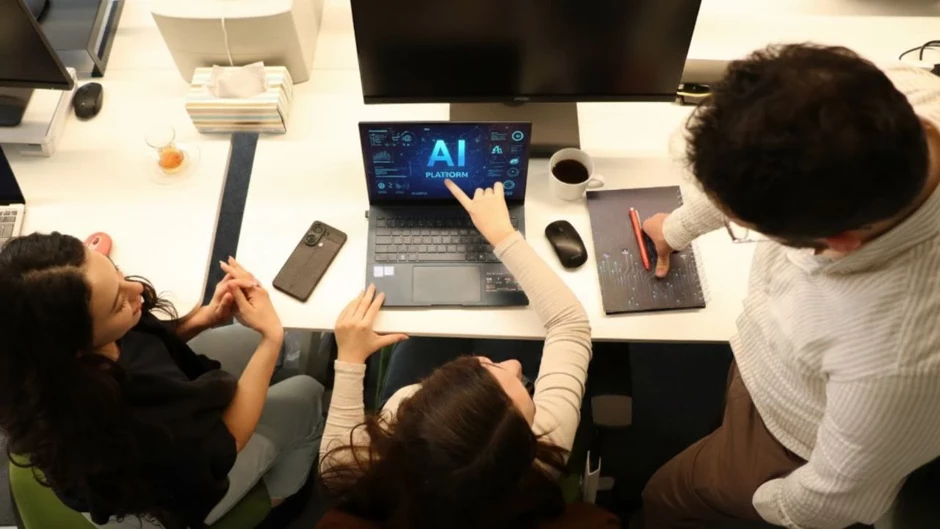
To understand where I think we’re going this year, we have to look at what just happened. In 2025, AI moved from being a “cool side project” to the center of corporate strategy.
- Mass Adoption: 88% of companies integrated AI into at least one business unit.
- The Rise of Agents: We saw autonomous agents take over everything from price optimization to CRM, boosting efficiency by up to 5%.
- Speed Records: With Agentic AI, customer service response times dropped by 80%, and some marketing teams actually accelerated their campaign speeds by 15 times.
I don’t know about you, but a 15x speed increase isn’t just a “tweak”—it’s a total revolution in how a company breathes.
2026 Trends: Supercomputers and Hybrid Architecture


As I look at the roadmap for 2026, the tech is getting deeper. We are moving away from simple software and into hybrid processing architectures.
1. The Death of Standard Hardware
We’re seeing a new standard where CPUs, GPUs, and specialized AI chips are fused together. This isn’t just for tech giants anymore; it’s becoming the baseline for any company that needs to analyze big data in real-time.
2. “AI-Native” Software
I’m starting to notice that new software isn’t “adding” AI features anymore—it’s being built on AI from the ground up. This allows tiny teams (we’re talking 2-3 people) to develop complex applications that used to require an entire department.
3. From Tools to “Teammates”
This is the part that fascinates me the most. Autonomous agents are now handling multi-step processes without a human holding their hand. They are becoming digital coworkers. This frees us up from the soul-crushing routine tasks, but it also means our jobs are shifting toward strategic oversight. We aren’t the “doers” as much as we are the “conductors.”
The Human-Tech Collaboration


Mustafa Furkan Örs, the CEO of Cerebrum Tech, recently mentioned something that resonated with me. He noted that while 2025 was about measurable outputs, 2026 is about integration and empathy.
They are focusing on products like Cere Insight that don’t just “calculate” but actually fit into the human workflow securely. The goal for this year is “Intelligence + Empathy.” I’ve always believed that technology without a human touch is just cold code. The real magic happens when the AI handles the data crunching so we can handle the creative, empathetic, and strategic decisions.
My Perspective: The Governance Challenge

As much as I love these “digital coworkers,” I have to be honest: 2026 is also going to be the year of Data Governance. With Gartner predicting that 15% of daily business decisions will be made by autonomous systems by 2028, we need to make sure the “ethics” of these agents are ironclad.
We’re moving fast—maybe faster than our legal systems can keep up with. But as an optimist who loves a good tech disruption, I’d rather be in the driver’s seat of this 1.5 trillion-dollar engine than watching from the sidelines.
If your company gave you a “digital teammate” today that could handle 50% of your workload, would you use that extra time to work on bigger projects, or would you use it to finally achieve that elusive 4-day work week?
You Might Also Like;
- Nvidia’s AI Can Now Predict the Future (Of Weather)
- The Tipping Point: Electric Cars Overtake Petrol in Europe
- Snapchat Doubles Down on AR: Meet Specs Inc.
-

-
-
-
-

-

-

-

-
-

-

-