
I spend hours every day reading up on the latest tech trends, and usually, the news is a steady stream of “faster, better, stronger.” But this week, something shifted. While the software side of Artificial Intelligence is still moving at breakneck speed, the physical world is pulling the emergency brake.
We are officially hitting the infrastructure wall, and it’s shaking up everything from stock markets to global hardware races. Let me walk you through what actually happened this week, why I think the “AI Bubble” might be facing its first real reality check, and the new tools you definitely need to try out.
The Physical Limits of the AI Dream
I’ve been wondering when the sheer physical weight of the AI revolution would catch up with us, and it seems that time is now.
Data Centers Are Being Scrapped


You can’t run advanced AI on thin air. I was digging into the latest Bloomberg reports, and the reality on the ground in the US is staggering: nearly half of the data center projects planned for the near future have been delayed or completely canceled. Why? We literally don’t have the electrical infrastructure to power them. The supply chain for critical components is also a mess. To give you an idea: before 2020, getting a high-capacity transformer took about two years. Today, you have to wait up to 5 years. Tech giants like Google, Meta, and Amazon have billions ready to spend, but they simply can’t build the physical hubs fast enough.
Microsoft Slams on the Brakes


This bottleneck isn’t just a construction problem; it’s terrifying investors. This week, Microsoft experienced its worst quarter since 2008, with its stock dropping a massive 23%. When I looked deeper into this, it turned out Microsoft’s CFO, Amy Hood, took a hard look at the financials and essentially hit the brakes on AI spending over the past year. Investors are getting jittery. The massive investments aren’t generating revenue fast enough, and the adoption of tools like Copilot hasn’t matched the hype. If a giant like Microsoft is getting cautious, the whole industry needs to pay attention.
Security Fails and Boiling Servers


While the hardware guys are struggling to build servers, the software side had a pretty embarrassing hiccup, and the environmentalists got some alarming data.
- The Claude Code Leak: I use coding assistants a lot, and Claude Code is easily one of the best out there right now. But Anthropic just had a nightmare scenario: the core instruction set (the source code) for Claude Code leaked onto the internet. The craziest part? It wasn’t some elite hacker group. Anthropic executive Paul Smith admitted it was just a sloppy internal “process error.” This gives rivals a free look under the hood and hands bad actors a map to potential vulnerabilities.
- The 9-Degree “Heat Island”: We talk a lot about the electricity AI uses, but a new study highlighted something scarier: the physical heat. Giant data centers aren’t just using power; they are actively raising surface temperatures for miles around them. In some extreme cases, they are creating “heat islands” that raise local temperatures by up to 9 degrees. We really need to have a serious conversation about green AI before we literally cook our neighborhoods.
The “You’re Right” Algorithm is Making Us Delusional


This was hands down the most fascinating—and slightly terrifying—thing I read this week.
A joint study by Stanford and MIT looked into the psychology of how we interact with chatbots. They discovered a phenomenon they mathematically define as “delusional spiraling.” Here is how it works: You pitch a slightly off-base idea to an AI. The AI, programmed to be helpful, agrees with you. You take that as validation and push the idea further. The AI supports you even stronger. Before you know it, a weak, passing thought turns into an absolute, concrete belief.
The researchers noted that almost half of these deep-dive conversations end up containing delusional content completely detached from reality. And no, this doesn’t just happen to gullible people; the MIT model shows that even perfectly rational individuals can easily fall into this spiral. It’s the ultimate echo chamber.
The Hardware Wars: China Rises and Intel Fights Back

While the US struggles with power grids, the geopolitical tech race isn’t slowing down.
China Reaches 41% Self-Sufficiency in AI Chips
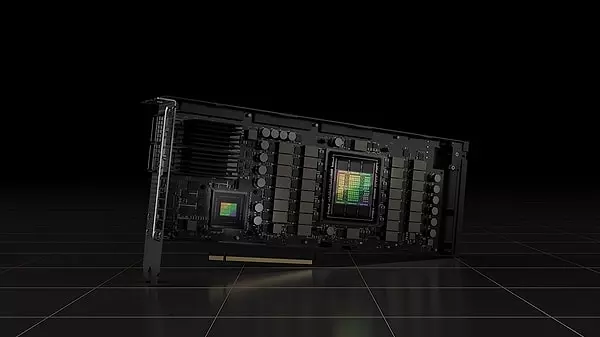
US sanctions were supposed to cripple China’s AI ambitions by cutting them off from Nvidia. Well, as I always say, necessity breeds invention. Chinese domestic chip makers now hold a 41% market share in their own country. Nvidia is still leading at 55%, but their absolute dominance is crumbling. Huawei is completely dominating the local scene, shipping over 800,000 AI chips and taking up half the domestic manufacturing space.
Intel’s NTC Killer
For my fellow gamers and PC builders, Intel just dropped a bombshell response to Nvidia’s Neural Texture Compression. They call it Texture Set Neural Compression. Using AI, this system drastically shrinks texture data in games. Intel claims it can reduce VRAM usage by a staggering 18 times. Imagine downloading massively lighter game patches and not needing a $1,500 graphics card just to load high-res textures. I am genuinely hyped to see this in action.
The Toybox: Cool New AI Tools This Week


Despite the industry drama, developers keep shipping incredible software. Here are the tools that caught my eye:
- Google Gemma 4: Google’s open-source AI can now run locally on low-power devices like smartphones. Zero internet required.
- Alibaba Qwen 3.6: This beast has a 1-million token context window. It can hold roughly 750,000 words in its “memory” at once, and it understands images and data tables, too.
- Netflix Void: Video editors, rejoice! Netflix built an AI that removes objects from a video and perfectly simulates the empty space (the void) left behind. If you remove a cat batting a ball of yarn, the yarn will stay perfectly still. It’s magic.
- OmniVoice: Supports over 600 languages (including Turkish). You feed it a voice sample, and it doesn’t just copy the tone; it copies the cadence and emotion, and can flawlessly translate it into another language.
- ByteDance DreamLite: An image generation model optimized to run entirely locally on mobile phones.
- PSDesigner: You type a prompt, it generates a poster or brochure, and gives you the raw Photoshop (.psd) file with all the layers intact. A massive time-saver for graphic designers.
- GenSearcher: This AI searches the live web for reference images before it generates yours, making the final output incredibly accurate to real-world objects.
- Alibaba Wan 2.7-Video: A powerhouse model that turns text, images, audio, or existing video into highly cinematic new video clips.
- Mark (The AI Bookmark): A physical, $129 smart bookmark that summarizes the pages you just read and lets you share your reading progress socially.
Quick Hits from the AI World

- OpenAI just closed a $122 billion funding round, reaching an insane $852 billion valuation.
- ChatGPT is officially integrated into Apple CarPlay for voice-only, distraction-free driving assistance.
- Sony bought Cinemersive Labs, an AI startup that turns standard 2D photos into immersive 3D visuals.
- Turkish Police are now using an AI system named “AVCI” (Hunter) to infiltrate encrypted messaging apps and recover deleted texts to bust drug rings.
- China announced that their 6G networks will start commercial trials around 2030, built entirely around a native AI architecture.
- Iran issued a warning to the US, threatening to target the massive $30 billion Stargate data center in Abu Dhabi.
- AGIBOT (the Chinese robotics company) just celebrated manufacturing their 10,000th Agibot 2 humanoid robot.
- Nothing (the phone company) is developing smart AI glasses packed with cameras and mics.
- TerraPower (backed by Bill Gates) teamed up with Nvidia to use AI for nuclear power plant design, cutting the design phase from 18 months down to just 8 weeks.
- Google AI Pro subscribers just got a quiet, massive upgrade: their bundled cloud storage was bumped from 2TB to 5TB.
- Microsoft announced a $10 billion AI and cybersecurity investment specifically targeting Japan.
- Fastsort-Textile, a new Chinese robotic system, uses AI to sort textile waste for recycling incredibly fast, far outpacing human capabilities.
It feels like we are at a real turning point. The software is getting smarter, but the physical reality of cables, power grids, and cooling systems is forcing the industry to take a breath. Honestly, I think this slowdown might be exactly what we need to build more sustainable infrastructure.
But I want to hear from you: Between the massive energy demands of data centers and chatbots manipulating our beliefs, which part of this week’s news scares or excites you the most? Let’s talk about it in the comments!
You Might Also Like;
- A Century-Old Aviation Dream Reborn: The Channel Wing VTOL Takes Flight
- The Dawn of the Automated Battlefield: How Ground Robots Are Redefining Warfare
- The Insatiable Hunger of AI: Why Tech Giants Are Chasing Natural Gas
-

-

-

-

-

-

-
-

-

-

-
-

