

As the dust settles on Web 3.0’s rise—characterized by semantic data, decentralized finance (DeFi), and blockchain-powered interactions—technology visionaries are already casting their gaze toward Web 4.0, a future phase of the internet that promises to fuse pervasive artificial intelligence, immersive sensory experiences, and seamless ambient connectivity. While the precise contours of Web 4.0 remain speculative, several emerging trends suggest it will transcend mere information exchange, evolving into a truly intelligent, intuitive, and contextually aware digital ecosystem. In this article, we explore key predictions for how Web 4.0 might function, the technologies driving it, and the societal implications it could bring.
1. Intelligent, Predictive AI at the Core


A defining feature of Web 4.0 is expected to be deep AI integration that goes beyond simple chatbots or recommendation engines. Instead, AI agents will serve as autonomous collaborators—continuously learning from your behavior, preferences, and real-world sensor data to anticipate needs before you explicitly express them.
- Hyper-Personalized Virtual Assistants: Rather than launching apps or issuing commands, users will interact with AI assistants that proactively handle tasks such as scheduling meetings, curating learning content, or even negotiating on your behalf in marketplaces. These assistants will leverage continual machine learning to refine their understanding of your mood, health indicators, and contextual priorities.
- Contextual Understanding & Natural Language Evolution: Web 4.0’s AI will interpret not only text or voice commands, but subtler cues—eye gaze in AR glasses, biometric signals from wearable devices, and IoT sensor data across smart environments. This shift from keyword-based queries to multi-modal context recognition will make online search and interaction almost frictionless.
2. Ambient Computing & the Sensory Web


Web 4.0 foresees an evolution where the internet disappears into the background of daily life, always available but never obtrusive. This “ambient computing” paradigm relies on a network of interconnected devices and surfaces, enabling seamless transitions between physical and digital realms.
- Seamless Device Ecosystem: Smart surfaces (walls, tables, mirrors) embedded with low-power micro-displays will overlay relevant information without the need for a “screen.” For example, you might glance at your kitchen counter in the morning and immediately see your calendar, weather, and suggested healthy recipes—all projected onto a refrigerator door.
- Haptic & Multisensory Interaction: Beyond sight and sound, emerging haptic feedback technologies could allow users to feel virtual objects. Imagine testing the texture of a virtual sofa in your living room before ordering it, or “touching” 3D medical simulations for remote surgical training. Olfactory interfaces could even emit subtle scents to reinforce immersion in virtual environments (e.g., smelling fresh grass in a remote nature simulation).
- Zero-UI Experiences: Rather than invoking apps via touch or voice, Web 4.0 systems will infer intent automatically—adjusting home lighting, suggesting ambient playlists, or ordering groceries simply by contextual patterns (your morning routine, biometric cues, or calendar reminders). The goal is that digital interactions feel as natural as walking into a familiar room.
3. Blockchain & Decentralized Governance on Steroids

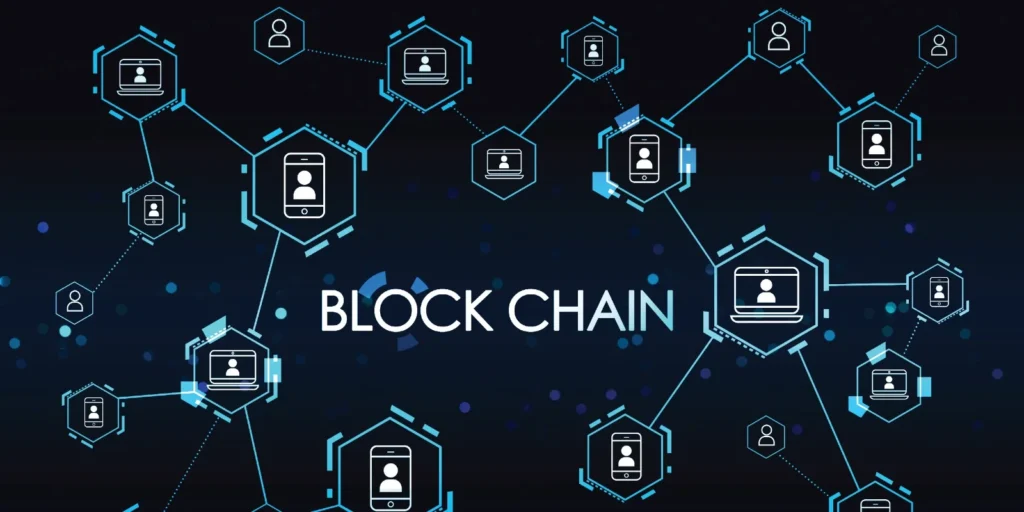
While Web 3.0 introduced blockchain as a means of decentralized ownership and governance, Web 4.0 is expected to push these concepts further into the fabric of everyday life.
- Self-Executing, AI-Driven DAOs: Decentralized Autonomous Organizations (DAOs) will evolve into self-governing networks powered by multi-agent AI. Instead of requiring manual proposal voting, these DAOs could autonomously allocate funds, manage resources, and refine governance rules based on real-time data analytics—allowing communities to adapt instantaneously to changing circumstances.
- Quantum-Resistant Cryptography: As quantum computing capabilities advance, Web 4.0 will incorporate quantum-safe encryption protocols to safeguard transactions and personal data. This ensures that decentralized ledgers remain immutable even if powerful quantum machines threaten earlier cryptographic algorithms.
- Digital Identity & Reputation Systems: Blockchain-backed identity solutions will grant each individual or device a portable, verifiable reputation score—integrating creditworthiness, social contributions, and real-world certifications. These decentralized IDs will seamlessly authenticate users across services (banking, healthcare, education) while preserving privacy via zero-knowledge proofs.
4. Ubiquitous Immersive Experiences: AR, VR & Beyond


By the time Web 4.0 arrives, mixed reality (MR) platforms will likely have matured to seamlessly blend physical and virtual worlds—ushering in an era where digital overlays, holograms, and fully immersive simulations coexist.
- Lightweight AR Contact Lenses & Wearables: Rather than bulky headsets, AR contact lenses or micro-glasses will project contextual information—directions, translation overlays, and social cues—directly into your field of vision. These devices will adapt to your focus and lighting conditions automatically, providing crystal-clear displays without blocking the real world.
- Persistent Virtual Spaces: Instead of logging into an isolated VR environment, Web 4.0 will support persistent, shared 3D worlds that exist continuously—linked to real-world landmarks. You might stroll down Main Street in your city and see both physical storefronts and virtual art installations, social hubs, or digital marketplaces co-located in the same GPS coordinates.
- Neural Interfaces & Brain-Computer Integration: Advanced brain-computer interfaces (BCIs) could enable thought-driven navigation of digital spaces, allowing users to summon a virtual workspace or communicate via direct neural signals. Early research into non-invasive BCIs hints that Web 4.0 might blur the line between conscious thought and online action.
5. The Role of 5G/6G & Edge Computing

Underpinning Web 4.0’s promises is a hyper-connected infrastructure—leveraging imminent 5G/6G rollouts and edge computing nodes to deliver near-zero latency, ultra-reliable connectivity.
- Real-Time Data Processing at the Edge: Instead of routing every data packet to distant cloud servers, edge micro-data centers will handle AI inference and sensor fusion locally—enabling true real-time responsiveness for autonomous vehicles, industrial IoT, and immersive AR experiences.
- Network Slicing & Quality-of-Service Guarantees: Telecom operators will partition networks into “slices” dedicated to specific use cases (e.g., remote surgery, VR gaming, industrial automation), ensuring that bandwidth and latency requirements are met without compromise.
- Ubiquitous Connectivity for Remote Regions: Satellite-based 6G constellations and high-altitude platform stations (HAPS) could bring Web 4.0 services to rural or underdeveloped areas—closing the digital divide and allowing all users to participate in advanced, immersive applications.
6. Potential Challenges & Ethical Considerations
While the future of Web 4.0 is undeniably thrilling, these innovations also introduce complex challenges:
- Privacy vs. Convenience: When AI assistants continuously monitor biometric, behavioral, and environmental data to anticipate user needs, how will personal privacy be safeguarded? Clear opt-in/opt-out frameworks and zero-knowledge proofs must become standard.
- Digital Inequality: Although 5G/6G and edge computing aim to broaden access, the cost and complexity of immersive devices (AR lenses, haptic suits) might deepen the divide between early adopters and underserved communities. Policymakers will need to invest in equitable infrastructure.
- Ethical AI & Governance: Autonomous AI decision-making—whether in DAOs or personal assistants—carries the risk of unintended bias, manipulation, or malfunction. Transparent AI models, algorithmic audits, and robust ethical oversight must accompany any deployment.
- Cybersecurity Threats: As more devices connect and quantum capabilities emerge, Web 4.0’s attack surface will exponentially expand. Ensuring quantum-resilient encryption, continuous threat monitoring, and decentralized security protocols will be nonnegotiable.
While no crystal ball can perfectly predict every nuance of Web 4.0, current technological trajectories point toward an internet that is proactively intelligent, seamlessly ambient, and profoundly immersive. From AI agents that anticipate needs—rather than simply reacting to commands—to AR lenses that overlay digital reality onto everyday life, Web 4.0 will reframe how we work, learn, and socialize online. However, realizing this vision hinges on addressing privacy, equity, and security concerns head-on. By embracing transparent AI ethics, quantum-safe cryptography, and inclusive connectivity strategies, we can steer Web 4.0 toward a future that truly augments human potential rather than overshadowing it. As 2025 unfolds, keep an eye on breakthroughs in edge AI, sensory computing, and decentralized governance—they will serve as harbingers of the next great evolution of the World Wide Web.
-

-

-

-

-

-

-

-

-

-

-

-

