I’ll confess something right up front: I have a love-hate relationship with physical keys. I can’t count the number of times I’ve stood in front of my own door, carrying heavy groceries, frantically digging through my pockets in the dark. So, when I started seeing the shift toward smart locks, I was the first in line. But the evolution we are seeing right now is entirely different. We aren’t just replacing the key with a keypad anymore; we are replacing the deadbolt with artificial intelligence.
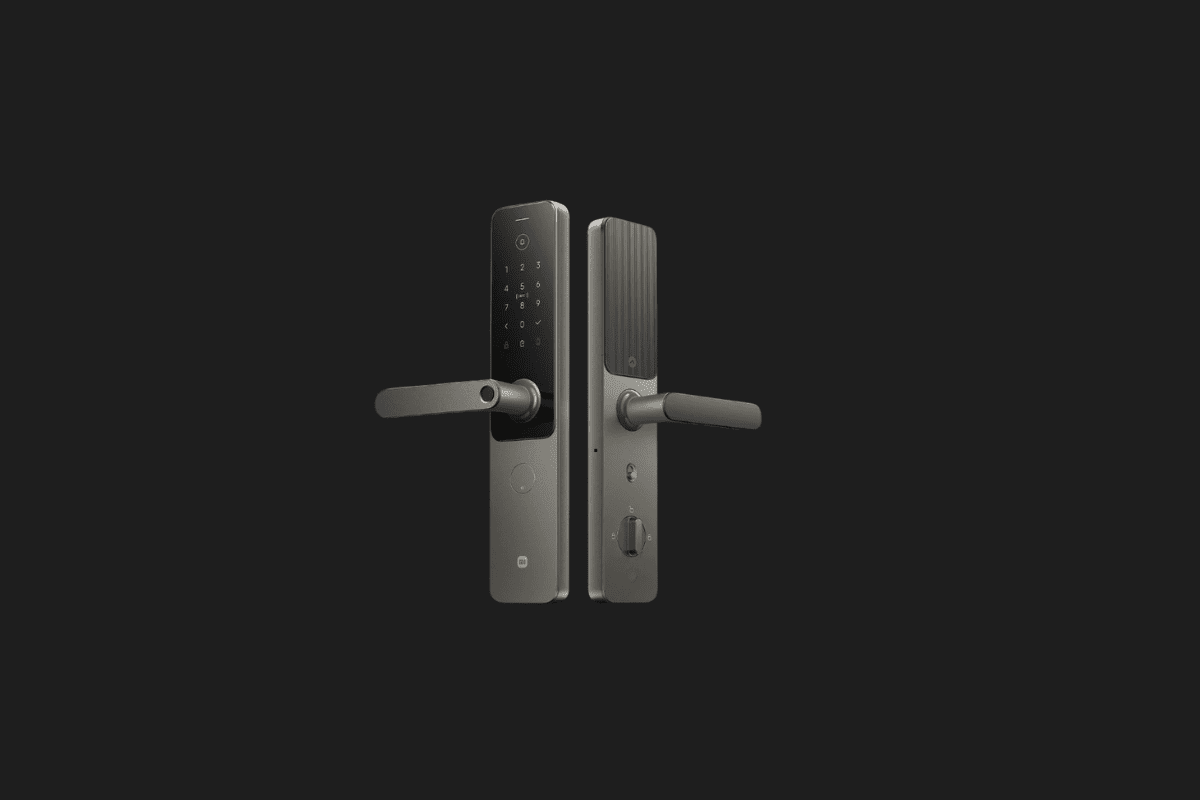
When I was digging into the latest smart home hardware this morning, the new Xiaomi Smart Door Lock G100 caught my eye. It’s not just another connected gadget; it’s a prime example of how AI is moving from our screens directly to our physical security. Let’s dive deep into what this $160 piece of tech actually does, and why it made me seriously reconsider my current home security setup.
The Brains Behind the Bolt: Why AI Matters Here


You might be wondering, “Ugu, why on earth does my door handle need artificial intelligence?” I asked myself the exact same thing. The answer lies in speed and adaptability.
The G100 isn’t just taking a static picture of your fingerprint. It uses an AI-supported algorithm that actively learns and adapts.
- Blink-and-You-Miss-It Speed: It scans and processes your biometric data in just 0.5 seconds.
- Extreme Accuracy: It boasts a 99.29% comparison accuracy rate.
But here is the feature that genuinely impressed me: The silent duress alarm. If you are ever in a terrifying situation where someone is forcing you to unlock your door, you can use a pre-designated “emergency” finger. The lock will open normally so as not to alert the intruder, but the AI will silently trigger an emergency call and alert your designated contacts. That is the kind of smart integration that actually saves lives, not just time.
Fortress-Level Hardware: Beyond the Software


As much as I love software, a smart lock is useless if someone can just smash it with a hammer or hack it with a cheap radio jammer. Xiaomi seems to have taken the physical threat models very seriously here.
- Financial-Grade Security Chip: All your biometric data, passwords, and access logs are stored locally on the device within a highly encrypted chip. As someone who cares deeply about digital privacy, I love this. Your fingerprint isn’t floating around on a vulnerable cloud server somewhere.
- C-Class Lock Cylinder: For those who aren’t locksmiths, a C-class cylinder is essentially the gold standard for residential security. It features a direct-insertion mechanism that is notoriously difficult to pick or bypass manually.
- Anti-Electronic Jamming: The lock is shielded against electromagnetic pulse (EMP) attacks and malicious electronic interference, which are increasingly common tools used by modern burglars.
The “Peeping Tom” Defense: Dummy Passwords


Let’s be real. Sometimes you have a guest, a neighbor, or a delivery person standing right behind you when you need to type in your PIN. You don’t want to be rude and ask them to turn around, but you also don’t want them memorizing your passcode.
Xiaomi implemented a brilliant “dummy password” (phantom passcode) technology. Here is how it works: You can type a string of random numbers before and after your actual PIN. If your password is 1234, you can type 8945[1234]772. As long as the correct sequence is in there continuously, the door unlocks. The person watching just sees a blurry mess of 10 digits and has no idea what the real code is. I absolutely love practical, everyday problem-solving like this.
The Xiaomi Ecosystem: HyperOS and Connectivity


If you are already living in the Xiaomi ecosystem, the G100 is designed to slide right in. It fully supports HyperOS Connect and is managed via the Mijia app.
This opens up a world of automation:
- Welcome Home Routines: Set the lights to turn on and the smart blinds to close the moment your specific fingerprint unlocks the door.
- Real-time Alerts: The lock will instantly notify your phone if the door is left ajar or if someone is attempting to tamper with the lock face.
My one slight disappointment? To get full remote control access from anywhere in the world, the lock requires a separate Bluetooth Mesh gateway. It doesn’t connect directly to your home Wi-Fi on its own. While this saves massive amounts of battery life, it means you might need to buy an extra hub if you don’t already have one in your house.
Battery Life and the “What If?” Scenario
One of the biggest fears people have about smart locks is: “What happens if the battery dies while I’m outside?” The G100 runs on 4 standard AA batteries, which Xiaomi claims will last for up to 12 months. But let’s say you ignore the low-battery warnings for a month and it finally dies. You aren’t locked out. There is a hidden USB Type-C port on the exterior. You can simply plug in a standard portable power bank (like the one you use for your phone), give the lock a jolt of emergency power, and type your PIN to get inside.
My Final Take
At a price point of around $160, the Xiaomi Smart Door Lock G100 feels like a steal for the sheer amount of technology packed into it. It bridges the gap between high-end biometric security and accessible smart home convenience.
It makes me realize that the concept of a physical metal key is rapidly becoming a relic of the past. We are entering an era where our homes recognize us the same way our smartphones do.
I’m really curious about where you stand on this. Would you feel comfortable trusting an AI-powered lock to secure your front door, or do you still prefer the mechanical certainty of a traditional metal key? Let’s debate this down in the comments—I want to hear your thoughts!
You Might Also Like;
- A Century-Old Aviation Dream Reborn: The Channel Wing VTOL Takes Flight
- The Dawn of the Automated Battlefield: How Ground Robots Are Redefining Warfare
- The Insatiable Hunger of AI: Why Tech Giants Are Chasing Natural Gas
-

-

-

-
-

-

-

-

-

-

-
-