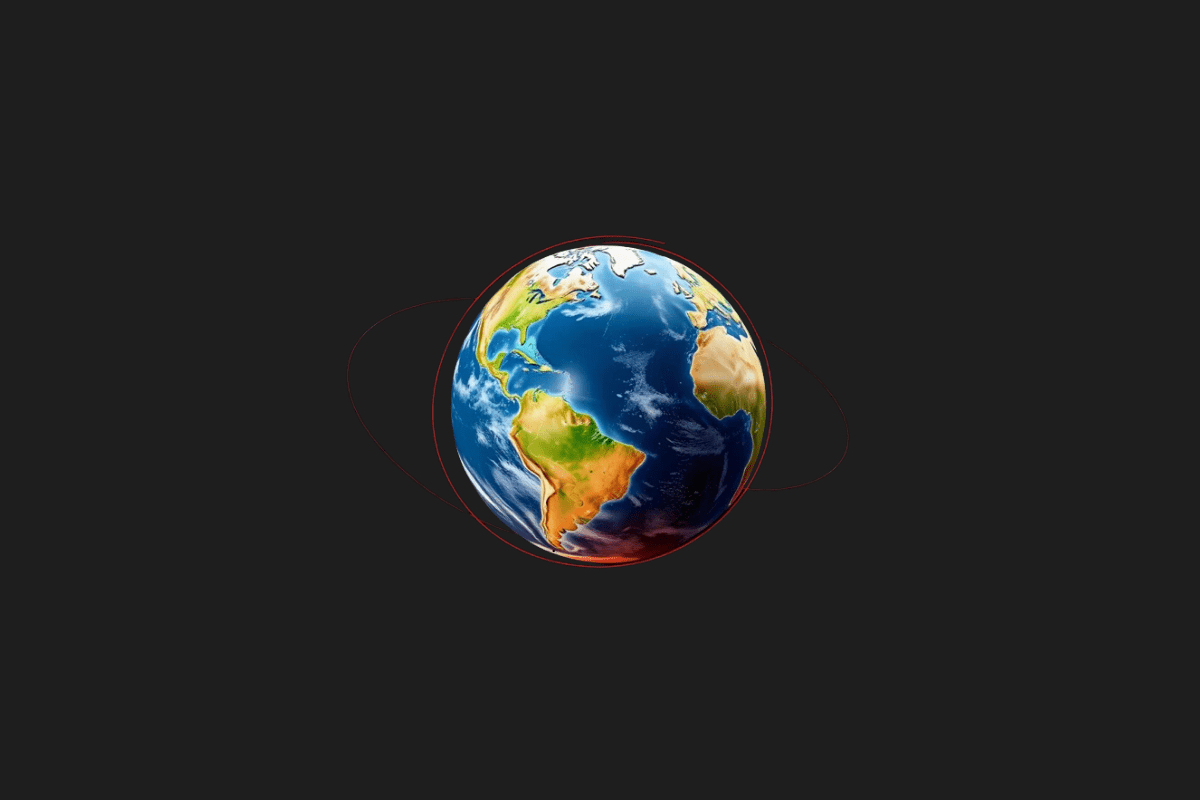
I used to look at my watch and take the 24-hour cycle for granted. It feels like the one constant in a chaotic universe, doesn’t it? The sun comes up, the sun goes down, rinse and repeat.
But recently, I fell down a rabbit hole of astrophysical data that completely changed how I view our planet. Here is the unsettling truth I found: Earth is hitting the brakes.
We are spinning on a rock that is slowly losing its momentum. This realization led me to ask a terrifying question: Will Earth one day stop spinning completely? And if it did, what would happen to us?
I dug into the science, and the answers are a mix of fascinating cosmic mechanics and absolute nightmare fuel. Let’s break it down.
The Nightmare Scenario: What If Earth Stopped Instantly?

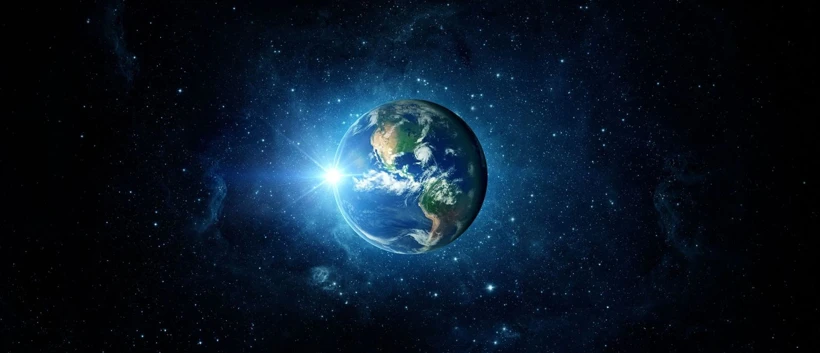
First, let’s tackle the Hollywood disaster movie scenario. What if someone just pulled the cosmic handbrake and Earth stopped spinning right now?
I ran the numbers, and let me tell you, it is not a pretty picture. It is essentially the apocalypse in a fraction of a second.
If you are standing at the equator, you are currently moving at about 1,600 kilometers per hour (approx. 1,000 mph) due to the planet’s rotation. You don’t feel it because everything around you—the atmosphere, the buildings, the oceans—is moving at the same speed.
If the planet stopped but everything else kept its momentum:
- The Ultimate Car Crash: You, me, and every building on Earth would be launched eastward at supersonic speeds. It would be like being in a car crash at 1,000 mph without a seatbelt.
- Atmospheric Shredder: The atmosphere wouldn’t stop immediately. It would continue moving, creating wind storms faster than the shockwave of an atomic bomb, scouring the surface of the planet clean.
- Molten Earth: The kinetic energy from this sudden stop would likely be so massive that it would melt the Earth’s crust. We would turn into a “stone ocean” of lava.
The good news? Physics doesn’t work that way. There is no mechanism in the universe that would cause an instant stop unless we collided with something massive enough to destroy us anyway. So, we can breathe easy on that front.
The Real Slowdown: The Moon is “Stealing” Our Spin

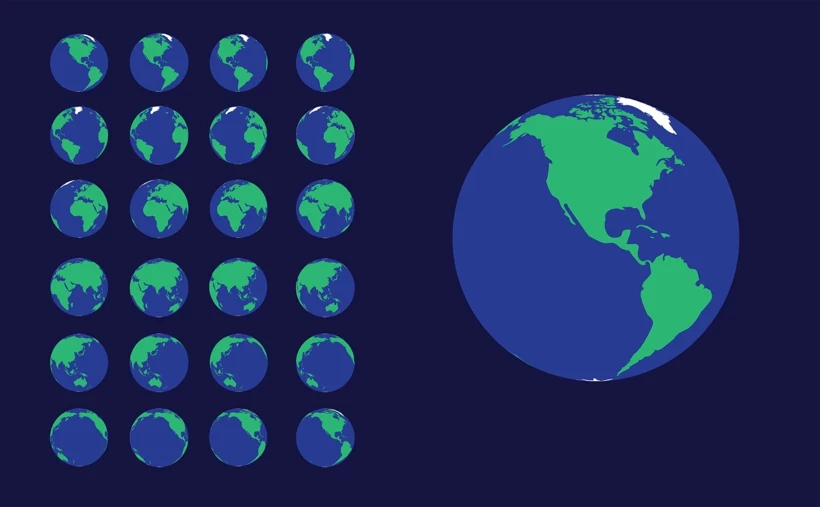
While an instant stop is impossible, a gradual slowdown is a scientific fact.
I was surprised to learn that days are getting longer. Not by much—about 1.8 milliseconds every century—but over geological time, it adds up.
- 600 Million Years Ago: A day on Earth was only about 21 hours.
- Today: It’s 24 hours.
- The Future: It will keep stretching.
Why is this happening? It’s a cosmic tug-of-war. The Moon’s gravity pulls on our oceans, creating tides. This tidal bulge acts like a brake pad against the Earth’s rotation. It creates friction.
Here is the poetic part of the physics: As Earth slows down, it loses angular momentum. To conserve that momentum, the Moon has to move further away. So, as our days get longer, our satellite friend is drifting away from us at about 4 centimeters per year.
The “Tidally Locked” Destination (Theoretical)

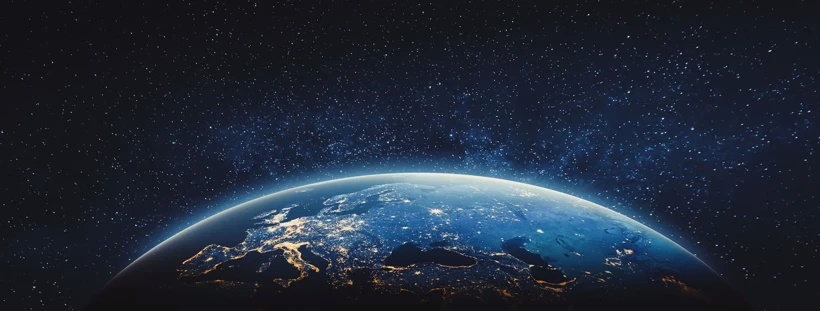
If I extrapolate this data out for billions of years, we reach a state called “Tidal Locking.”
This is what has already happened to the Moon. Have you noticed we only ever see one face of the Moon? That’s because its rotation period matches its orbit.
If Earth continued to slow down for another 50 billion years, the same would happen to us.
- Earth would stop rotating relative to the Moon.
- One side of Earth would permanently face the Moon.
- The other side would never see the Moon again.
- A “day” on Earth would last roughly 47 of our current days.
It’s a strange, frozen future to imagine—a world where time seems to stand still.
The Ultimate Spoiler: The Sun Wins

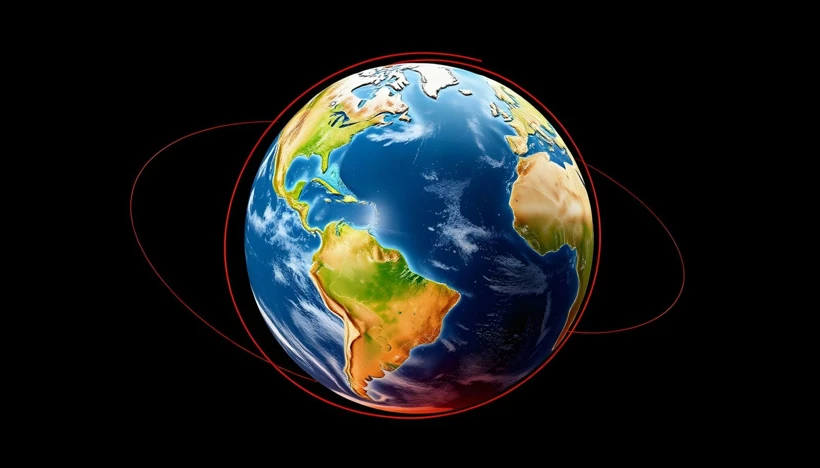
However, while researching this, I found the ultimate plot twist. We will never actually reach that frozen, tidally locked state.
Why? Because the Sun has a deadline.
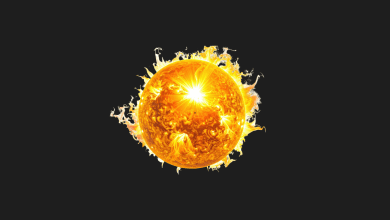
Current astrophysical models predict that our Sun has about 5 billion years left before it runs out of hydrogen fuel. When that happens, it won’t just fade away; it will expand into a Red Giant.
- The Expansion: The Sun will swell to massive proportions.
- The Scorched Earth: It will likely swallow the inner planets, including Mercury and Venus, and possibly Earth. Even if it doesn’t swallow us, the heat will strip away our atmosphere and boil our oceans long before Earth’s rotation ever stops completely.
My Perspective
It’s easy to feel small when you read numbers like “50 billion years” or “Red Giant.” But for me, this research was strangely comforting.
Earth isn’t a static stage; it’s a dynamic, evolving spaceship. The fact that our days are getting longer—even by milliseconds—reminds me that the universe is constantly in motion. We are part of a grand, slow-motion ballet with the Moon and the Sun.
So, the next time you feel like there aren’t enough hours in the day, just remember: technically, you are right. But don’t worry about the planet stopping. We have a few billion years to figure that out.
What do you think? Does the idea of a changing planetary clock scare you, or does it make you appreciate the “perfect balance” we live in right now?
You Might Also Like;
- The Mystery of the Far Side: What Is Hiding in the Lunar Shadows? | Metaverse Planet
- The Doomsday Clock Hits 85 Seconds to Midnight: Are We Out of Time?
- Nvidia’s AI Can Now Predict the Future (Of Weather)
-

-

-
-

-
-
-
-

-
-
-
-