The European Space Agency’s Euclid telescope and the Flagship 2 simulation unveil the largest virtual universe ever, encompassing 3.4 billion galaxies. New clues about dark energy and standard cosmology are on the way.
There is no definitive answer to the question, “Are we living in a simulation?” However, it is certain that humanity has created its own simulations. Furthermore, these simulations are now being used to explore the deepest secrets of the universe.
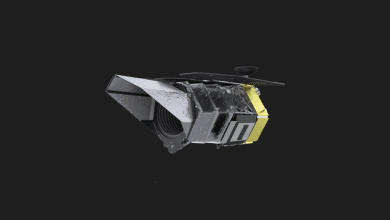
The Euclid Consortium, which manages the European Space Agency’s Euclid telescope, has released the most comprehensive simulation of the universe ever prepared. This virtual universe map, called Flagship 2, covers 3.4 billion galaxies and tracks the gravitational interactions of over 4 trillion particles.
This massive undertaking was prepared using an algorithm developed by astrophysicist Joachim Stadel from the University of Zurich. In 2019, Stadel used one of the world’s most powerful supercomputers, Piz Daint, to create this incredibly detailed virtual universe.
Preparing for the Euclid Mission


Julian Adamek, an astrophysicist involved in the project, states that these simulations are vital for analyzing the data collected by Euclid.
The Euclid telescope, operational since 2023, observes billions of galaxies and investigates the distribution of dark matter and dark energy in the universe. The spacecraft is set to survey approximately one-third of the sky. Because such a vast amount of data is being produced, simulations like Flagship 2 contribute to a faster and more efficient process.
The Limits of the Standard Model
Researchers expect Euclid‘s observations to largely align with the predictions in Flagship 2. However, they are also prepared for surprises in the universe. This is because Flagship 2 is built upon the currently accepted standard cosmological model. In Stadel’s words, “We are seeing signs that cracks are forming in the Standard Model.”
The most exciting topic for the team is dark energy, which is accelerating the expansion of the universe. According to the current model, this energy is accepted as a constant value. However, Euclid will shed light on the universe up to 10 billion years ago, testing whether this energy is truly constant. Adamek says, “We will be able to see how the universe expanded during that period and measure if this constant has changed.”
Euclid‘s initial observation results were shared with the public in March 2025. New datasets are expected to be announced in the spring of 2026.
You Might Also Like;
- The Mystery of the Far Side: What Is Hiding in the Lunar Shadows? | Metaverse Planet
- The Doomsday Clock Hits 85 Seconds to Midnight: Are We Out of Time?
- Nvidia’s AI Can Now Predict the Future (Of Weather)
-

-

-
-
-
-
-

-
-
-

-

-