As space exploration enters a new era of ambitious projects—ranging from lunar bases to crewed missions to Mars and beyond—the need for ultra-reliable, high-speed, and secure communication has never been greater. Traditional radio-frequency and laser-based communication channels face limitations in bandwidth, latency, and vulnerability to eavesdropping or jamming. The emergence of the Quantum Internet promises to revolutionize how spacecraft, satellites, and ground stations exchange information. By harnessing the principles of quantum mechanics—such as entanglement and superposition—the Quantum Internet can deliver instantaneous, tamper-evident links across interplanetary distances. This article explores what the Quantum Internet entails, how it differs from classical networking, its benefits and challenges in space applications, and the roadmap toward integrating quantum communication into future space missions.
1. What Is the Quantum Internet?


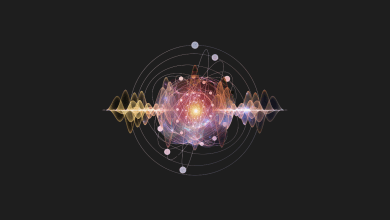
A Quantum Internet is a network that distributes and manages quantum states—typically in the form of entangled photons or quantum bits (qubits)—between distant nodes. Unlike classical Internet links, which transmit bits (0s and 1s) that can be read or intercepted without immediate detection, a quantum network leverages two unique phenomena:
- Quantum Entanglement: Two or more particles become linked so that the state of one instantly influences the state of the other, regardless of the distance separating them. Measurement of one entangled photon immediately “collapses” the state of its partner, enabling instantaneous correlations that classical signals cannot replicate.
- No-Cloning Theorem: It is impossible to create an identical copy of an unknown quantum state. Any attempt to intercept or duplicate qubits in transit will introduce detectable errors—ensuring inherently secure communication.
Together, these principles allow for applications such as quantum key distribution (QKD)—where encryption keys are shared via entangled photons—and long-distance teleportation of quantum states, which can form the basis for distributed quantum computing or secure telemetry in space.
2. Why the Quantum Internet Matters for Space Missions
Traditional deep-space communication relies on radio waves or laser links that travel at the speed of light but can suffer significant delays (measured in minutes between Earth and Mars) and are vulnerable to interference. The Quantum Internet addresses these issues in several ways:
- Unbreakable Encryption
With quantum key distribution, encryption keys are encoded into quantum states. If an adversary attempts to intercept these keys, the quantum states collapse, introducing detectable anomalies. For crewed missions or robotic explorers sending sensitive telemetry—such as biometric data, scientific measurements, or navigational commands—QKD ensures that any eavesdropping attempts become immediately apparent. - Instantaneous Correlation (Entanglement Swapping)
Although classical signals still govern many aspects of interplanetary communication (and thus cannot exceed the universal speed limit), entanglement can be “swapped” across a chain of intermediate nodes. By establishing a network of quantum repeaters—potentially deployed on satellites or relay probes—spacecraft can maintain entangled links back to Earth or between one another. While this does not transmit information faster than light, it allows for pre-shared entanglement that can be used for secure teleportation of data once classical signals confirm receipt. - Resistance to Space Weather and Jamming
Solar flares, cosmic rays, and charged particles can disrupt classical signal integrity. While quantum signals—single photons sent through optical channels—are also susceptible to scattering or absorption by particles, the presence of entanglement or quantum states provides built-in error detection. Any significant disturbance in the quantum channel reveals itself through degraded coherence or elevated error rates, allowing ground stations or spacecraft to switch to alternate channels or resend entangled pairs. - Foundational Platform for Distributed Quantum Computing
In the future, large space telescopes or arrays of quantum sensors might benefit from distributed quantum computing across multiple satellites. By sharing entangled qubits between nodes, these platforms could perform collaborative quantum algorithms—enabling, for example, real-time joint analysis of deep-space observational data or coordinated control of multiple robotic probes with a shared quantum state.
3. Technical Challenges in Deploying a Quantum Internet to Space
Although the advantages are clear, several formidable technical hurdles must be overcome to fully realize a Quantum Internet in space:
3.1 Generating and Maintaining Entanglement Over Long Distances
- Photon Loss in Atmosphere and Vacuum: Generating entangled photon pairs on Earth and transmitting them to orbiting satellites requires overcoming beam divergence, atmospheric turbulence, and absorption. Even in vacuum, slight misalignment or dust particles can cause significant photon loss over distances of hundreds to thousands of kilometers.
- Quantum Repeaters and Memory: Classical relays in optical fiber networks can amplify signals, but quantum states cannot be copied or amplified directly. Quantum repeaters, which combine entanglement swapping and quantum memory, must store and re-emit entangled states without losing coherence. Developing robust, long-lived quantum memory devices that can operate under harsh temperature and radiation conditions is still an area of active research.
3.2 Space-Qualified Hardware
- Photon Sources and Detectors: Creating compact, energy-efficient sources of entangled photons (for instance, via spontaneous parametric down-conversion or quantum dots) that can survive launch stresses and operate reliably in orbit is challenging. Likewise, single-photon detectors must maintain high detection efficiency and low noise even when exposed to cosmic radiation.
- Ruggedized Quantum Hardware: Devices such as ion-trap or NV-diamond quantum memories must be miniaturized and shielded from temperature fluctuations and radiation spikes. Packaging these components into a small satellite (CubeSat) form factor requires advances in thermal control and vacuum enclosure technology.
3.3 Synchronization and Timing
- Sub-Nanosecond Synchronization: Quantum protocols often demand sub-nanosecond synchronization between transmitter and receiver to ensure that entangled photons arrive within a precise time window. Achieving such tight timing over interplanetary distances—where signal delays can range from minutes on Mars to several hours at the orbit of Jupiter—requires extremely stable clocks (such as spaceborne optical clocks) and precise orbital tracking.
3.4 Integration with Classical Space Communications
- Hybrid Networks: A practical space Quantum Internet will likely operate alongside classical links. Integrating quantum channels (for key distribution or entanglement) with existing radio-frequency or laser-communication hardware demands complex multiplexing and switching schemes. Ensuring that quantum and classical signals do not interfere while managing limited power and bandwidth on spacecraft is nontrivial.
4. Potential Use Cases and Mission Profiles
Despite these challenges, multiple mission concepts stand to benefit from quantum networking:
4.1 Earth–Satellite Quantum Key Distribution (QKD)
Already demonstrated in low Earth orbit (LEO) by certain experimental satellites, satellite-based QKD can distribute encryption keys to ground stations and craft. Future geostationary or medium Earth orbit (MEO) quantum satellites could offer near-constant secure channels for Earth-based control centers, enabling:
- Secure Command and Control: Ground stations could send critical commands—such as orbit adjustments or software updates—to orbital assets with quantum-secured links, making malicious interference detectable and preventable.
- Crewed Vehicle Protection: Missions to the Moon, Mars, or deep-space habitats could receive updated encryption keys from Earth-based quantum satellites, ensuring that communication between astronauts and mission control remains confidential.
4.2 Interplanetary Entanglement Links
One of the most ambitious proposals involves using a chain of relay satellites or stationary platforms (e.g., on the lunar surface) to establish entanglement links from Earth all the way to Mars. Potential applications include:
- Teleportation of Quantum Sensor States: If a Mars rover tests a new quantum sensor (for example, a magnetometer based on quantum interference), the collected quantum state could be teleported—via pre-shared entanglement—to a processing facility on Earth. This would allow Earth-based scientists to analyze quantum data as-if it were measured locally.
- Distributed Navigation and Timing: By sharing entangled pairs between a constellation of satellites and a Mars orbiter, highly accurate time stamping and synchronization could be achieved—improving navigation precision for both spacecraft and rovers.
4.3 Quantum-Enhanced Astronomical Observatories
Future space-based telescopes could form quantum interferometry networks. By entangling photons collected at different telescopes—potentially spanning thousands of kilometers—astronomers might achieve effective apertures far exceeding any single dish, enabling:
- Ultra-High-Resolution Imaging: Resolve exoplanet surfaces or fine structures around black holes with unprecedented clarity.
- Quantum-Noise Reduction: Quantum entanglement can suppress certain noise modes, improving signal-to-noise ratios in deep-space observations.
5. Current Developments and Roadmap

Several agencies and private companies are laying the groundwork for a spaceborne Quantum Internet:
- Experimental QKD Satellites
- Some LEO demonstration satellites have successfully exchanged entangled photons with ground stations at rates sufficient for simple QKD experiments. These missions validate atmospheric compensation algorithms and photon-tracker gimbals needed for stable links.
- Quantum Memory Testbeds
- Laboratory prototypes of quantum memory devices—such as rare-earth-ion-doped crystals—have shown millisecond-scale storage times at cryogenic temperatures. Efforts are underway to develop compact quantum memory modules tolerant of space conditions.
- Optical Clock Miniaturization
- Ultra-stable optical atomic clocks are being miniaturized for satellite deployment. With fractional timing stability on the order of 10⁻¹⁸, these clocks can support sub-nanosecond synchronization across interplanetary distances.
- International Collaborations
- Agencies like NASA, ESA, and CNSA, along with research consortia and leading universities, are collaborating on roadmaps to integrate quantum payloads into future deep-space missions—starting with lunar orbiters and then extending to Mars-bound vessels.
Roadmap toward deployment typically follows three phases:
- Phase 1: Earth–LEO Demonstrations
Continue launching quantum payloads on CubeSats to test entanglement creation, photon transmission through the upper atmosphere, and ground-segment reception. - Phase 2: LEO–Lunar Links
Establish quantum channels between Earth, LEO satellites, and a dedicated lunar orbiter or lunar surface station. Test entanglement swapping and quantum memory retrieval across these nodes. - Phase 3: Lunar–Martian Relay Network
Deploy quantum-capable repeater satellites at strategic Lagrange points, lunar orbit, and Martian orbit. Use this network to distribute entanglement from Earth to Martian surface habitats—enabling secure keys and interplanetary quantum telemetry.
6. Conclusion

The Quantum Internet promises to transform future space missions by providing unbreakable encryption, ultra-precise synchronization, and the foundation for distributed quantum sensing and computing across the Solar System. While significant engineering challenges remain—particularly in generating and preserving entanglement over vast distances, developing space-hardened quantum hardware, and integrating quantum links with classical networks—ongoing experiments in low Earth orbit and lunar testbeds chart a clear path forward. As astronauts venture to the Moon, Mars, and beyond, a robust quantum communication backbone will not only safeguard critical data but also unlock new scientific capabilities—bringing us closer to a permanent, interconnected presence among the stars.
-
-

-
-
-
-
-
-
-
-

-
-