
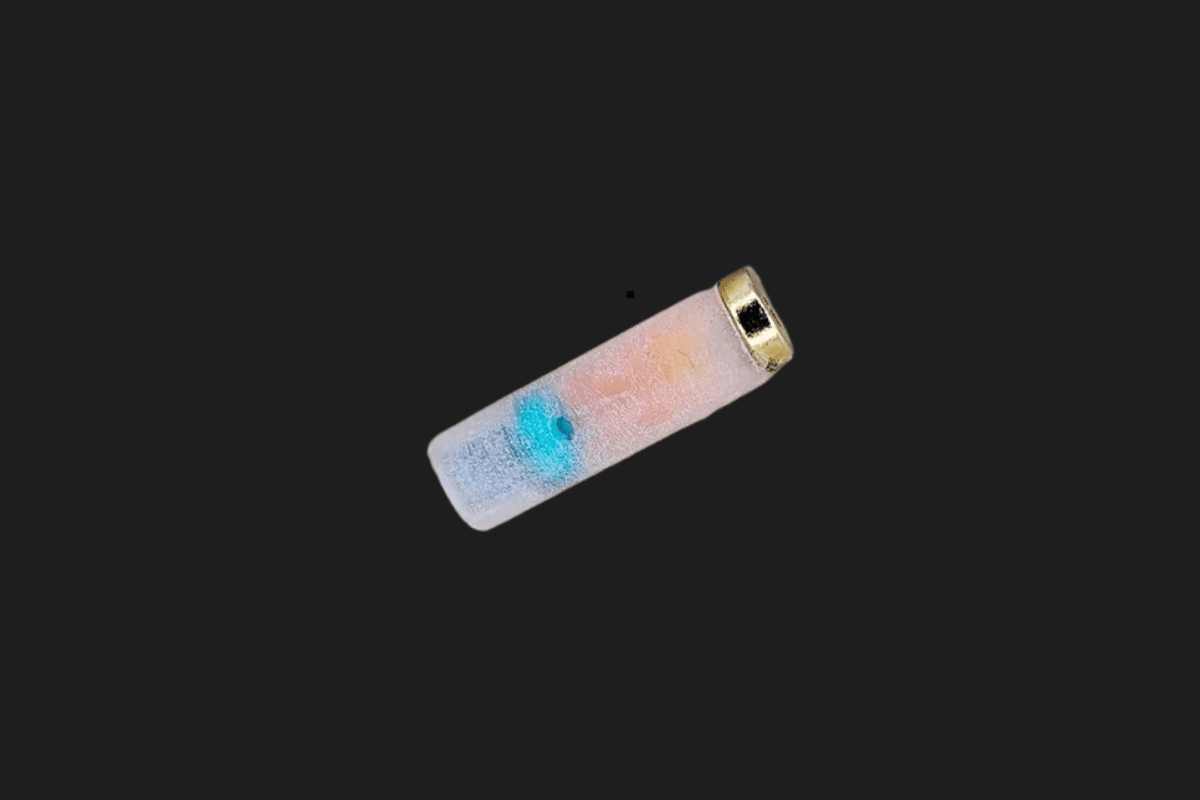
Researchers have introduced a brand-new method to the medical world by combining the concept of a swallowable device with bioprinting. A tiny “swallowable printer” has the potential to heal soft tissue injuries like ulcers by applying bio-ink to the required areas.
It is clear that technology has developed tremendously over the years. Still, for those who remember the days when fax machines were cutting-edge technology, the existence of a newly developed, pill-sized bioprinter that can be swallowed might be surprising. This miniature device repairs damaged areas inside the body using “living” ink and can be easily retrieved with the help of an external magnet once its task is complete.
Developed at the Laboratory for Advanced Manufacturing Technologies (LAMT) at the École Polytechnique Fédérale de Lausanne (EPFL), this device is inspired by other non-invasive technologies such as microrobots and capsule cameras. Vivek Subramanian, the head of the laboratory, states that this new class of devices combines the principles of in-situ bioprinting with the drug-release concepts of smart capsules.
The repair of soft tissue injuries within the gastrointestinal (GI) tract is one of the most promising applications for this technology. While ulcers and bleeding often require surgical intervention today, this swallowable bioprinter could offer a non-invasive alternative to surgery.
Treatment with Living Ink: How the MEDS System Works

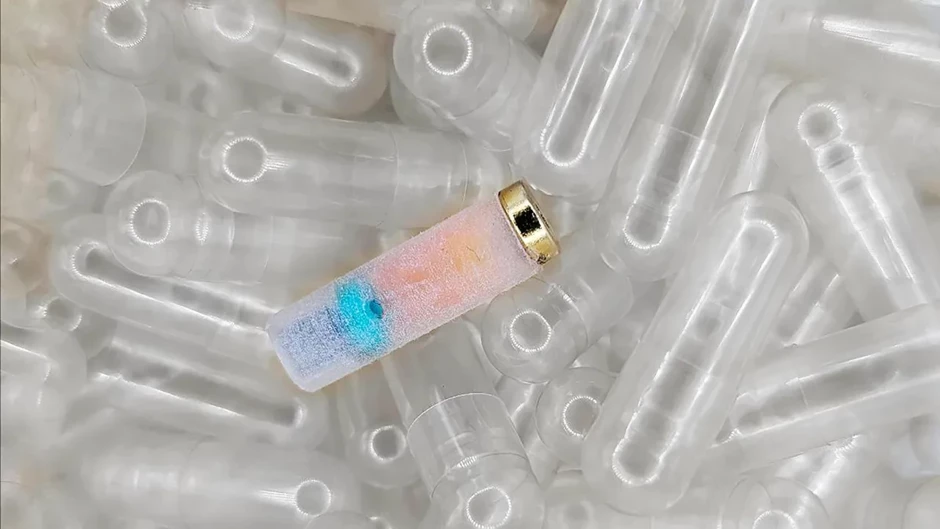
The miniature bioprinter, formally known as the Magnetic Endoluminal Deposition System (MEDS), somewhat resembles a ballpoint pen. The device has a bio-ink reservoir containing a biocompatible material that acts as a scaffold for new tissue formation, and a spring-loaded mechanism that pushes the ink out. Bioprinting is similar to traditional 3D printing, but the “ink” used can be loaded with living cells.
The bio-ink can be applied to the injured area like a bandage, protecting the damaged tissue underneath and allowing for healing. The precision of navigation and application is critical for this device, which needs to make contact with the walls of the digestive system at the exact correct spot. A known issue with other free-floating devices is the difficulty in directing them when they make contact with tissue walls.
Interestingly, MEDS contains no electronic parts. Once the device is swallowed, its movement is tracked externally. When it reaches the correct location, external surgeons or scientists trigger the release of the bio-ink using a near-infrared laser that can penetrate the body wall without causing damage.
The steering and retrieval of the capsule also rely on an external magnet system. This magnet, mounted on a robotic arm, steers the capsule to the desired location. Once the treatment is complete, the capsule is guided in the reverse direction until it can be retrieved orally.
The research team first conducted experiments in a laboratory setting to see if the device truly worked. In these experiments, they successfully repaired simulated stomach ulcers and a bleed. They then took a step further by conducting in-vivo experiments on rabbits, demonstrating how the bio-ink could be applied and how the device could be steered as intended.
Sanjay Manoharan, a doctoral student, noted that in controlled laboratory experiments, the cell-loaded bio-ink maintained its structural integrity for more than 16 days. This shows the ink’s potential as a “micro-bioreactor” that can release growth factors and provide new cells for wound healing.
The team says more work is needed for now, and they want to try this system on other tissues, such as blood vessels and the peritoneum that lines the abdominal cavity.
You Might Also Like;
- The Mystery of the Far Side: What Is Hiding in the Lunar Shadows? | Metaverse Planet
- The Doomsday Clock Hits 85 Seconds to Midnight: Are We Out of Time?
- Nvidia’s AI Can Now Predict the Future (Of Weather)
-

-

-
-

-

-
-
-

-
-

-

-

