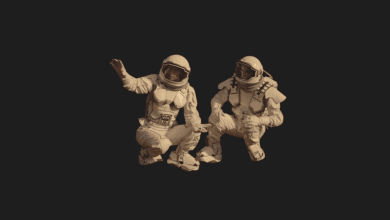
I don’t know about you, but whenever I look up at the night sky, I can’t help but feel a bit impatient. It’s been over half a century since humanity last walked on the lunar surface, and for a long time, it felt like we were permanently stuck in low-Earth orbit. But while researching NASA’s latest updates, I realized something incredibly exciting: the long wait is finally coming to an end.
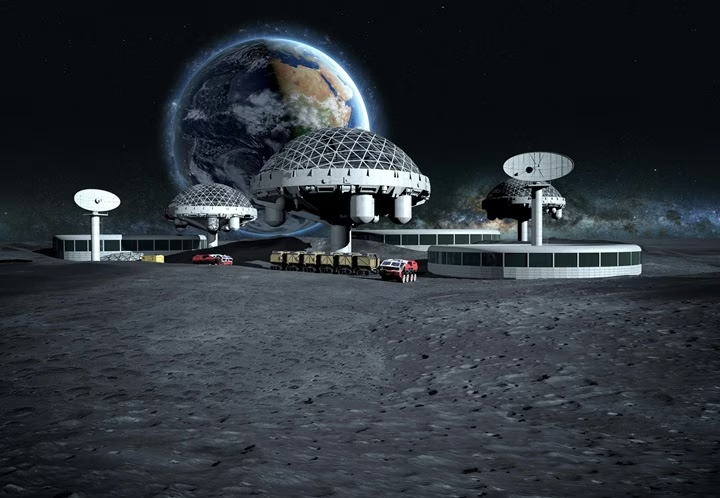
However, if you’re expecting to see massive, sci-fi-style glass domes popping up on the Moon overnight, you might want to adjust your expectations. NASA has radically shifted its strategy, opting for a much more grounded, step-by-step approach. Let’s dive into what this means for the future of space exploration and why the traffic to the Moon is about to get very heavy.
Artemis 2: The First Real Step Back

We’ve been talking about the Artemis program for a while, but the first truly tangible step of our return is Artemis 2. During a recent conference, NASA official Amit Kshatriya gave us a solid update: the agency is sticking to its April 1 launch target (and no, that’s not an April Fool’s joke!).
If everything goes according to plan, this mission is going to be historic. The crew won’t land, but they will break the distance record set by Apollo 13 in 1970, traveling further into space than any human has ever gone before.
Here is the incredible crew undertaking this roughly 10-day journey:
- Reid Wiseman (Commander)
- Victor Glover (Pilot)
- Christina Koch (Mission Specialist)
- Jeremy Hansen (Mission Specialist)
Why Human Eyes Beat Robotic Sensors


As the spacecraft orbits the dark side of the Moon, this crew will observe the surface closer than anyone in history. What fascinated me most while digging into this is the scientific value of human perception.
Planetary scientist Ariel Deutsch made a brilliant point: the astronauts’ verbal descriptions will become our most valuable scientific data set. While we have amazing rovers and high-res cameras, robotic sensors still cannot replicate human “contextual perception.” The human eye’s ability to instantly process subtle color gradients, shadows, and terrain structures is vital. It reminds me that no matter how advanced our AI and robotics become, human intuition remains irreplaceable.


Unlike the Apollo missions, which touched down on the relatively flat, safe equatorial plains, NASA’s ultimate prize this time is the lunar South Pole.
Why go there? Simple: Water. The permanently shadowed craters of the South Pole are believed to hold massive reserves of water ice. For me, this is the ultimate game-changer. Water isn’t just for drinking; it can be broken down into hydrogen and oxygen to make rocket fuel.
However, landing there is a logistical nightmare. The terrain features:
- Incredibly steep slopes
- Extreme temperature fluctuations
- Deceptive lighting conditions that can mess with landing sensors
A Major Shift in Strategy
Because of these extreme risks—and let’s be honest, the ongoing delays with SpaceX’s Starship development—NASA had to pivot. The highly anticipated human landing originally planned for Artemis 3 has been pushed back. The new target for boots on the ground is now the Artemis 4 mission, slated for later in the decade. Honestly, I think this is the right call. Instead of rushing for a PR victory and risking lives, NASA is giving its private sector partners the flexibility to get it right.
The Lunar Traffic Jam: A Step-by-Step Base

So, what happens in the meantime? This is where the “traffic” comes in.
To prepare for human arrival, NASA is planning an aggressive robotic scouting campaign. Starting soon, they aim to land a robotic vehicle on the Moon almost every single month. These rovers will be the unsung heroes, testing soil properties, measuring extreme temperatures, and mapping out the safest landing zones to reduce risks for our astronauts.
Amit Kshatriya was very clear about the reality of lunar colonization. We aren’t building a sci-fi metropolis on day one. Everything will be built incrementally. We will start with small habitats, reliable power grids, and basic infrastructure.
This partnership between NASA and private companies is setting the stage for humanity’s permanent presence in space. We are moving away from “flags and footprints” and moving toward sustainable, long-term exploration.
When I look at this revised, cautious, but highly calculated strategy, I feel much more confident that we are actually going to stay on the Moon this time. The glass domes can wait; I’m just excited to see humanity finally setting up a permanent outpost.
What about you? Does NASA’s delayed but safer, step-by-step approach make you more hopeful for the future of space exploration, or are you disappointed we aren’t moving faster? Let’s discuss it in the comments below!
You Might Also Like;
- A Century-Old Aviation Dream Reborn: The Channel Wing VTOL Takes Flight
- The Dawn of the Automated Battlefield: How Ground Robots Are Redefining Warfare
- The Insatiable Hunger of AI: Why Tech Giants Are Chasing Natural Gas
-

-

-

-
-
-

-

-
-

-

-

-