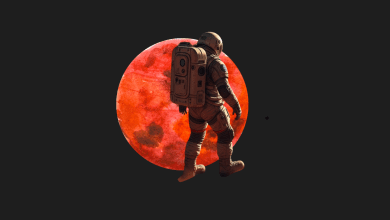
NASA is heavily considering deploying AI-powered robots for the initial missions to the Red Planet. Their durability and capacity for autonomous operation make machines a logical choice to precede humans on Mars.
For a long time, humanity has dreamed of setting foot on Mars. However, the first steps towards this goal may be taken not by people, but by human-made machines. New scenarios being developed by NASA suggest that robots equipped with artificial intelligence could be deployed on the initial journeys to the Red Planet.
Machines with advanced AI systems are physically more resistant to the harsh Martian conditions and can function without life support resources, making them ideal candidates for these challenging missions. These robotic explorers require no oxygen, water, or food, and can both pilot the spacecraft and begin building the initial infrastructure to host humans.
Technologies developed under NASA’s “Autonomous Systems and Operations” program have already demonstrated that robots can act by making independent decisions, not just through remote commands. These systems can operate without being affected by communication delays and can directly support a crew.
One of the most challenging aspects of space missions is the long duration of travel, which pushes the physical and psychological limits of astronauts. Risks like radiation exposure, resource scarcity, and lack of emergency medical facilities complicate crewed missions significantly. In contrast, AI-powered machines can continue their tasks, unaffected by these dangers.
Silicon Explorers Can Prepare the Infrastructure


These next-generation robots planned for Mars will be far more capable than the remotely controlled rovers sent to date. They will be able to make real-time decisions despite communication delays and move independently in environments that would be dangerous for humans.
These robots could establish shelters on the Martian surface, set up power generation systems, and even scout for subsurface water resources and collect data for future missions before humans ever depart. In short, they can take the foundational steps toward creating a habitable environment for people.
This approach brings with it not only a technological but also a philosophical debate: If robots are the first to reach Mars, how will that align with humanity’s dream of space exploration?
According to planetary scientist Pascal Lee from the SETI Institute and the Mars Institute, this scenario does not mean humans will be excluded from the process of exploration. Speaking at the “Space Robotic Workshop” in July 2025, Lee stated that the colonization of Mars may take not years, but centuries, and that machines will be the pioneers and guardians of this long-term endeavor.
NASA’s Preparations Are Already Underway
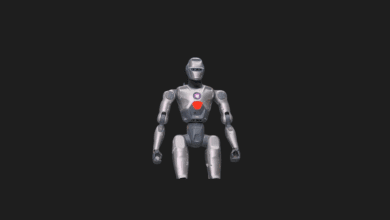
NASA’s current work reflects preparation for this scenario. The humanoid robot prototype Valkyrie is being developed with this vision in mind. Furthermore, the AI-powered auxiliary systems known as Astrobee, currently operating on the International Space Station (ISS), serve as examples proving that robots can work alongside humans.
The goal of sending humans to Mars remains on the table. However, it appears that the initial steps toward achieving this goal will be prepared by the machines that will precede us. Creating habitable conditions for the first humans to set foot on Mars may be the most crucial task of these robotic explorers.
You Might Also Like;
- The Mystery of the Far Side: What Is Hiding in the Lunar Shadows? | Metaverse Planet
- The Doomsday Clock Hits 85 Seconds to Midnight: Are We Out of Time?
- Nvidia’s AI Can Now Predict the Future (Of Weather)
-

-

-
-
-
-

-

-
-
-

-

-