
Honestly, the footage I watched from that Chinese factory kept me up at night.
We have always joked that “robots would take over the world” one day. We laughed at the videos of robots falling over or walking clumsily. But looking at these new humanoid robots working 24/7 without food, sleep, or a salary… the joke isn’t funny anymore.
In this article, I am not just talking about a cool new piece of technology. I am talking about our survival in the job market. This isn’t just an update; it is a reality check.
What Are “Dark Factories”?


There is a term in the manufacturing world that sounds like something out of a sci-fi horror movie: The Dark Factory.
Why “dark”? Because inside these facilities, the lights are turned off. There are no humans working there, so there is no need for light.
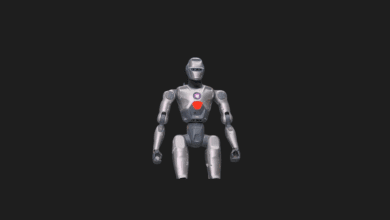
When I saw the footage of the “Iron” robot and others like it in China, I realized we are entering a new phase. These aren’t just mechanical arms bolting a door onto a car. These are humanoid agents moving freely, making decisions, and handling delicate tasks with precision.
- They don’t need breaks.
- They don’t form unions.
- They don’t get sick.
- They don’t stop.
The Brutal Math: $3,000 vs. $0

Let’s put feelings aside for a second and look at the cold, hard math. If you were a business owner, you would be staring at a very difficult spreadsheet right now.
Option A: The Human
- Cost: Average $3,000/month (salary, insurance, benefits).
- Limitations: Works 8 hours a day, needs sleep, has emotional days, takes vacations.
- Output: Variable.
Option B: The Humanoid Robot
- Cost: Near $0 in labor wages (after the initial purchase/lease).
- Advantages: Works 24 hours a day, 7 days a week. Consistent quality.
- Output: Constant and scalable.
I love technology. I live for this stuff. But when I look at those numbers, I don’t see a “choice.” For a capitalist economy, this is a mathematical inevitability.
Is This Another Industrial Revolution?

Whenever I bring this up, someone always says: “Don’t worry, Ugu. The Industrial Revolution destroyed farming jobs but created factory jobs. AI will create new jobs too.”
I really want to believe that. But this feels different.
In previous revolutions, machines replaced muscle. They helped us lift heavier things and move faster. But these new humanoid robots, powered by advanced AI, are starting to replace cognitive function and dexterity.
They can fold laundry, sort logistics, assemble electronics, and even perform quality control. If a robot can do the physical work and the basic thinking required for the task, where does that leave the average worker?
My Honest Take
I am not a pessimist. I believe human creativity is irreplaceable. But let’s be real: most jobs in the world right now aren’t about “creativity.” They are about repetition and labor. And those are exactly the jobs these robots are coming for.
We need to stop looking at this as “cool tech news” and start looking at it as a signal to adapt. The era of getting paid just for showing up and doing a routine task is ending.
What Do You Think?

I want to end this with a serious question. I want you to be absolutely honest with me.
If you owned a manufacturing company today, would you hire a human for $3,000 a month, or deploy a robot that works for free?
Drop your answer in the comments below. I’m genuinely curious if ethics can beat economics.
You Might Also Like;
- The Mystery of the Far Side: What Is Hiding in the Lunar Shadows? | Metaverse Planet
- The Doomsday Clock Hits 85 Seconds to Midnight: Are We Out of Time?
- Nvidia’s AI Can Now Predict the Future (Of Weather)
-

-

-

-
-
-

-

-

-

-

-

-

