I have to admit, I got absolute chills watching the broadcast. The wait is finally over! Artemis 2 has officially left Earth, and seeing that massive rocket tear through the atmosphere felt like watching history rewrite itself. For the first time in over half a century, humanity is heading back to the Moon. But as I sat there watching the thrusters light up the sky, one thought kept looping in my head: this isn’t just a Moon trip.
Let’s get straight to the point. I’ve been analyzing the specs, the mission trajectory, and the sheer scale of what NASA is attempting here. What we are witnessing is the very first tangible step towards colonizing Mars.
Grab a coffee, because I want to dive deep into this 10-day epic journey, the mind-blowing tech keeping the crew alive, and why I am so incredibly hyped about what this means for the future of humanity.
The 10-Day Epic Journey: Riding the Orion Capsule


When I was researching the flight plan for Artemis 2, I was struck by how beautifully daring it is. Unlike the Apollo missions that went straight into a stable lunar orbit to land, Artemis 2 is doing something different.
The crew is strapped inside the Orion capsule, a spacecraft that honestly looks like it was pulled straight out of a sci-fi movie. Over the next 10 days, they aren’t just going to look out the window. Here is what their intense itinerary looks like:
- High Earth Orbit Checkout: Before committing to deep space, they will spend about a day orbiting Earth, testing every single life support system. If I were up there, this would be the moment my heart would be pounding the hardest—making sure the ship can actually keep us breathing.
- The Translunar Injection: This is the massive engine burn that slingshots them toward the Moon.
- The Lunar Flyby: They aren’t orbiting; they are using the Moon’s gravity in a “free return trajectory.” They will fly thousands of miles beyond the far side of the Moon—farther into the void than any human has gone in decades.
- The Mach 32 Return: Coming back, the Orion capsule will hit the Earth’s atmosphere at a staggering 24,500 mph (Mach 32), enduring temperatures half as hot as the surface of the Sun.
This isn’t just a joyride. It is a grueling, high-stakes stress test of the technology that will eventually keep humans alive on a multi-month journey to the Red Planet.
Pushing the Limits: A Rocket 15% More Powerful

You can’t talk about Artemis without talking about the beast that got it off the ground: the Space Launch System (SLS).
If you are a space nerd like me, you probably revere the old Apollo Saturn V rockets. They were the undisputed kings of spaceflight. But the SLS rocket we just watched launch is a completely different animal. It generates 15% more thrust off the launch pad than the Saturn V did.
Why does that matter? Because getting to space is entirely about fighting gravity, and gravity demands a heavy toll.
- Heavier Payloads: To build a base on the Moon, or eventually a colony on Mars, we can’t just send people. We have to send habitats, rovers, massive solar arrays, and drilling equipment.
- Deep Space Velocity: That extra 15% of raw, bone-rattling power is what allows us to push the heavy Orion capsule completely out of Earth’s gravitational grip.
Watching those solid rocket boosters ignite, I couldn’t help but marvel at the raw physics of it all. We are literally riding controlled explosions into the cosmos.
Why I Believe This is Actually About Mars

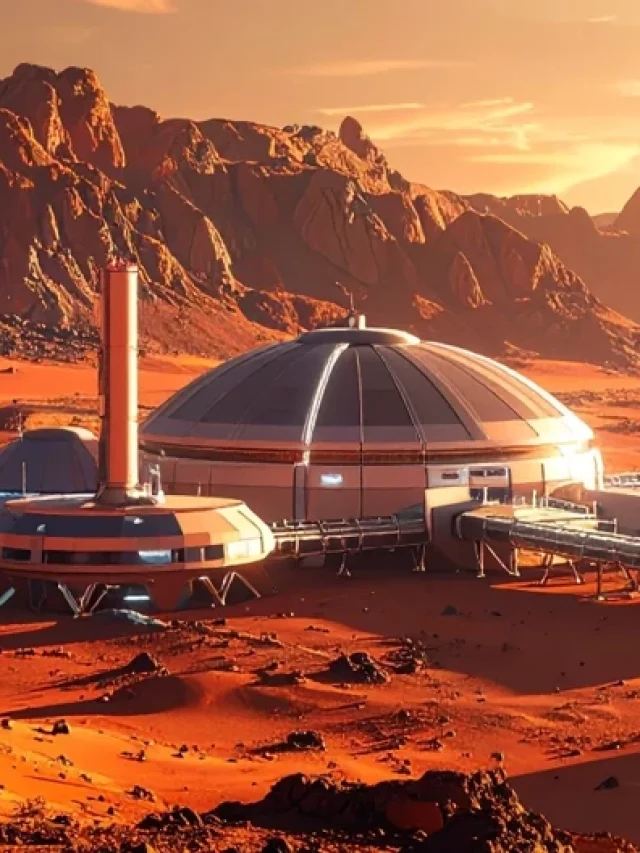
Whenever I talk to people about the Artemis program, I always hear the same question: “Why the Moon? Haven’t we already been there?” Yes, we have. But the Apollo missions were a sprint to the finish line. The Artemis missions are about setting up a permanent campsite. I strongly believe that everything happening right now inside that Orion capsule is actually a rehearsal for Mars.
Think about it logically. If a critical life-support system fails on the way to the Moon, you are only a few days away from Earth. It’s a rescueable scenario (barely, but possible). If that same system fails halfway to Mars, the crew is months away from any help.
The Moon is our sandbox. By returning to the lunar surface and eventually building the Lunar Gateway (a space station that will orbit the Moon), we are figuring out how to live in deep space without relying on Earth’s immediate umbilical cord. We are testing radiation shielding, long-term psychological isolation, and sustainable closed-loop life support systems. The Moon is the stepping stone; Mars is the destination.
What Lies on the Dark Side?


As the Orion capsule swings around the far side of the Moon—the side that never faces Earth—the crew will lose all communication with Mission Control for a brief period. It’s just them, the silence of deep space, and the rugged, cratered lunar surface below.
This brings me to the most exciting part of the Artemis era. We are eventually heading to the lunar South Pole, areas that have been cloaked in permanent shadow for billions of years. We know there is water ice trapped in those craters. Water means hydration, yes, but more importantly, it means hydrogen and oxygen. It means rocket fuel.
If we can harvest fuel on the Moon, we have built the ultimate cosmic gas station.
I am so hyped about where this is leading us. The future of humanity is currently hurtling through the vacuum of space, and we get to watch it happen in real-time.
But I want to turn this over to you. As Orion flies over those unexplored, permanently shadowed craters, what do you think they will actually find on the dark side of the Moon? Drop your wildest theories in the comments below!
You Might Also Like;
- A Century-Old Aviation Dream Reborn: The Channel Wing VTOL Takes Flight
- The Dawn of the Automated Battlefield: How Ground Robots Are Redefining Warfare
- The Insatiable Hunger of AI: Why Tech Giants Are Chasing Natural Gas
-

-

-

-

-

-

-

-
-

-

-

-