

I still remember the absolute, suffocating silence in the theater when the credits rolled for Dune: Part Two. The holy war had officially begun, and we all realized that Paul wasn’t the traditional, clear-cut hero the sci-fi genre usually hands us. I have been following the breadcrumbs for the final chapter ever since, and reading Timothée Chalamet’s latest comments on Dune: Part Three genuinely gave me chills.
He isn’t just returning to Arrakis to hit his marks and read his lines. According to his recent talk at a Variety event in Austin, Chalamet is treating this final run as a “sacred” farewell. I spent hours digging into his inspirations for this movie, and I have to say, the direction he is taking Paul Atreides is going to completely shatter our expectations. Let’s dive into why this final chapter is shaping up to be the most terrifying and brilliant installment yet.
A “Sacred” Farewell to the Desert Messiah

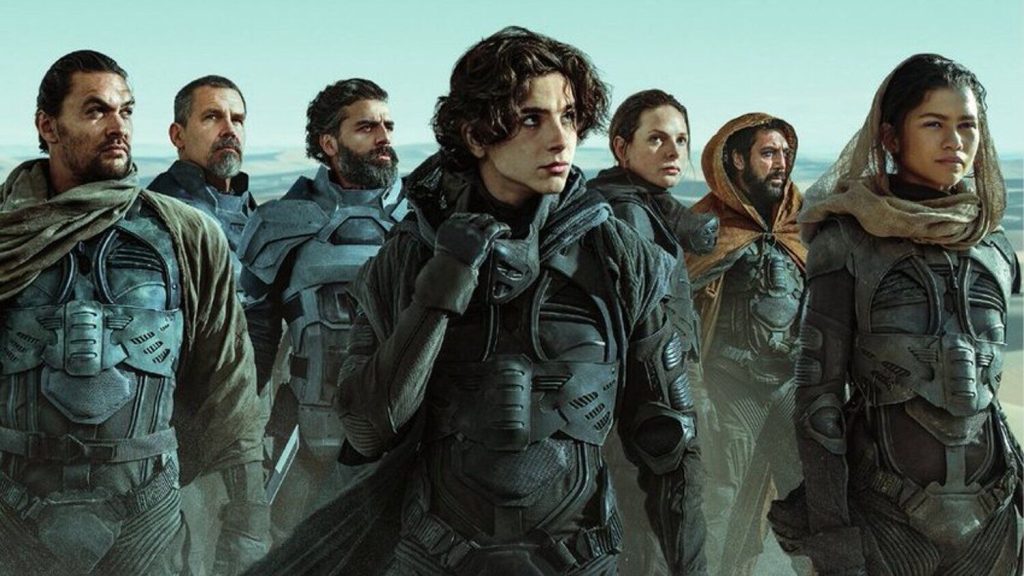
When an actor admits they are pushing their absolute physical and mental limits for a role, I always pay attention. Chalamet has made it crystal clear: this is his final time playing Paul Atreides.
Because he knows this is the end of his journey in the Dune universe, he refused to fall into the trap of sequel complacency. Instead, he treated the preparation for Part Three as a sacred duty. If you’ve read Frank Herbert’s Dune Messiah (which this third film is based on), you know exactly why this mindset is so crucial.
- No Longer a Boy: Paul is no longer the lost heir; he is an Emperor drowning in the consequences of his own absolute power.
- The Weight of Billions: The character is carrying the guilt of a galactic jihad. Playing this requires a heavy, suffocating emotional depth.
- Creative Freedom: Chalamet noted that he used a lot more creative freedom in this film, stepping away from the constraints of his earlier, more grounded indie roots to fully embrace the surreal, futuristic madness of a God-Emperor.
The Ghost of Leto Atreides: A Shakespearean Influence


I was pleasantly surprised to learn how much Oscar Isaac still influences Chalamet’s performance. Even though Duke Leto died in the first film, Isaac’s approach to the craft left a permanent mark on his on-screen son.
Chalamet mentioned that Isaac approached the first Dune with a deep, “Shakespearean” seriousness. I love this detail. It grounds a story about giant sandworms and space travel in deeply human, theatrical tragedy. For Part Three, Chalamet leaned heavily into that same Shakespearean discipline, ensuring that Paul’s tragic arc feels like a classic stage drama, full of betrayal, prophecy, and inevitable doom.
Channeling the Greats: Ledger’s Joker and Brando’s Kurtz


This is the part of Chalamet’s interview that completely blew my mind. When asked about his inspirations for the final movie, he didn’t point to typical sci-fi heroes. Instead, he named two of the darkest, most psychologically complex performances in cinematic history:
- Heath Ledger’s Joker (The Dark Knight): Ledger brought an unpredictable, terrifying chaos to the screen—a man who couldn’t be reasoned with because he operated on a completely different plane of reality. If Paul Atreides is leaning into this energy, we are going to see an Emperor who is completely detached from normal human morality.
- Marlon Brando’s Colonel Kurtz (Apocalypse Now): To me, this is the most brilliant comparison. Just like Kurtz, Paul is a man who went into the wilderness, was worshipped as a god by local warriors, and lost his humanity in the process. Kurtz was isolated by his own terrifying mythos, and that is exactly where Paul finds himself in the third movie.
Hearing that Chalamet is injecting his own unique, unhinged details into Paul—just as Ledger and Brando did with their iconic characters—tells me we are not ready for the darkness of this performance.
Denis Villeneuve’s “Uncanny” Masterpiece
I honestly think the dynamic between Timothée Chalamet and director Denis Villeneuve is one of the best actor-director partnerships in modern cinema. Working together for the third time, Chalamet mentioned that they have found a seamless, unspoken rhythm.
Villeneuve knows how to make vast, empty spaces feel incredibly oppressive, and Chalamet noted that this third film is easily the most ambitious and “uncanny” of the entire series. It’s supposed to feel strange, unsettling, and completely alien. When the movie hits theaters on December 18, I have a strong feeling it’s going to leave us staring at the screen in pure, disturbed awe.
I honestly can’t wait to see how far Chalamet pushes this descent into madness. A Paul Atreides inspired by Colonel Kurtz is exactly the kind of bold, unapologetic storytelling modern sci-fi needs.
But I want to hear from you: Do you think audiences are ready to see the “hero” of the first Dune movie transform into a dark, terrifying, Shakespearean tragedy? Drop your thoughts in the comments, let’s discuss!
You Might Also Like;
- The True Cost of Being Stranded in Space: How Much Do NASA Astronauts Actually Earn?
- The Illusion of Autonomy: Why Your Futuristic Robot is Secretly Controlled by a Human
- Decathlon’s New Stilus E-Touring is a Game-Changer for Electric Adventures
-
-
-
-

-
-

-

-
-
-

-

-

