
I spend an absurd amount of time digging through aerospace patent filings, drone startup press releases, and advanced mobility concepts. If you follow the eVTOL (electric Vertical Takeoff and Landing) space as closely as I do, you start to notice a pattern. Most of the time, I see the exact same quadcopter or tilt-rotor silhouettes rehashed with a slightly different carbon-fiber shell and a new corporate logo.
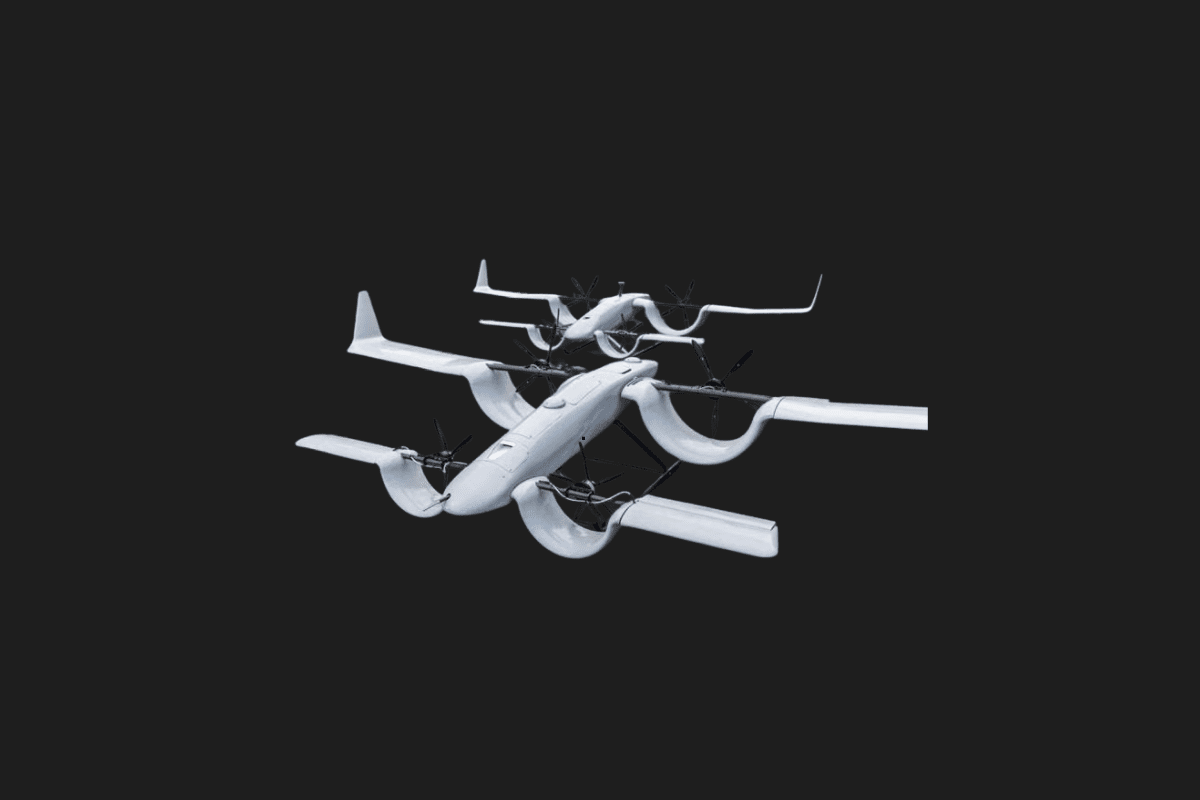
But every once in a while, I stumble across something that genuinely makes me stop and stare. That is exactly what happened when I first saw the schematics for HopFlyt’s new Cyclone VTOL.
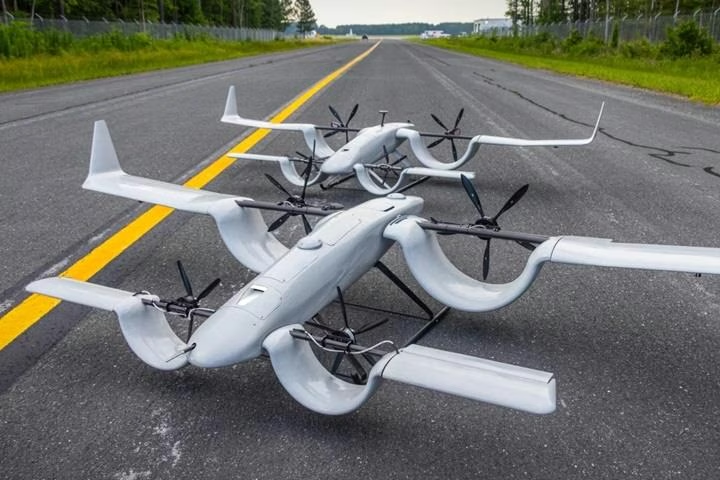
When I looked at its curved, semi-circular wings, it didn’t look like a standard modern drone. It looked like something pulled straight from an alternate-history steampunk novel. And the most mind-bending part of this entire project? The core engineering concept driving this futuristic aircraft isn’t new at all. It was actually conceptualized over a century ago.
I want to dive deep into how a forgotten, wildly unconventional idea from 1925 is being resurrected by modern engineering, and why I believe it might just completely rewrite the rules of efficiency in the aviation industry.
The Ghost of 1925: Willard Ray Custer’s Brilliant Obsession

To understand why HopFlyt’s Cyclone is such a massive deal, I have to take you back in time. The history of aviation is filled with strange prototypes, but few are as fascinating as the work of Willard Ray Custer.
In 1925, Custer looked at how airplanes worked and decided everyone was doing it the hard way. Traditional flight relies on a simple premise: an airplane must move forward at a very high speed so that air rushes over its wings, creating the pressure difference known as lift. No forward speed, no lift. It’s why airports need massive runways.
Custer, however, proposed a radical alternative. Instead of pushing a heavy airplane violently through the air to generate lift, why not just pull the air directly over the wings?
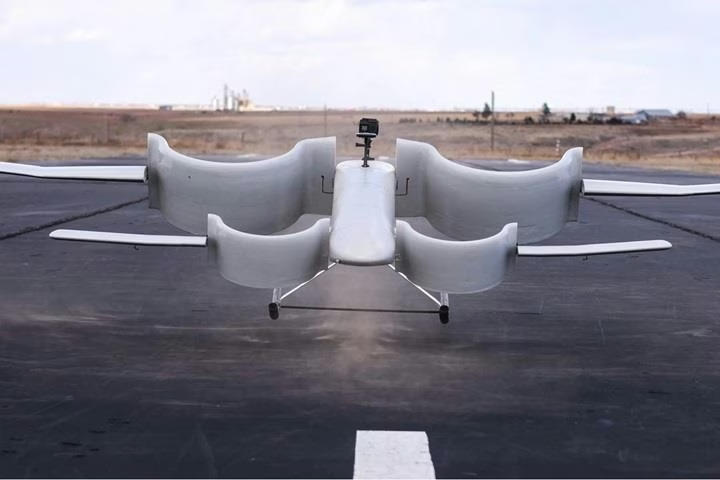
He invented what he called the “Channel Wing.” Instead of flat or slightly curved traditional wings, Custer designed wings with deep, half-circle dips—like a piece of a massive pipe. He then placed propellers directly inside these semi-circular channels. When the propellers spun, they sucked massive amounts of air violently over the curved surface of the channel, generating immense lift even if the airplane itself was standing completely still.
The Jogging Airplane
When I was researching Custer’s early prototypes, I found accounts of flight tests that sound almost comical today. The lift generated by the channel wing was so incredibly efficient at low speeds that during one test, a person literally ran alongside the aircraft as it lifted off the ground. It was achieving flight at a jogging pace.
In another stationary test, Custer strapped the plane down, fired up the propellers, and the aircraft generated enough lift to try and rip itself off its tethers—creating one of the earliest conceptual proofs of vertical takeoff.
So, if it was so brilliant, why aren’t we all flying in channel-wing Boeing jets today?
The answer comes down to the limitations of historical technology. In the mid-20th century, internal combustion engines were incredibly heavy and mechanically complex. Trying to synchronize heavy engines inside these channels, while dealing with the intense structural stress and vibrations, made the planes too bulky. The system couldn’t scale efficiently, and the idea was quietly filed away in the dusty archives of aviation history.
Why Now? The Magic of Modern eVTOL Tech
This brings us back to the present day. When I look at the current landscape of electric aviation, I realize we finally have the tools that Custer was missing.
HopFlyt’s engineering team realized that the channel wing concept wasn’t flawed; it was simply ahead of its time. The advent of the eVTOL revolution has given us lightweight, hyper-efficient electric motors, high-density batteries, and—most importantly—digital fly-by-wire control systems.
Neil Winston, the Chief Engineer at HopFlyt, summed this up perfectly. He pointed out that while brilliant aerospace concepts existed in the 1960s for variable takeoff and landing craft, the analog world simply couldn’t handle them. Today, we have computers that can adjust engine thrust thousands of times a second to maintain perfect stability.
With these modern tools, HopFlyt hasn’t just resurrected Custer’s channel wing; they have evolved it into something much more dynamic.
Dynamic Channels: Not Your Grandfather’s Wing
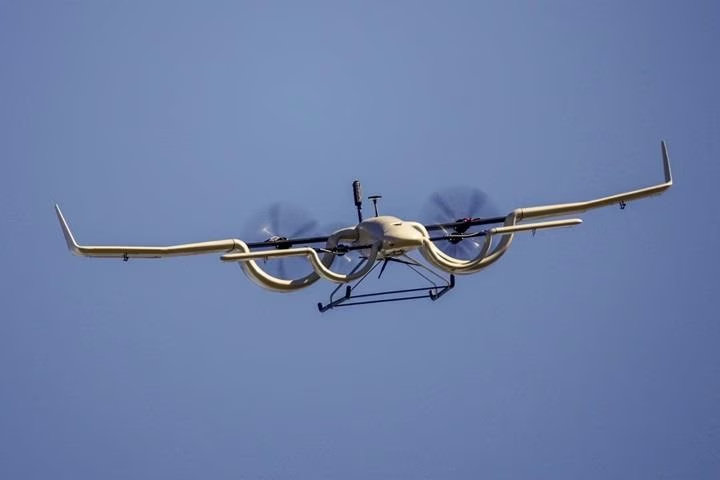
What blew my mind about the Cyclone model is that HopFlyt didn’t just build rigid half-circles into the wings. They made the channels movable.
- During Takeoff: The channel structures pivot, directing the thrust straight down for a highly stable, vertical climb.
- During Forward Flight: The channels rotate and tuck neatly under the main wing, creating a highly aerodynamic profile for fast cruising.
- During Landing: The channels can shift again, acting as massive, highly effective airbrakes to slow the craft down seamlessly.
This morphing geometry is something that engineers in the 1920s couldn’t have even dreamed of executing safely.
Under the Hood: The Cyclone’s Mind-Blowing Specs
All of this historical context and neat engineering is great, but as a tech analyst, I always look for the hard numbers. Does this weird, retro-futuristic design actually perform better than the standard quadcopter VTOLs currently flooding the market?
According to the data HopFlyt has released, the answer is a resounding yes. Let me break down the metrics that really caught my eye:
- Unmatched Climbing Efficiency: The channel wing design generates so much passive lift that the Cyclone uses roughly one-third less energy to complete its initial vertical climb compared to peer VTOL aircraft. In the battery-starved world of electric flight, saving that much energy on takeoff is a monumental advantage.
- The Hybrid Advantage: Unlike pure electric drones that suffer from severe range anxiety, the Cyclone utilizes a hybrid power system (combining electric propulsion with a fuel generator).
- Extreme Fuel Economy: During flight, this hybrid system consumes less than 11 liters of fuel per hour. For an aircraft of this size and capability, that level of efficiency is staggering.
- Massive Range: Because of the hybrid setup and aerodynamic efficiency, the Cyclone boasts an operational range of over 1,287 kilometers (800 miles). Most current pure-eVTOLs struggle to break the 150-kilometer mark.
- Heavy Lifting: For shorter, tactical routes, the Cyclone can carry payloads of up to 113 kilograms (250 pounds).
Slashing Costs and Emissions
When I crunch the numbers on the operational side, the claims HopFlyt is making are incredibly bold. They state that the Cyclone will reduce overall operation costs by 90% compared to traditional helicopters performing similar tasks, and lower carbon emissions by a factor of 50. If they can even deliver half of those promises, they will completely disrupt the logistics sector.
Beyond the Hype: Where Will We See the Cyclone First?

So, when do I actually get to see one of these flying over my city?
HopFlyt has set an aggressive target for commercial deployment in 2027. But don’t expect to be commuting to work in a Cyclone right away. They are targeting the heavy-duty commercial sectors first.
I think their initial use-case strategy is brilliant. They are focusing on environments where traditional helicopters are currently too expensive and pure drones are too weak. We will likely see the Cyclone utilized for:
- Maritime Supply Lines: Delivering heavy parts to cargo ships out at sea.
- Offshore Energy: Providing vital logistics and transport to remote oil rigs and wind farms.
- Medical Transport: Rapidly moving organs, critical medical supplies, or even acting as a highly efficient air ambulance across long distances.
Once they prove the safety and reliability of the channel wing in these harsh industrial environments, they plan to adapt the platform for human passenger transport.
I genuinely love seeing stories like this. It proves that innovation isn’t always about inventing something entirely new out of thin air; sometimes, it’s about having the vision to look backward, find a forgotten spark of genius, and apply modern technology to finally make it catch fire.
The idea of stepping into a hybrid VTOL with morphing, semi-circular wings feels like the kind of future I was promised as a kid.
But I’m curious to hear your thoughts. If HopFlyt eventually launches a passenger version of the Cyclone, would you feel comfortable flying in an aircraft with such a radically unconventional wing design, or do you prefer the traditional airplane shape we’ve trusted for decades? Let me know in the comments below!
You Might Also Like;
- A Century-Old Aviation Dream Reborn: The Channel Wing VTOL Takes Flight
- The Dawn of the Automated Battlefield: How Ground Robots Are Redefining Warfare
- The Insatiable Hunger of AI: Why Tech Giants Are Chasing Natural Gas
-

-

-

-

-

-
-

-

-

-

-

-

