

I remember watching those early DARPA robotics challenges a decade ago. Do you recall them? Multi-million dollar robots trying to open a door and falling over like toddlers. It was funny, almost cute. I used to think, “Okay, we are safely 50 years away from anything resembling I, Robot.”
I was wrong.
The timeline has collapsed. We aren’t looking at decades anymore; we are looking at years, maybe months.
If you read my recent deep dive into [The Massive Energy Crisis Coming Our Way], you might remember I asked a critical question: “Who is going to consume all this new electricity we are desperately trying to produce?”
Today, I’m introducing you to the consumer. It’s not just a data center. It’s a new mechanical workforce.
The “IPhonification” of Robotics


Why is this happening now? We’ve had robots for years in car factories. Big, orange arms welding doors. But they were “dumb.” They did exactly what they were coded to do. If you moved the car door one inch to the left, the robot would weld the air.
What changed is a convergence of three technologies that I’ve been tracking obsessively:
- The Brain (Generative AI): This is the game-changer. With LLMs (Large Language Models), robots can now understand context. You don’t have to code them to “pick up the red apple.” You just tell them, “I’m hungry,” and they figure out the rest.
- The Body (Electric Actuators): Old robots used hydraulics (liquids under pressure). They were loud, heavy, and leaked. The new generation, like the new Atlas or Optimus, uses electric motors. They are silent, precise, and efficient.
- The Eyes (Computer Vision): Cameras are now better than human eyes. They can map a room in 3D in milliseconds.
The Big Players: My Honest Assessment


I don’t like reading press releases. I like looking at the engineering. Here is my take on the robots that are actually close to walking into our lives.
1. Tesla Optimus (The Mass Production Beast)
Elon Musk says this project is more important than the cars. I believe him. Tesla isn’t just building a robot; they are building the factory to build the robot.
- My Take: It’s not the most acrobatic robot, but it will likely be the first one you can actually buy. The hand dexterity—watching it sort batteries or fold a shirt—is where the real magic is. It’s designed to do the boring stuff we hate.
2. Figure 01 (The Smartest Kid in Class)
These guys partnered with OpenAI. The demo that blew my mind wasn’t the robot walking; it was the robot talking. A human asked, “Can I have something to eat?” and the robot scanned the table, saw an apple, handed it over, and explained why it did it.
- My Take: This is where the line blurs. Figure is proving that the hardware is useless without a brain that understands the world.
3. Boston Dynamics Atlas (The Athlete)
They recently retired the old hydraulic Atlas and introduced a fully electric version. The way this thing moves is… unsettling. It can twist its head 180 degrees; it stands up from a prone position in ways a human skeleton never could.
- My Take: Boston Dynamics is showing us that robots don’t need to move like humans to be effective. They can be better than humans.
The Energy Elephant in the Room

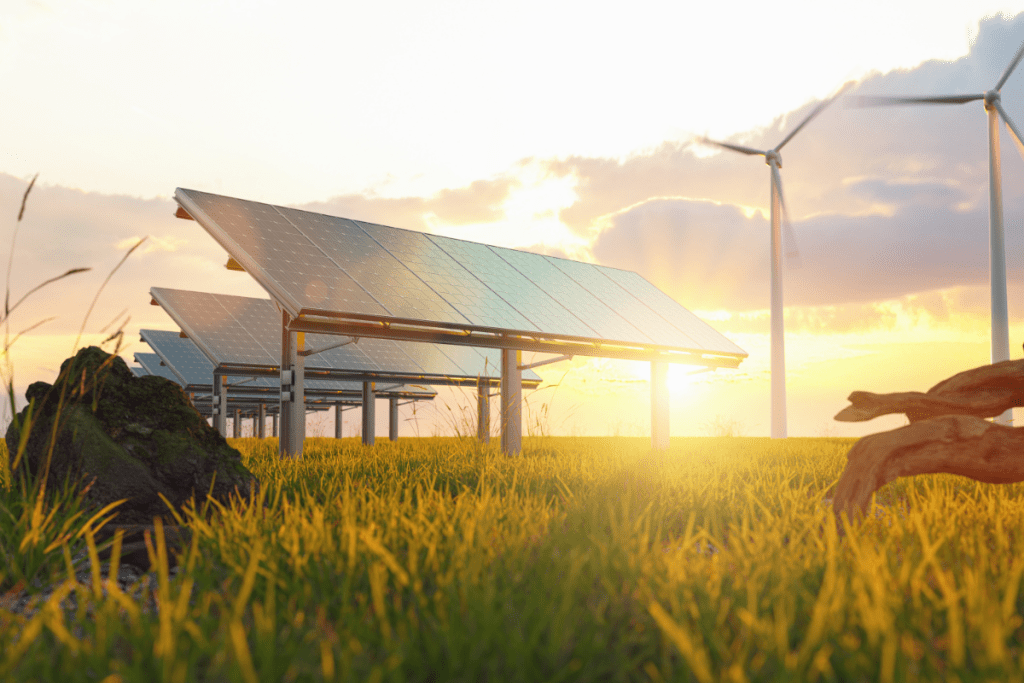
Here is the part most tech blogs miss, but we talk about real infrastructure here.
A humanoid robot is essentially a massive battery on legs. If we deploy 1 billion of these units (which is the long-term goal of these companies) to work in factories, nursing homes, and warehouses, the energy demand will be astronomical.
Think about it:
- They need to charge daily.
- The AI brains running them need constant cloud connection (more data centers).
- Manufacturing them requires immense resources.
This connects perfectly back to my previous article about Nuclear and Fusion energy. We aren’t building those power plants just for our air conditioners. We are building them to power this new species of labor.
Are We Ready for the Cultural Shift?
Technically, we are getting there. But psychologically?
I was imagining a scenario yesterday: I order a pizza, and a bipedal robot walks up my driveway to deliver it. Do I tip it? do I say “Thank you”? Do I feel safe?
These machines are going to replace labor in dangerous and repetitive jobs first. Mining, logistics, toxic waste cleanup. That’s fantastic. But eventually, they will enter our homes as caregivers and butlers.
The Bottom Line: The “Sci-Fi” label is officially dead. This is an engineering reality. The hardware is ready, the brain is learning, and the factories are being built.
I’m curious about your “line in the sand.” Would you be comfortable leaving a humanoid robot alone with your pets or kids? Or is that a strict “No” for you?
Let’s talk in the comments below.
You Might Also Like;
- The Mystery of the Far Side: What Is Hiding in the Lunar Shadows? | Metaverse Planet
- The Doomsday Clock Hits 85 Seconds to Midnight: Are We Out of Time?
- Nvidia’s AI Can Now Predict the Future (Of Weather)
-
-
-

-

-

-
-

-

-

-

-

-

