
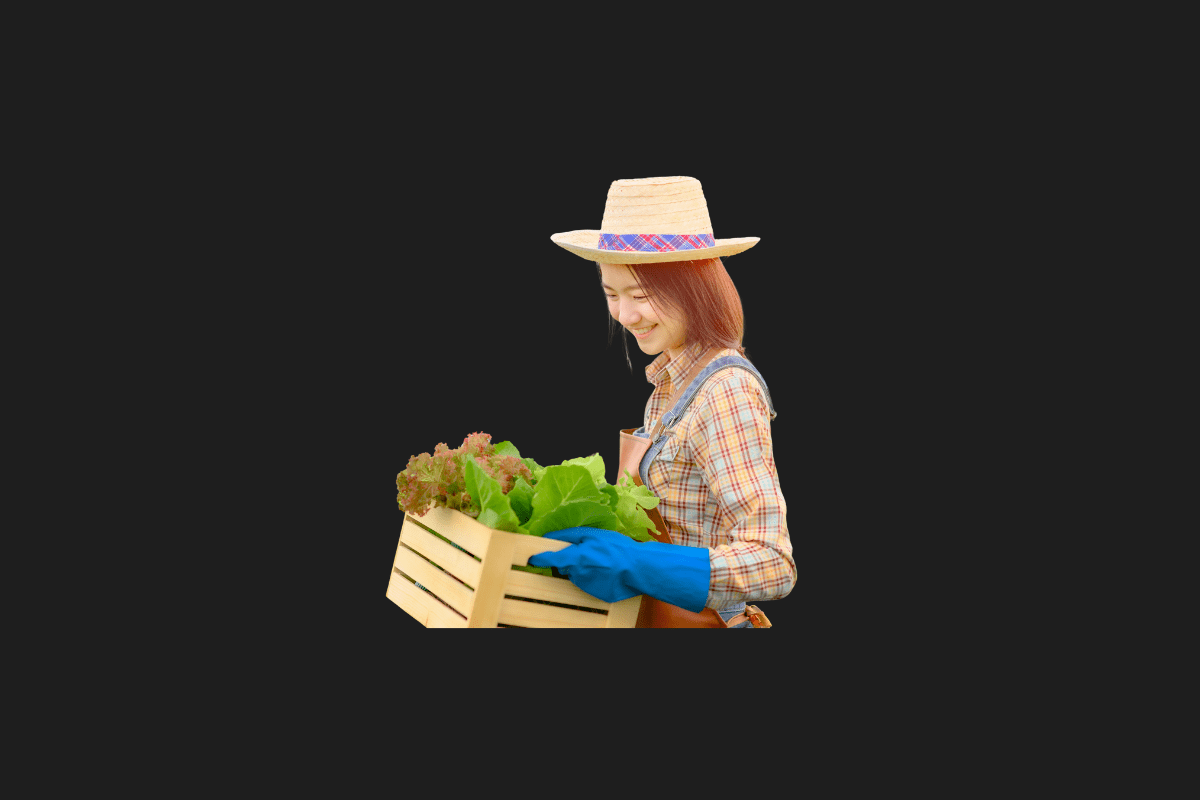
A shipping container has been transformed into a fully automated vertical farming system. This facility can grow 4,600 plants year-round without using soil or agricultural pesticides.
Illinois State University is making headlines with its Vertical Farming Facility, a pioneer in modern agricultural technologies. Opened on May 1, 2025, the facility aims to provide students with practical training while also serving as a model for sustainable urban agriculture.
Equivalent to 1-2 Acres of Farmland

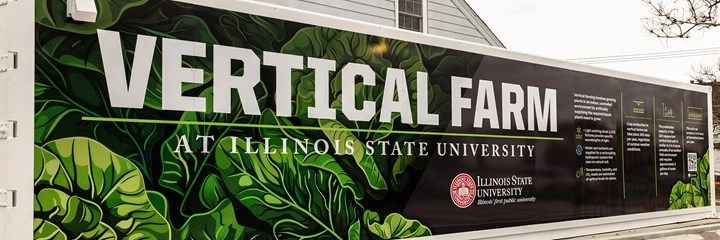
A traditional 40-foot shipping container, located on the university campus, now functions as an agricultural unit producing year-round. Established with a $200,000 investment, this specialized system operates without soil and pesticides. Designed using the hydroponic vertical farming method, it offers cultivation possibilities throughout all four seasons. Thanks to LED lighting, recirculating nutrient solutions, and an automated irrigation system, it can produce up to 4,600 plants daily using only about 19 liters of water. This yields an equivalent of 1-2 acres of traditional farmland.
Fully Automated and Sustainable

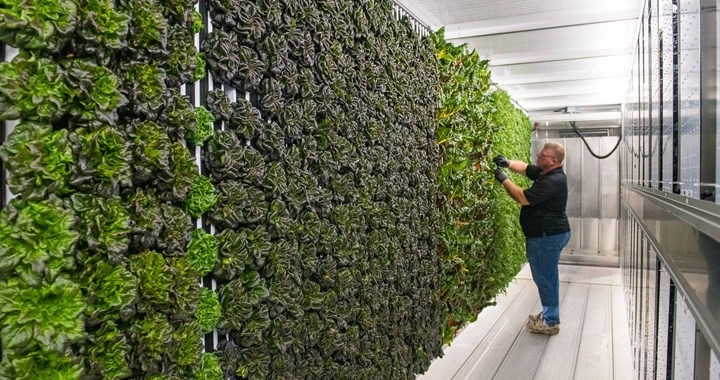
At the heart of the facility lies a fully automated control system. Numerous variables such as temperature, light levels, relative humidity, carbon dioxide levels, and pH levels are monitored via sensors. Seeds are first placed into compostable root cubes, where they grow into seedlings for 3-4 weeks. Then, they are transferred to 256 vertical towers, each approximately 2 meters long, for another 3-4 week growth period. Harvested plants are weighed, packaged, and the system re-enters the cycle with new seedlings.
Global warming and changing climate conditions are disrupting farmers’ traditional practices. At the same time, the increasing frequency of sudden weather events is reducing productivity in conventional soil-based agriculture. Furthermore, as cities become more crowded, logistics costs increase. This type of urban production, or even direct in-building cultivation, becomes feasible. The system, capable of producing year-round without soil or agricultural pesticides, offers an ideal solution for modernizing cities.
You Might Also Like;
-

-

-
-

-

-

-

-

-

-

-

-

