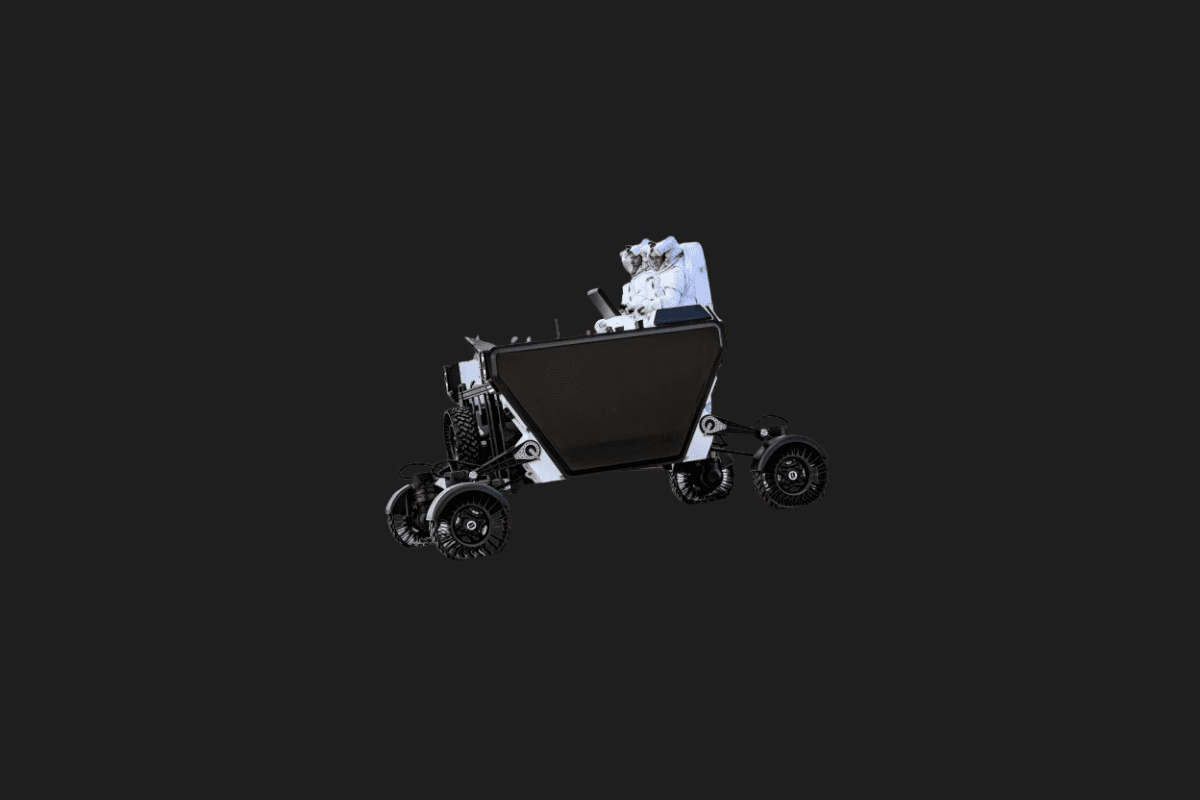
Two US-based companies have achieved a major milestone for the future of space colonization. Astroport Space Technologies and Venturi Astrolab announced the successful field testing of a specialized excavation system designed specifically for the Moon. This machinery is being developed to serve as the heavy-duty industrial workforce for future lunar colonies.
Testing Critical Technology for Lunar Bases


While the exact timeline for a permanent human settlement on the Moon remains uncertain due to delays in the Artemis Program, space agencies and private enterprises are aggressively developing the necessary infrastructure technologies. Astroport and Venturi Astrolab recently demonstrated a specialized excavator designed to prepare the lunar surface for habitation.
The companies consider this successful test a foundational step toward deploying fully automated systems that will make lunar construction a reality.
Sintering: Solving the Regolith Problem


The lunar surface is an incredibly harsh environment covered in fine, razor-sharp dust known as regolith. When spacecraft land, they kick up this dust with tremendous force, which can severely damage surrounding equipment and habitats.
To combat this, Astroport is developing “sintering” technologies.
This process involves melting the lunar dust to forge solid, durable surfaces. The ultimate goal is to use this method to construct landing pads and roads directly on the Moon.
FLEX: The Multi-Purpose Lunar Rover

At the heart of these infrastructure efforts is the Flexible Logistics and Exploration Rover (FLEX). Developed by Venturi Astrolab, FLEX is engineered as a highly modular platform capable of carrying interchangeable equipment for diverse mission profiles.
During the recent field tests:
- Astroport’s excavation system was seamlessly integrated into the FLEX vehicle.
- The system successfully transported an average of 94 kilograms of regolith in just 3.5 minutes.
- This marks the first of a planned family of automated vehicles dedicated to lunar infrastructure preparation.
Experts state that establishing a sustainable human presence will require robots capable of moving and processing thousands of tons of regolith. These excavation systems will be crucial for preparing habitat zones, paving roads, and building secure rocket landing platforms.
The Push for Lunar Mining
Beyond construction, other corporations are developing technologies to extract valuable lunar resources. Interlune is focusing heavily on Helium-3, a highly sought-after isotope for quantum computing and fusion energy. Partnering with heavy machinery manufacturer Vermeer Corporation, Interlune has announced the development of a large-scale mining prototype designed to process 100 tons of regolith per hour.
You Might Also Like;
- A Century-Old Aviation Dream Reborn: The Channel Wing VTOL Takes Flight
- The Dawn of the Automated Battlefield: How Ground Robots Are Redefining Warfare
- The Insatiable Hunger of AI: Why Tech Giants Are Chasing Natural Gas
-
-

-

-

-

-
-

-
-

-
-

-