
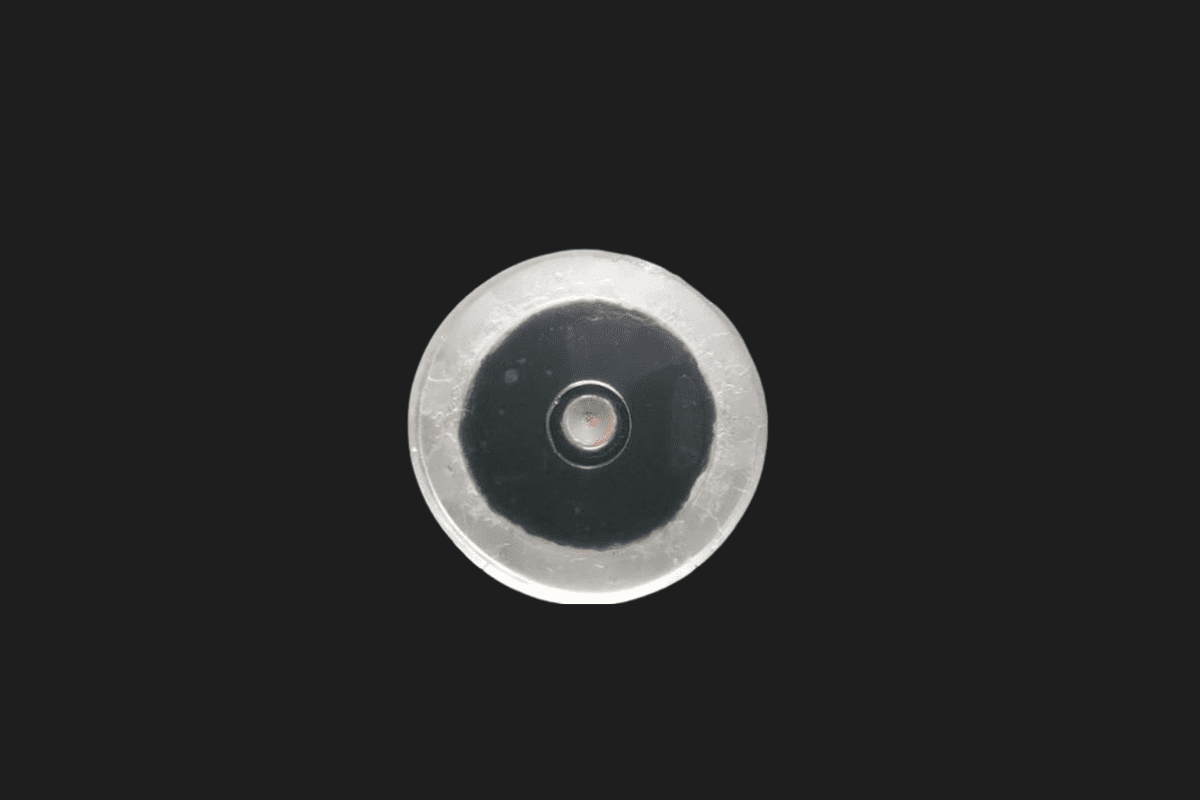
Georgia Tech researchers have presented a revolutionary technology that enables robots to change focus without electronics by developing light-sensitive soft eyes.
It is a well-known fact that analog cameras are quite slow and cumbersome when compared to biological eyes. SLR cameras, especially those with zoom lenses attached, stand out as heavy devices that are troublesome to adjust focus with. Although digital SLRs are faster, they cannot mimic the subtle and automatic focus changes that the human eye performs thousands of times an hour. Traditional lenses are rigid and bulky, requiring movement back and forth to adjust focus. However, nature has endowed us humans with small, soft, and flexible eyes. Now, scientists are bringing a design similar to ours to robots.
Could Create a Revolution in Robots

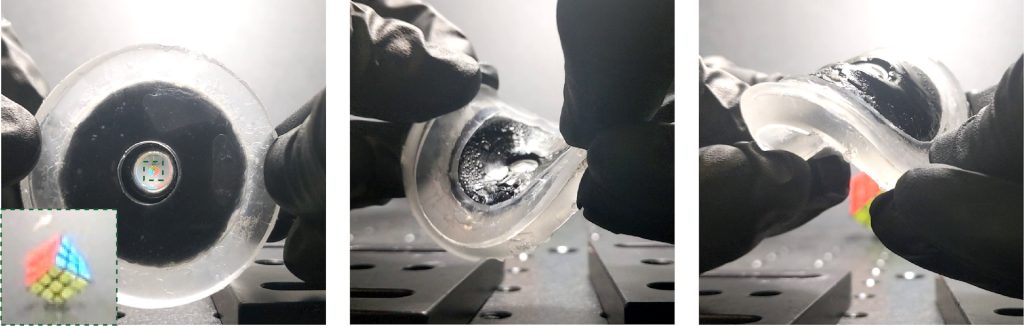
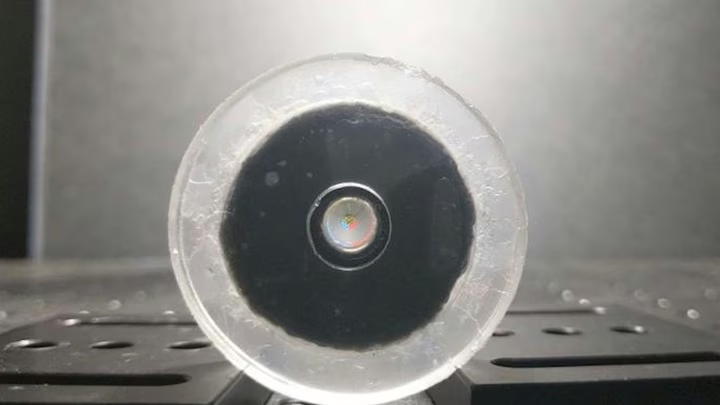
Corey Zheng and Shu Jia from Georgia Tech developed a photosensitive hydrogel soft lens (PHySL) to solve the vision problem in robots. PHySL draws inspiration from the ciliary muscles in the human eye and uses water-based hydrogel polymers instead of traditional fragile, rigid lenses and mechanisms. The lens adjusts focus not by telescopic movement, but by compressing and stretching. In this respect, it resembles us. The most striking feature of PHySL is that it does not need electronic signals for adjustments. The lens responds directly to light, and the focal length can be precisely controlled by lighting applied to different areas. PHySL manages optical energy autonomously using a dynamic hydrogel actuator and provides focus change entirely through optical control. This approach, which bids farewell to rigid materials, makes the lens more flexible, durable, and safer, especially in environments involving contact with living beings.
Ideal for Soft Robotics

New generation soft robots must operate without damaging the environment, unlike metallic robots that use rigid eyes. PHySL’s biomimetic design is ideal for surgical endoscopes and robotic arms carrying delicate objects due to its soft, low-power, and autonomous structure. Thanks to its flexible nature, soft robots can move easily in areas where rigid robots cannot pass or would sustain damage. These features also provide significant advantages for wearable and internal devices, such as skin-like sensors or hydrogel-coated implants, because these materials can move without breaking or cutting the surrounding environment.
Advanced Studies Have Begun
PHySL also eliminates the problems faced by previous soft lens designs. While traditional soft lenses usually require fluid-filled cavities or electronic actuators, PHySL is triggered entirely by light, eliminating the need for electronics and cabling.
Zheng and Jia are taking the work further by working on new hydrogel types that respond faster to light and provide stronger contraction. They also developed an electronics-free camera prototype, combining PHySL with a light-sensitive microfluidic chip. This technology could be used in future robotic vision systems that do not require electronics.
You Might Also Like;
- The Mystery of the Far Side: What Is Hiding in the Lunar Shadows? | Metaverse Planet
- The Doomsday Clock Hits 85 Seconds to Midnight: Are We Out of Time?
- Nvidia’s AI Can Now Predict the Future (Of Weather)
-
-

-

-

-

-
-

-

-

-

-

-

