NASA has completed preparations for the Orion spacecraft for the Artemis 2 mission.
NASA is continuing its work on the first human mission to the Moon in decades. In this context, it was announced that the preparations for the Orion spacecraft for Artemis 2 have been completed.
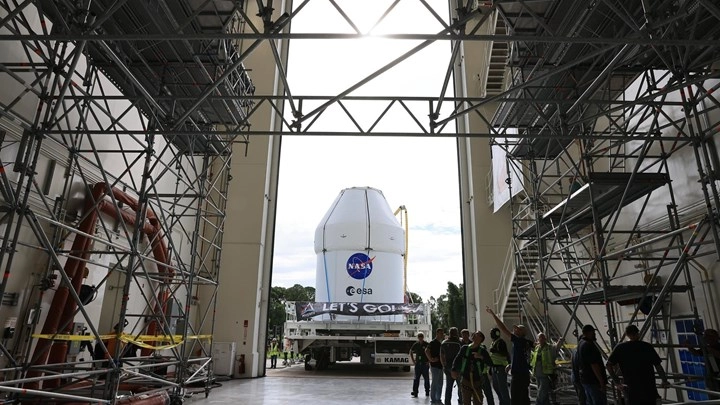
The Orion spacecraft, to be used in NASA‘s next crewed lunar mission, has moved a step further in its launch preparations by completing fueling. The Orion crew capsule, having been fueled at the Kennedy Space Center in Florida, was transported from the Multi-Payload Processing Facility (MPPF) to the Launch Abort System Facility (LASF). This move is regarded as a significant milestone for Artemis 2, the first human flight in NASA’s Artemis program.
Launch in February 2026

Artemis 2 will take four astronauts on a 10-day mission around the Moon. The mission is scheduled to take place in February 2026 at the earliest, and by April 2026 at the latest. Orion will carry NASA astronauts Reid Wiseman, Victor Glover, and Christina Koch, along with Canadian Space Agency (CSA) astronaut Jeremy Hansen. This crew will be the first people to travel to lunar orbit since the Apollo program ended in 1972.
For several months, the Orion capsule has undergone comprehensive system checks. Additionally, the Artemis 2 crew participated in their first suited tests inside the capsule. The astronauts donned the Orion Crew Survival System (OCSS) spacesuits they will wear on launch day, connected to life support and communication systems, and tested flight conditions through various ground-based simulations.
For the Orion, now moved to the LASF, the installation of the 13.4-meter-long launch abort system is currently underway. This system is designed to safely propel Orion away from the Space Launch System (SLS) rocket in an emergency. The tower and capsule cover also possess guidance capabilities to ensure the capsule’s safe separation during emergency escape maneuvers as well as in the event of potential anomalies.
Following the completion of the launch abort system installation, Orion and the entire system will be moved to the assembly building where final assembly for the launch will take place in High Bay 3 atop the SLS rocket.

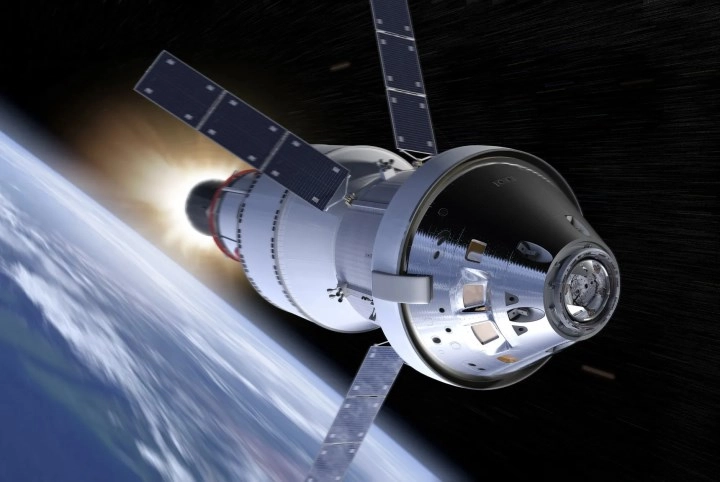
Artemis 2 will be the first mission for Orion with a crew. The program represents a critical step towards NASA’s goal of establishing a sustainable human presence on the Moon. Previously, Artemis 1 successfully launched the uncrewed Orion into lunar orbit and returned it. NASA plans to land astronauts on the lunar surface with Artemis 3 in 2027.
The Artemis missions are being built with very different objectives than the Apollo missions. During Apollo, astronauts landed on the Moon and conducted some basic research. However, the goal with Artemis is to establish a permanent presence on the Moon. Although there is a perception that Artemis 3 will be the final ultimate mission of the program, NASA will carry out numerous Artemis missions thereafter.
You Might Also Like;
-

-

-

-

-

-

-

-
-

-

-

-