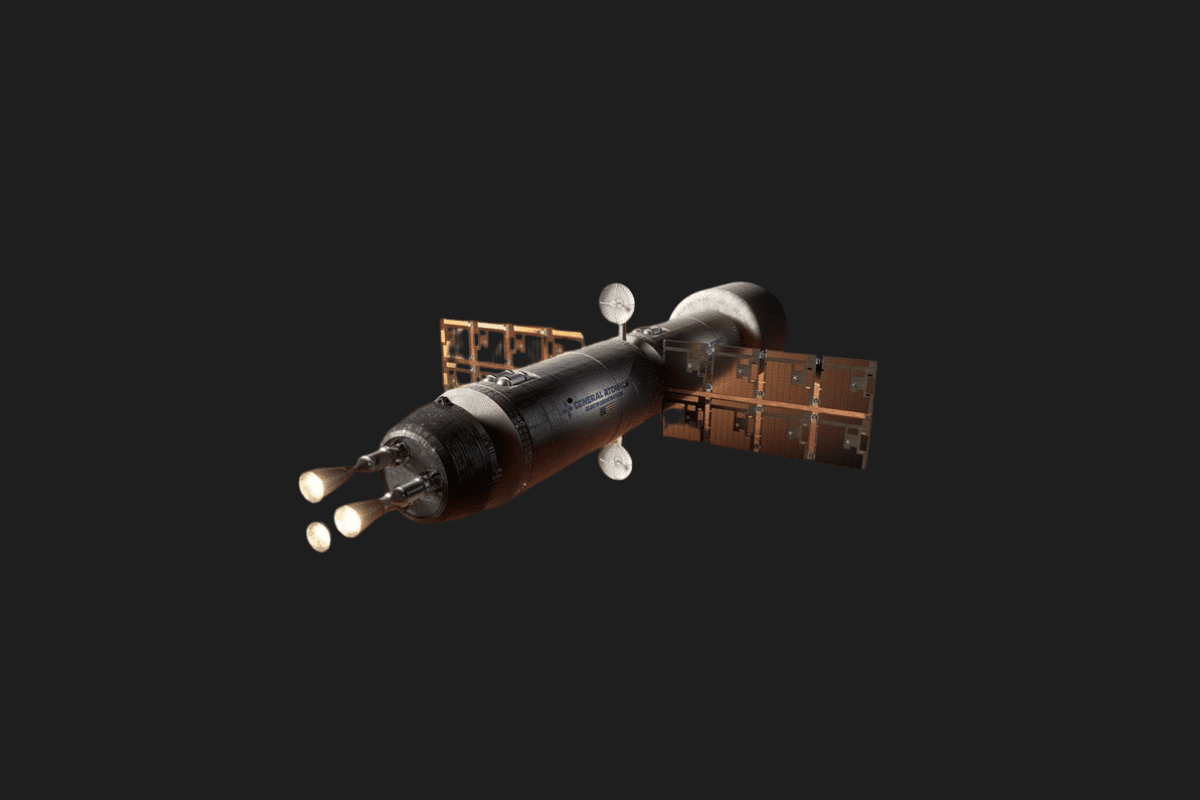
A new nuclear rocket concept developed by scientists could cut the journey to Mars in half by heating propellant with liquid uranium. This could reduce the travel time to Mars to 6 months.
Engineers at Ohio State University are working on a new nuclear rocket concept that could reduce the travel time to Mars by half. The system being developed uses liquid uranium to heat the rocket propellant, providing faster and more efficient nuclear propulsion.
NASA and its private sector partners aim to establish a regular human presence on the Moon and Mars. However, the future of space travel depends on the development of engines that can propel vehicles faster and over longer distances. At this juncture, nuclear thermal propulsion technology stands out among new engine solutions that could significantly shorten travel times and carry heavier payloads.
Accelerated Travel with Nuclear Propulsion


Nuclear propulsion works by using a nuclear reactor to heat a liquid propellant to extreme temperatures. This propellant turns into gas and is expelled through a nozzle to generate thrust. The newly developed engine concept, the Centrifugal Nuclear Thermal Rocket (CNTR), heats the propellant directly with liquid uranium. This method promises higher efficiency than both conventional chemical rockets and other nuclear propulsion engines.
If the CNTR is successful, future spacecraft could travel longer distances with less fuel. While conventional chemical engines provide about 450 seconds of thrust from a given amount of propellant (specific impulse), nuclear propulsion engines can reach about 900 seconds. With the CNTR, this value could increase even further. According to researchers, this could reduce the journey to Mars, which takes about a year with conventional systems, to just 6 months.
Furthermore, the CNTR will not only enable faster travel but could also use propellants found in space, such as ammonia, methane, hydrazine, or propane. This would make it possible to refuel from asteroids or other celestial bodies. However, the concept is still in the development phase. Engineers are working to prevent potential instabilities during the engine’s startup, shutdown, and operation, and are searching for ways to minimize the loss of liquid uranium.
You Might Also Like;
- The Mystery of the Far Side: What Is Hiding in the Lunar Shadows? | Metaverse Planet
- The Doomsday Clock Hits 85 Seconds to Midnight: Are We Out of Time?
- Nvidia’s AI Can Now Predict the Future (Of Weather)
-

-

-
-

-

-

-

-
-

-

-

-