

Microsoft has announced Mu, its new on-device language model with just 330 million parameters. This AI, which has almost no negative impact on battery consumption, will allow you to adjust settings by talking to your computer. Microsoft, the world’s largest software company, has announced its new language model, Mu, which runs inside your device. Acting like a small but smart assistant inside your computer, Mu enables you to control any setting on your computer with simple commands. Moreover, as an extremely compact language model, Mu has no negative impact on performance.
We can explain Mu’s operating system as follows: When you type “Increase the brightness” into Settings, Mu understands this sentence, determines which slider needs to move, and gets the job done in a millisecond. Since Mu runs entirely on-device, the commands you give do not go to the internet. Thus, a significant privacy concern is eliminated.
Your Secret On-Computer Assistant is a Pocket-Sized AI: Mu


With 330 million parameters, Mu is considered a pocket-sized AI compared to giant language models like GPT-4o and Gemini 2.5. Thanks to this, battery consumption and performance are not negatively affected, and responses are delivered much faster than usual.
Unlike classic chatbots, Mu uses a two-stage encoder-decoder architecture. In the first stage, the encoder creates a hidden map that summarizes your sentence in one go. Then, the decoder references this map to generate a response as quickly as possible. The operations are converted into tiny 8 and 16-bit numbers to be fully compatible with the NPU’s math engine. This is the main feature that makes Mu battery and performance-friendly. Microsoft has distilled information from its larger Phi models into Mu, preserving its intelligence while reducing its size. The result: a portable brain that generates over 100 words per second and delivers its first response in under half a second.
How Do Speed, Privacy, and Battery Life Affect the User?
From a user’s perspective, the difference is immediately noticeable. Instead of navigating through menus, you just need to type “Turn on Bluetooth and connect my headphones” into the Settings search box. Mu reads your request, opens the relevant page, and, if necessary, activates a setting for you. An older relative or a gamer engrossed in a game can use it easily because all instructions can be given in natural language; there’s no need for technical terms. Even if the internet connection is lost, Mu continues to work offline, keeping your computer settings at your fingertips whether you’re in a cafe, on a plane, or in a mountain cabin. Furthermore, since changes are reversible, there’s no need to fear giving a wrong command.
This convenience rests on three pillars: speed, privacy, and battery life. Since Mu keeps all data on-device, your commands do not go to the cloud; your personal settings won’t be fed to advertising algorithms. In Microsoft’s tests, the model reaches 200 tokens per second while keeping the device temperature low. Because it can work without a connection, your mobile data plan is also conserved when using it outside your home or office.
Future Applications and Hardware Requirements

Mu’s architecture is flexible enough not to be limited to just the Settings menu. The same engine can be adapted for a browser extension that compares prices, a panel that suggests performance settings during a game, or an assistant module that reduces background noise in a video call. Thanks to a lightweight fine-tuning method called LoRA, developers can train the model’s behavior in minutes without needing to rent giant server farms. This both reduces the carbon footprint and ensures local data never leaves the computer. It will not be a surprise to soon see smart mini-assistants that work even without the internet in many places, from office software to the Xbox interface.
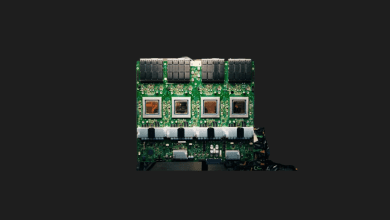
Of course, making all these scenarios a reality depends on the widespread availability of the right hardware. For Mu to perform at its full potential, the computer must have a dedicated NPU (Neural Processing Unit). Many laptops currently sold in Turkey do not have this chip; new models labeled Copilot+ come with a high-end price tag. Intel, AMD, and Qualcomm plan to make the NPU a standard feature in mid-range machines by 2026. When this happens, the “change my settings by talking” feature will cease to be a luxury and become a natural part of the operating system. In other words, in the future, getting things done by chatting with your computer instead of fighting with it could become a common habit. For now, those who are curious can join the Windows Insider program to test an early version of Mu.
-

-

-

-
-
-

-

-
-
-

-

-

