Just as it is everywhere, artificial intelligence (AI) has created a significant dilemma in the medical world. The new debate centers on the question of whether AI is a competitor or a partner.
In this era where artificial intelligence is penetrating every aspect of life, the most critical question rising among professionals is, “Is AI my competitor, or my partner?” From doctors to lawyers, architects to accountants, all areas of expertise are questioning this technological transformation.
Experts, however, provide a clear answer: The path to success lies not in avoiding AI, but in positioning the right AI as a partner to complement one’s own expertise. In this new collaboration model, while AI can pose a risk when it deepens its own domain, it transforms into an indispensable force multiplier when it supports its user’s expertise.

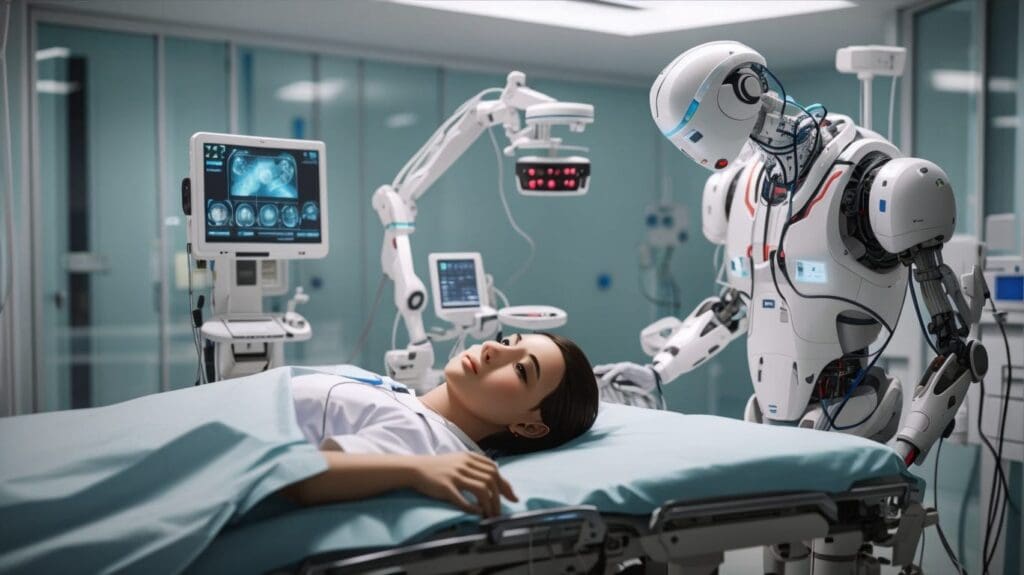
This new reality finds a concrete equivalent in the healthcare sector. Burhan İnal, Co-founder and CTO of Opinion AI, which offers solutions using artificial intelligence technology in the health field, evaluates this change. İnal says, “Medicine, by its nature, requires a human touch and clinical experience. Without compromising this foundation, artificial intelligence can increase a doctor’s capacity by enhancing diagnosis speed and data analysis depth.”
İnal states that instead of avoiding AI, doctors should use it as a “second opinion” in analyzing complex imaging, detecting early-stage diseases, and developing personalized treatment protocols. He strongly emphasizes that AI is ultimately a diagnostic tool; however, issues like the final decision, ethical responsibility, and empathy will always remain within the physician’s domain.
Two Specializations, One Goal: Human Health


Pointing out that there is significant conceptual confusion in the sector, Burhan İnal explains their approach to this new collaboration model. İnal notes that while general-purpose AI tools claim to be “your assistant in everything,” doctors rightly have trust issues with these tools.
Stating that Opinion AI has chosen a different path, İnal says they have adopted a “medical-only, expertise-only, source-based information-only” strategy. This focused strategy enables collaborations where artificial intelligence and the physician meet at the highest level in their respective fields. The AI’s area expertise explores continuously updated medical literature and millions of case analyses; meanwhile, the physician uses their experience, empathy, patient relationship, and ultimate decision-making authority to produce the most reliable results. This integration provides the best treatment for existing diseases and preventive measures for future risks, ultimately elevating the final goal, human health, to the highest level.
You Might Also Like;
- The Mystery of the Far Side: What Is Hiding in the Lunar Shadows? | Metaverse Planet
- The Doomsday Clock Hits 85 Seconds to Midnight: Are We Out of Time?
- Nvidia’s AI Can Now Predict the Future (Of Weather)
-

-

-

-
-
-

-

-
-

-
-
-